
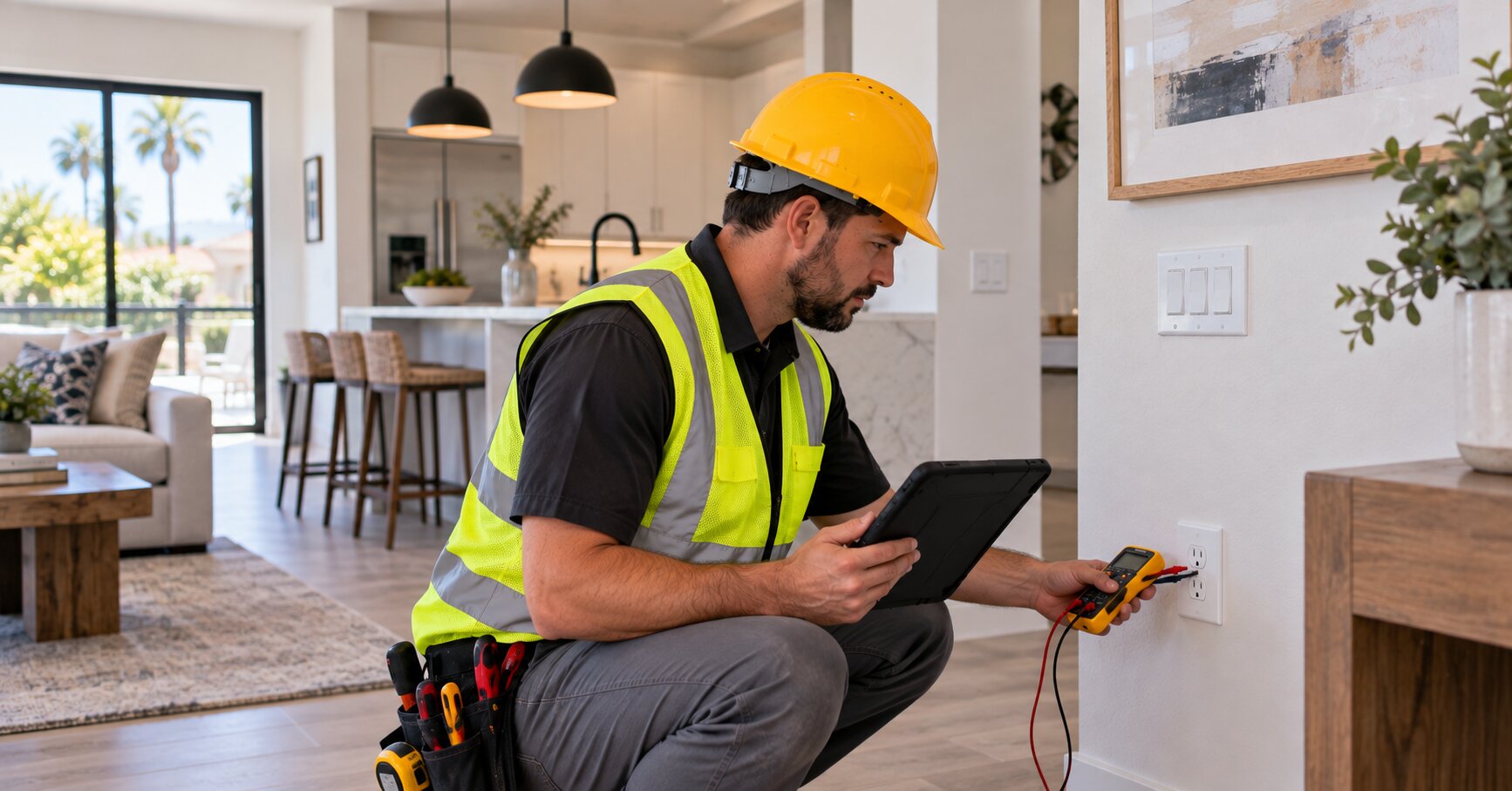
Your home’s electrical system works behind the walls, above the ceilings, inside the electrical panel, and throughout the property every day. Because so much of the system is out of sight, electrical problems are not always obvious until something begins behaving differently.
Flickering lights, repeatedly tripping breakers, warm outlets, unusual electrical odors, aging equipment, or unexplained power problems can all be reasons to have the electrical system professionally evaluated. But homeowners do not need to wait for a noticeable problem before scheduling an inspection.
AMTEK Construction provides residential electrical inspections in Los Angeles and Orange County for homeowners who want a better understanding of the condition of their electrical system.
An electrical inspection may be appropriate when purchasing an older home, planning a remodel, adding major electrical equipment, investigating recurring problems, or simply evaluating a system that has been modified many times over the years.
The purpose is not to assume that something is wrong. It is to identify the condition of the electrical system, recognize areas that may require attention, and help homeowners make informed decisions about repairs, upgrades, and future electrical improvements.
What Is a Residential Electrical Inspection?
A residential electrical inspection is a professional evaluation of accessible portions of a home’s electrical system.
Depending on the property and reason for the inspection, an electrician may evaluate components such as:
- Electrical panels
- Circuit breakers
- Visible wiring
- Outlets and receptacles
- Switches
- Grounding and bonding
- Electrical connections
- Dedicated circuits
- Lighting circuits
- GFCI and other electrical protection
- Major electrical loads
- Electrical equipment associated with additions or remodels
- Other accessible electrical components
The scope of an inspection can vary depending on why the homeowner requested it.
Someone experiencing a recurring electrical problem may require a more focused investigation, while a homeowner preparing for a major renovation may need a broader evaluation of the existing system and available electrical capacity.
Why Residential Electrical Inspections Matter
Homes change.
A property that was originally constructed decades ago may have gone through several owners, remodels, additions, appliance changes, HVAC replacements, and electrical modifications.
Some changes may have been professionally planned and documented. Others may be difficult for the current homeowner to understand simply by looking around the property.
Meanwhile, household electrical demand continues to increase.
Today’s homes may support:
- Central air conditioning
- Electric cooking equipment
- Multiple televisions and computers
- Home offices
- Pool and spa equipment
- Security systems
- Smart-home technology
- EV chargers
- Electric water heating
- Additional refrigerators or freezers
- Outdoor kitchens
- Workshops
- ADUs and converted spaces
A residential electrical inspection provides an opportunity to look at the electrical system as a whole rather than waiting for individual problems to appear one at a time.
Experienced electrical contractors in Los Angeles can evaluate existing electrical infrastructure and help homeowners understand whether conditions deserve further attention.
When Should You Schedule a Home Electrical Inspection?
There is no single situation in which every homeowner needs an electrical inspection.
However, certain circumstances make an evaluation particularly worthwhile.
1. You’re Buying an Older Home
Purchasing a home is one of the biggest financial decisions most people make, and the condition of the electrical system deserves careful consideration.
Older properties can contain electrical infrastructure from different periods.
A house may have an older original system alongside newer circuits installed during kitchen renovations, HVAC upgrades, additions, or other improvements.
An electrical inspection can help identify the visible condition and configuration of the system and determine whether further electrical work should be considered.
This can be especially valuable when the property’s renovation history is unclear.
2. You Own an Older Los Angeles or Orange County Home
Older does not automatically mean unsafe or inadequate.
However, an older home’s electrical system may have experienced decades of changes.
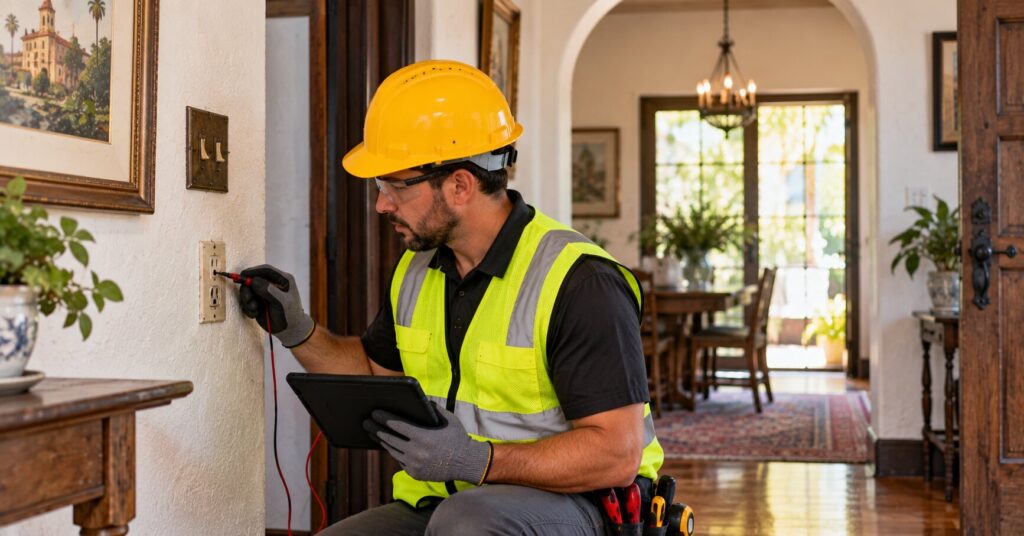
Previous owners may have:
- Added circuits
- Replaced appliances
- Installed air conditioning
- Remodeled kitchens
- Renovated bathrooms
- Converted garages
- Added bedrooms
- Installed pools or spas
- Added outdoor electrical equipment
- Changed lighting
- Installed EV charging equipment
The electrical infrastructure supporting those improvements may have been modified multiple times.
Having the system evaluated can give the current homeowner a clearer picture of what is present today.
3. Your Circuit Breakers Keep Tripping
A circuit breaker that trips is doing what it was designed to do under certain electrical conditions.
However, repeatedly resetting the same breaker without understanding why it is tripping is not a diagnosis.
Recurring breaker trips can potentially involve:
- Circuit overload
- Connected equipment
- Wiring conditions
- Electrical faults
- Breaker problems
- Changing electrical demand
- Other electrical issues
An electrician can investigate the problem and determine whether it is isolated to a particular circuit or connected to a broader electrical condition.
A breaker problem also does not automatically mean the home needs a new electrical panel.
If an evaluation shows that the existing panel is aging, lacks appropriate capacity, or should be considered for replacement, AMTEK can discuss whether a residential electrical panel upgrade is appropriate.
4. Your Lights Flicker or Dim Unexpectedly
Occasional changes in lighting can have different explanations.
However, homeowners may want an electrical evaluation when flickering or dimming becomes frequent, affects multiple areas of the house, appears when certain equipment operates, or begins without an obvious explanation.
The cause should be investigated rather than assumed.
Possible factors can involve the fixture, circuit, electrical connections, equipment loads, or another part of the electrical system.
The purpose of the inspection is to narrow down the cause and determine whether additional testing or electrical work is appropriate.
5. Outlets, Switches, or Electrical Equipment Feel Unusually Warm
Electrical components can generate some heat during normal operation, but unusual or unexplained warmth deserves attention.
A homeowner may notice heat around:
- Receptacles
- Switches
- Electrical panels
- Breakers
- Plugs
- Electrical connections
- Connected equipment
Unusual heat can have different causes, which is why simply replacing the component without investigating the condition may not address the underlying issue.
A professional electrical evaluation can help determine where the heat is originating and what should happen next.
6. You Hear Buzzing, Crackling, or Other Unusual Electrical Sounds
Electrical systems should generally operate without homeowners regularly hearing unusual noises from panels, outlets, switches, or other electrical components.
Buzzing, crackling, or similar sounds deserve investigation, particularly when the noise is new or recurring.
An electrician can inspect the affected area and determine whether the sound is associated with a connection, component, electrical load, or another condition.
Homeowners should avoid opening electrical panels or attempting to investigate energized electrical equipment themselves.
7. You’re Planning a Major Home Remodel
A residential electrical inspection can also be valuable when nothing appears to be wrong.
Before remodeling a kitchen, adding living space, converting a garage, or making another significant improvement, it is useful to understand the electrical infrastructure that will support the project.
The electrician can evaluate factors such as:
- Existing panel capacity
- Available circuits
- Current electrical demand
- Proposed appliances
- New lighting
- HVAC requirements
- Additional receptacles
- Dedicated circuit requirements
- Future electrical needs
Working with an experienced electrical contractor Orange County homeowners trust during the planning stage can help identify electrical considerations before construction is underway.
An Electrical Inspection Is More Than Looking at the Panel
The electrical panel is important, but it is only one part of the home’s electrical system.
A useful residential electrical evaluation considers the relationship between the panel, circuits, wiring, outlets, connected equipment, electrical loads, and the way the property is currently being used.
For example, a newer-looking panel does not necessarily tell you everything about wiring elsewhere in an older property.
Likewise, an older panel does not automatically mean the entire electrical system requires replacement.
The goal is to evaluate the property methodically and determine where additional attention, testing, repairs, or improvements may actually be warranted.
Electrical Inspections Before Installing an EV Charger
Installing a home EV charger can introduce a substantial new electrical load.
Before installation, the existing electrical system should be evaluated to determine how the charging equipment will fit into the home’s current electrical infrastructure.
An inspection may consider:
- Existing electrical service
- Electrical panel capacity
- Available breaker space
- Current household electrical demand
- Charger requirements
- Proposed charger location
- Distance from the electrical panel
- Other major electrical loads
- Future EV charging needs
Not every home requires a panel upgrade to install an EV charger.
Some electrical systems may already have appropriate capacity, while others may require improvements before the desired charging equipment can be installed.
Evaluating the system first helps determine what the individual property actually needs.
Electrical Inspections Before an ADU, Addition, or Garage Conversion
Adding living space changes more than the physical layout of a home.
An ADU, room addition, or garage conversion may introduce:
- New lighting
- Additional receptacles
- HVAC equipment
- Kitchen appliances
- Bathroom circuits
- Water heating equipment
- Laundry equipment
- Dedicated circuits
- Outdoor electrical equipment
- Additional electrical demand
Before construction begins, an electrical inspection can help establish what infrastructure is already present and whether changes may be necessary to support the project.
This is particularly useful when the existing home is older or has already undergone several renovations.
Electrical planning at the beginning of the project can also help coordinate electrical work with other construction activities instead of discovering capacity or infrastructure issues after work is underway.
You Recently Purchased a Home
A general home inspection can provide valuable information during a real estate transaction, but homeowners may sometimes want a more focused evaluation of the electrical system.
This can be particularly useful when:
- The home is older
- The electrical panel appears dated
- The property has undergone multiple remodels
- The renovation history is unclear
- Breakers or circuits are not clearly identified
- There are additions or converted spaces
- Electrical problems appear after moving in
- You plan to add major electrical equipment
A residential electrical inspection can give the new homeowner a better understanding of the system they have inherited.
It can also help establish priorities.
Not every electrical condition necessarily requires immediate large-scale work. Some items may involve targeted repairs, while others may be appropriate to incorporate into future renovations or electrical upgrades.
Previous Remodels Can Leave Questions About the Electrical System
A beautifully remodeled home does not necessarily tell you what is behind the walls.
Over the life of a property, electrical systems can be modified during:
- Kitchen renovations
- Bathroom remodels
- Room additions
- Garage conversions
- ADU construction
- HVAC replacements
- Pool installations
- Outdoor renovations
- Lighting projects
The current homeowner may have little information about who completed that work or how the electrical system was changed.
If there are concerns about previous modifications, an electrician can evaluate accessible portions of the system and identify conditions that deserve further investigation.
This can be especially important when a homeowner begins experiencing electrical problems in an area that was previously remodeled.
What Does AMTEK Look at During a Residential Electrical Inspection?
The exact inspection depends on the property and the reason for the evaluation.
AMTEK Construction can focus the inspection around the homeowner’s concerns while also considering relevant portions of the broader electrical system.
Electrical Panel and Breakers
The electrical panel is one of the primary areas that may be evaluated.
An electrician may look at factors such as:
- General panel condition
- Breaker condition
- Circuit organization
- Available circuit space
- Visible connections
- Signs of unusual heat or deterioration
- Panel configuration
- Existing electrical loads
- Evidence of previous modifications
If the panel appears to be contributing to an electrical problem, additional testing may be appropriate.
If the evaluation indicates that the existing equipment or capacity no longer fits the property’s needs, AMTEK can discuss whether a residential electrical panel upgrade in Los Angeles or Orange County should be considered.
Outlets and Receptacles
Outlets are among the most frequently used parts of a residential electrical system.
Depending on the inspection, an electrician may evaluate accessible receptacles for conditions that could indicate a problem or require additional attention.
Homeowners should mention outlets that:
- No longer work
- Work intermittently
- Feel unusually warm
- Appear loose
- Show visible damage
- Produce unusual sounds
- Have caused recurring problems with connected equipment
The goal is to determine whether the issue is isolated to the receptacle or related to another part of the circuit.
Switches and Lighting
Lighting problems can sometimes provide clues about electrical conditions elsewhere in the system.
An inspection may investigate issues such as:
- Flickering lights
- Dimming
- Switches that feel unusually warm
- Lights that operate intermittently
- Fixtures that repeatedly stop working
- Problems that appear when major appliances turn on
Because these symptoms can have different causes, diagnosis is important before deciding what electrical work is necessary.
Visible Wiring and Connections
Where wiring and electrical connections are accessible, their condition may provide useful information about the electrical system.
An electrician may look for visible signs of:
- Deterioration
- Loose connections
- Previous modifications
- Improperly supported wiring
- Damage
- Unusual heat
- Other conditions requiring further evaluation
An inspection cannot necessarily reveal every condition concealed behind finished walls and ceilings, which is why the scope and limitations of an inspection should be understood.
Grounding, Bonding, and Electrical Protection
Grounding, bonding, and protective devices are important components of a residential electrical system.
Depending on the scope of the inspection and property, an electrician may evaluate relevant accessible components and determine whether conditions require additional investigation or corrective work.
This may include reviewing electrical protection in areas where additional safety measures are particularly important, such as kitchens, bathrooms, garages, and exterior locations.
Diagnostic Testing Can Help Identify Problems That Are Not Obvious
Visual inspection is valuable, but not every electrical condition can be identified by sight alone.
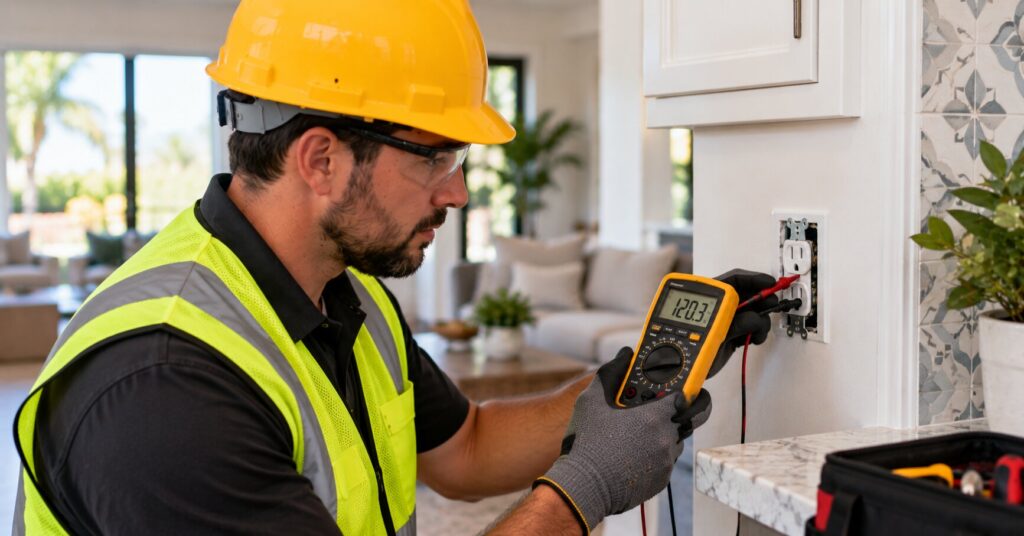
When appropriate, electricians can use diagnostic equipment to gather additional information about the electrical system.
Testing may help investigate:
- Voltage problems
- Circuit conditions
- Electrical loads
- Breaker behavior
- Connections
- Recurring power interruptions
- Equipment-related electrical issues
The type of testing should be based on the symptoms and conditions found at the property rather than performed simply for the sake of collecting measurements.
How Thermal Imaging Can Support an Electrical Evaluation
Thermal imaging can sometimes be used as an additional diagnostic tool during electrical evaluation.
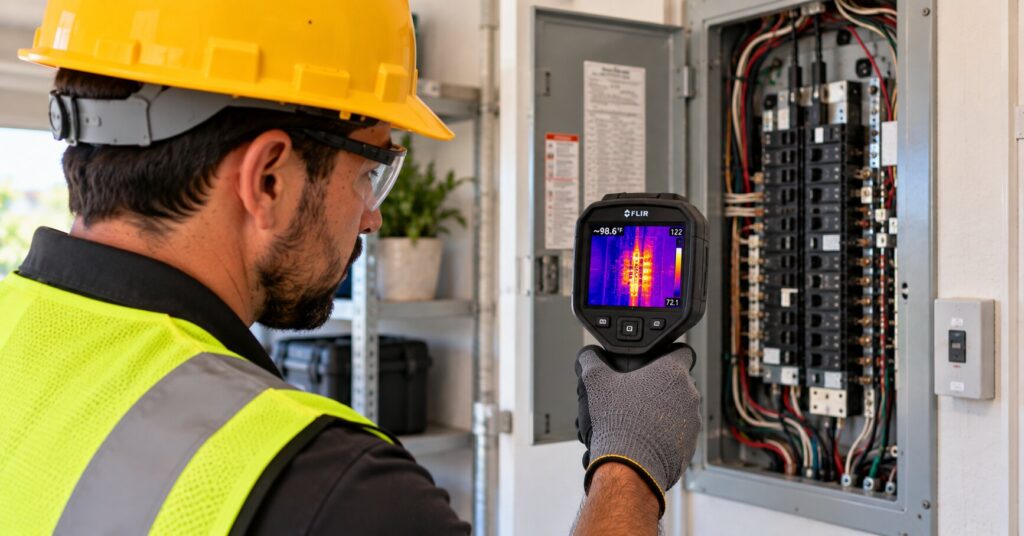
A thermal camera detects temperature patterns rather than seeing electricity itself.
When used appropriately, it may help an electrician identify unusual temperature differences around accessible electrical equipment that deserve closer investigation.
For example, an unexpected heat pattern could lead to additional evaluation of:
- Breakers
- Electrical connections
- Panel components
- Electrical loads
- Other accessible equipment
However, a thermal image by itself does not explain why something is warmer.
It is a diagnostic clue.
An electrician still needs to interpret the conditions, consider the electrical load, and perform additional testing when appropriate before determining what corrective work is necessary.
Residential Electrical Inspection vs. Electrical Troubleshooting
These services can overlap, but they are not always the same.
A residential electrical inspection generally evaluates the condition of relevant portions of the home’s electrical system.
Electrical troubleshooting is typically more focused on identifying the cause of a specific problem.
For example, a homeowner might request troubleshooting because:
- One breaker repeatedly trips
- A group of outlets stopped working
- Lights flicker in one part of the house
- An appliance repeatedly loses power
- A circuit behaves unpredictably
- There is an unexplained electrical odor or sound
In those situations, the electrician may follow the symptoms and perform targeted testing until the likely cause can be identified.
By contrast, someone purchasing an older home or planning a renovation may want a broader electrical evaluation even though no specific failure has occurred.
Understanding the goal of the visit helps determine the appropriate scope.
What Happens If an Electrical Inspection Finds a Problem?
Finding an electrical issue does not automatically mean the home requires a complete electrical overhaul.
The appropriate next step depends on what was discovered.
An inspection might identify a need for:
- A targeted electrical repair
- Breaker replacement
- Circuit repair or modification
- Outlet or switch replacement
- Additional troubleshooting
- Corrective electrical work
- A new dedicated circuit
- Panel-related improvements
- A larger electrical upgrade
The recommendation should correspond to the actual condition.
If an inspection reveals that the panel itself is aging, undersized for planned improvements, or otherwise appropriate for replacement, the homeowner can then evaluate the next steps for a residential panel upgrade.
If the problem is isolated elsewhere, a more focused repair may be the better solution.
An Inspection Can Help Prioritize Electrical Improvements
One of the practical benefits of a residential electrical inspection is gaining a clearer understanding of what should be addressed first.
A homeowner may have several electrical concerns but may not know whether they are related or how significant each one is.
For example, a property might have:
- An older panel
- Several ungrounded or outdated receptacles
- A circuit that occasionally trips
- A planned kitchen remodel
- A future EV charger
- An upcoming HVAC replacement
Instead of treating every issue as a separate emergency, an electrical evaluation can help create a more logical picture of the home’s needs.
Some repairs may deserve prompt attention.
Other improvements may make more sense as part of an upcoming remodel or equipment installation.
And some existing components may not require changes at all.
Electrical Inspections Can Help You Plan Ahead
Residential electrical inspections are not only about finding problems.
They can also help homeowners understand whether their electrical infrastructure is prepared for what they plan to do next.
If you’re considering a remodel, EV charger, ADU, HVAC replacement, pool equipment, electric appliances, or another major improvement, evaluating the electrical system early can help answer an important question:
Can the existing electrical system support where you’re taking the home?
That information allows electrical improvements to be planned alongside the project instead of becoming an unexpected issue later.
Our Residential Electrical Inspection Process
A residential electrical inspection should provide homeowners with useful information about their property—not simply a checklist of electrical components.
AMTEK Construction approaches each inspection based on the home, the reason for the evaluation, and any concerns or future projects the homeowner may have.
1. Discuss Your Concerns and Plans
We begin by understanding why you’re requesting an electrical inspection.
You may be:
- Experiencing recurring electrical problems
- Purchasing or recently purchased an older home
- Planning a remodel
- Installing an EV charger
- Adding an ADU
- Replacing HVAC equipment
- Concerned about an older electrical panel
- Planning additional electrical improvements
- Looking for a better understanding of your home’s electrical system
Knowing the reason for the inspection helps establish where additional attention may be needed.
2. Evaluate Relevant Electrical Components
The electrician can then evaluate accessible portions of the electrical system relevant to the inspection.
Depending on the property and scope, this may include the electrical panel, breakers, outlets, switches, visible wiring, electrical protection, connections, and other accessible components.
The electrician can also consider how the existing electrical system relates to the way the home is currently being used.
3. Investigate Areas of Concern
If the homeowner reports a specific electrical problem or the inspection identifies something unusual, additional investigation may be appropriate.
For example, further testing may be used to investigate:
- Repeated breaker trips
- Flickering lights
- Intermittent power
- Unusual heat
- Nonworking outlets
- Voltage concerns
- Electrical equipment problems
- Other unexplained electrical behavior
The goal is to gather enough information to determine what should happen next rather than making assumptions based on one symptom.
4. Identify Recommended Next Steps
If electrical work is recommended, AMTEK can explain what was found and discuss appropriate next steps.
Depending on the condition, this could involve a relatively focused repair or a larger electrical improvement.
When the existing panel is part of the concern, we can also determine whether a residential electrical panel upgrade in Los Angeles or Orange County should be considered.
5. Plan Repairs or Future Electrical Improvements
Not every finding needs to become a separate project immediately.
When appropriate, electrical improvements can be coordinated with planned remodeling, equipment installation, additions, or other property improvements.
This can help homeowners make more informed decisions about where to invest in their electrical system.
Why Choose AMTEK Construction for a Residential Electrical Inspection?
When you’re asking someone to evaluate your home’s electrical system, you want more than someone who can simply point out that a component looks old.
You want an electrician capable of understanding how the different parts of the system work together and determining whether the conditions found actually require additional attention.
AMTEK Construction provides residential electrical services throughout Los Angeles and Orange County and brings practical electrical experience to inspections, troubleshooting, repairs, upgrades, and larger residential projects.
We Look for the Cause, Not Just the Symptom
A flickering light does not automatically identify the problem.
Neither does a tripping breaker, warm outlet, or older electrical panel.
These conditions can have different causes.
AMTEK evaluates the electrical system so recommendations can be based on the conditions found rather than the symptom alone.
We Don’t Assume Older Means Replace Everything
Southern California has many older homes, but age by itself does not determine what electrical work a property needs.
An older home may have undergone significant electrical improvements over the years. A newer-looking home may contain electrical work from several different renovations.
The system needs to be evaluated based on what is actually present.
We Can Help Beyond the Inspection
One advantage of working with an electrical contractor rather than treating the inspection as an isolated service is the ability to address the next step when work is necessary.
If the inspection identifies an electrical issue, AMTEK can help determine whether the appropriate solution involves:
- Troubleshooting
- Electrical repair
- Circuit work
- Panel improvements
- Additional electrical capacity
- Remodel-related electrical work
- EV charger electrical preparation
- Other residential electrical upgrades
That gives homeowners continuity from evaluation through corrective work when needed.
Residential Electrical Inspections in Los Angeles
Los Angeles homes vary enormously in age, design, electrical infrastructure, and renovation history.
A property may have been built decades ago and substantially remodeled, or it may contain a combination of older electrical infrastructure and newer equipment.
Homeowners may also be placing greater demands on their electrical systems through EV charging, home offices, air conditioning, modern kitchens, ADUs, and other improvements.
Working with experienced electrical contractors in Los Angeles gives homeowners an opportunity to evaluate their electrical system before making assumptions about what needs to be repaired or upgraded.
An inspection can be particularly useful before a major remodel, after purchasing an older property, or when electrical problems begin occurring repeatedly.
Residential Electrical Inspections in Orange County
Orange County homes face many of the same challenges.
Properties that have been expanded or remodeled over time may contain electrical systems that have evolved alongside the home.
Meanwhile, newer electrical demands such as EV chargers, additional HVAC equipment, outdoor living spaces, pools, home offices, and modern appliances can change what is required from the electrical system.
If you’re looking for an experienced electrical contractor Orange County homeowners can call for an electrical evaluation, AMTEK Construction can inspect relevant portions of the system and help determine whether repairs, upgrades, or additional testing should be considered.
Related Residential Electrical Services
A residential electrical inspection may identify another service that better addresses the homeowner’s needs.
AMTEK Construction can assist with residential electrical work including:
- Electrical troubleshooting
- Electrical repairs
- Circuit and breaker work
- Residential electrical panel upgrades
- Electrical work for home remodeling
- EV charger electrical installations
- Electrical work for ADUs and additions
- Lighting improvements
- Electrical system upgrades
- Electrical work associated with new equipment
The purpose of the inspection is not to create unnecessary work. It is to understand the condition of the electrical system and determine the appropriate next step.
Frequently Asked Questions About Residential Electrical Inspections
What does a residential electrical inspection include?
The scope depends on the property and reason for the inspection.
An electrician may evaluate accessible electrical panels, breakers, outlets, switches, visible wiring, electrical connections, protective devices, grounding and bonding components, and other relevant portions of the electrical system.
If a specific problem is reported, diagnostic testing may also be appropriate.
How often should a home’s electrical system be inspected?
There is not one inspection schedule appropriate for every home.
The age of the property, condition of the electrical system, previous renovations, recurring electrical problems, and planned improvements can all influence when an inspection is worthwhile.
Older homes or properties that have undergone substantial changes may benefit from evaluation when concerns arise or before major electrical additions.
Should I have an electrical inspection before buying a home?
A dedicated electrical evaluation may be worth considering when purchasing an older home, when the property’s electrical history is unclear, or when concerns about the electrical system arise during the buying process.
It can provide more focused information about accessible electrical components and conditions.
Is a home inspection the same as an electrical inspection?
No.
A general home inspection evaluates many different systems and components throughout a property. A residential electrical inspection performed by an electrical professional focuses specifically on the electrical system and can involve more detailed electrical evaluation where appropriate.
Should I have an electrical inspection before remodeling?
It can be particularly valuable before a major remodel.
An electrician can evaluate existing electrical infrastructure and help determine how the proposed appliances, lighting, HVAC equipment, circuits, additions, or other improvements may affect the system.
Do I need an electrical inspection before installing an EV charger?
Evaluating the electrical system before installing significant EV charging equipment can help determine whether the existing service, panel, and available capacity are appropriate for the proposed charger.
Not every home requires the same electrical improvements.
Does a tripping breaker mean I need a new electrical panel?
No.
A repeatedly tripping breaker can have several potential causes. The circuit, connected equipment, wiring, breaker, electrical load, and other conditions may need to be investigated.
If the evaluation shows that the panel itself should be upgraded, AMTEK can discuss the available options.
Can an electrical inspection find problems hidden behind walls?
An inspection has limitations because much of a home’s wiring may be concealed behind finished walls, ceilings, floors, and other building materials.
Accessible components and visible conditions can provide important information, and diagnostic testing may reveal additional clues, but an inspection cannot necessarily identify every concealed condition without additional investigation.
Can thermal imaging find electrical problems?
Thermal imaging can identify temperature differences around accessible electrical equipment, which may help an electrician locate conditions that deserve closer investigation.
However, a thermal image alone does not diagnose the cause of the temperature difference. Additional electrical evaluation or testing may be necessary.
What happens if AMTEK finds an electrical problem?
The next step depends on the condition found.
Some issues may require a targeted repair. Others may require additional troubleshooting, circuit work, panel improvements, or a larger electrical upgrade.
AMTEK can explain the findings and discuss an appropriate course of action.
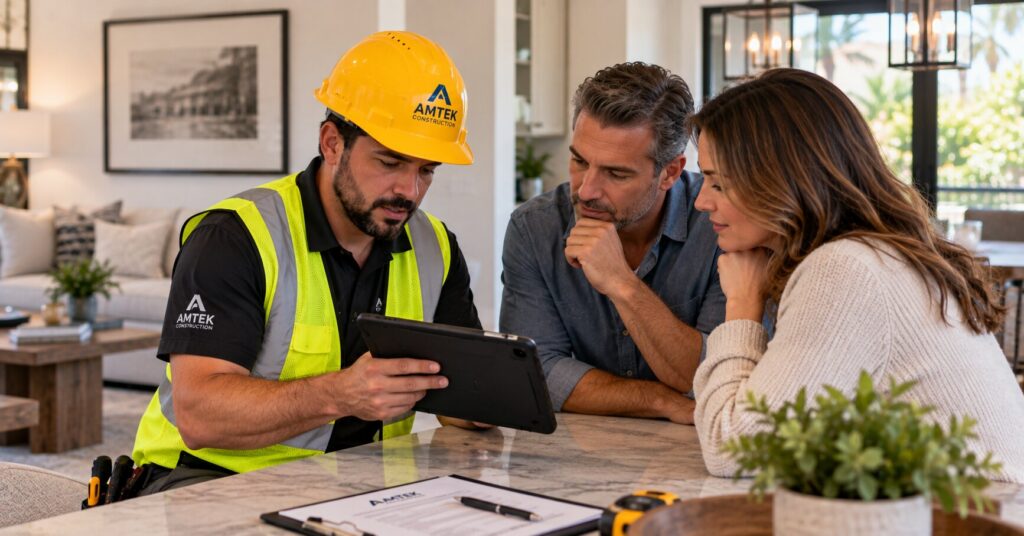
Schedule a Residential Electrical Inspection With AMTEK Construction
You do not have to wait for a complete electrical failure to learn more about the condition of your home’s electrical system.
Maybe your breakers have started tripping. Perhaps lights are flickering, an outlet feels unusually warm, or you’re concerned about electrical work completed by a previous owner.
Or there may be nothing obviously wrong at all—you may simply be purchasing an older home, planning a remodel, installing an EV charger, adding an ADU, or preparing the property for greater electrical demand.
AMTEK Construction provides residential electrical inspections throughout Los Angeles and Orange County to help homeowners better understand their existing electrical systems and determine whether repairs, troubleshooting, or future improvements should be considered.
Contact AMTEK Construction today to schedule a residential electrical inspection in Los Angeles or Orange County.