
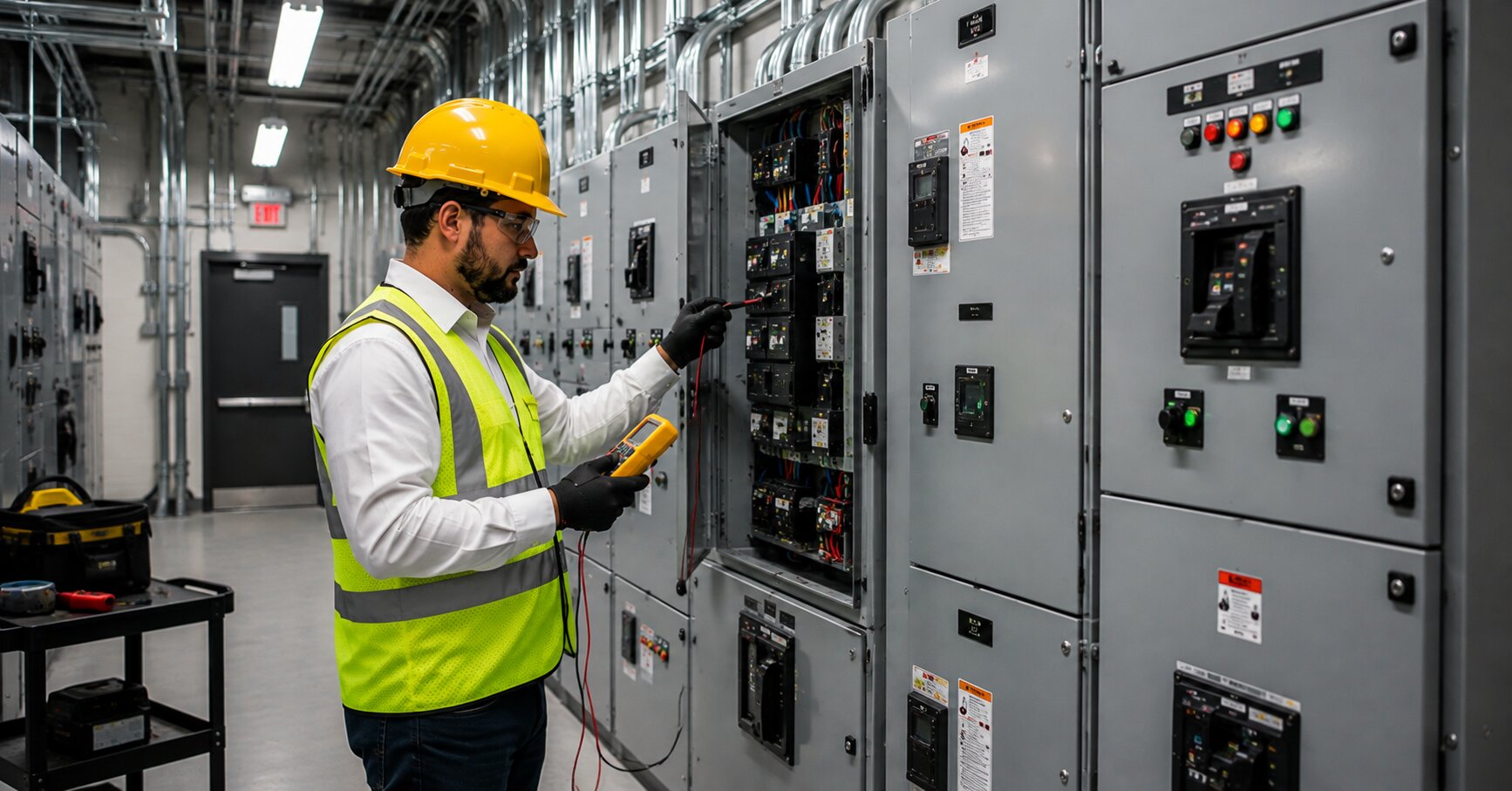
Electrical problems can become expensive long before a complete failure occurs. Loose connections, overloaded circuits, deteriorating components, excessive heat, aging breakers, and changes in electrical demand can gradually affect the reliability of a commercial electrical system without immediately disrupting operations.
AMTEK Construction provides commercial electrical preventative maintenance plans for businesses and facilities throughout Los Angeles and Orange County. Our preventative approach helps property owners, facility managers, and businesses identify developing electrical concerns, maintain critical electrical infrastructure, and reduce the likelihood of unexpected downtime.
Rather than waiting for a breaker failure, overheated connection, equipment interruption, or electrical emergency, preventative maintenance allows businesses to take a more proactive approach to electrical system reliability.
Whether you manage an office building, warehouse, manufacturing facility, retail property, restaurant, medical office, or other commercial facility, a structured electrical maintenance plan can help protect the systems your operations depend on every day.
What Is a Commercial Electrical Preventative Maintenance Plan?
A commercial electrical preventative maintenance plan is a scheduled program for inspecting, testing, evaluating, and maintaining electrical equipment before problems lead to unexpected failures.
Unlike reactive electrical service, which begins after something stops working, preventative maintenance focuses on finding developing concerns while electrical systems are still operational.
Depending on the facility and its electrical infrastructure, a maintenance plan may include evaluations of:
- Electrical panels
- Circuit breakers
- Switchgear
- Distribution equipment
- Disconnects
- Transformers
- Electrical connections
- Conduit and conductors
- Grounding and bonding
- Lighting systems
- Dedicated equipment circuits
- Three-phase electrical systems
- Emergency electrical equipment
- Electrical components supporting HVAC and other building systems
The appropriate maintenance schedule depends on the type of facility, equipment, operating environment, electrical demand, age of the system, and importance of maintaining continuous operations.
Why Preventative Electrical Maintenance Matters for Commercial Properties
Commercial buildings depend on electrical infrastructure for far more than lighting.
Electrical systems may support HVAC equipment, computers, manufacturing machinery, refrigeration, security systems, communications equipment, building automation, elevators, commercial kitchens, medical equipment, and other systems essential to daily operations.
When electrical infrastructure fails, the consequences can extend throughout the facility.
Potential impacts include:
- Operational downtime
- Lost productivity
- Equipment interruptions
- Tenant complaints
- Emergency electrical repairs
- Disrupted customer service
- Production delays
- Building system interruptions
- Unexpected repair expenses
Preventative maintenance helps businesses identify electrical concerns before they develop into larger operational problems.
It also gives facility managers an opportunity to plan repairs and improvements instead of being forced to make decisions during an unexpected electrical failure.
Electrical Problems Often Develop Gradually
Many commercial electrical failures do not begin as dramatic emergencies.
They develop over time.
A connection may gradually loosen. Electrical demand may increase after years of tenant improvements. A breaker may begin operating at elevated temperatures. Equipment additions may place additional demand on an older distribution system.
These conditions can remain unnoticed until the system is placed under heavier demand.
Common developing problems include:
- Loose electrical connections
- Excessive heat
- Aging breakers
- Deteriorating components
- Circuit overloads
- Voltage irregularities
- Phase imbalance
- Damaged conductors
- Panel capacity limitations
- Improper modifications
- Wear caused by environmental conditions
Regular inspections provide an opportunity to identify these conditions before they contribute to more significant failures.
When a recurring or unexplained problem is already occurring, businesses may require Commercial Electrical Troubleshooting to diagnose the underlying cause rather than relying on routine maintenance alone.
What Can Be Included in a Preventative Maintenance Plan?
Commercial electrical systems vary considerably, so preventative maintenance should be tailored to the property rather than treated as a generic checklist.
A maintenance program may incorporate several types of inspection, testing, and documentation.
Visual Electrical Inspections
A visual inspection can reveal conditions that indicate developing electrical problems.
Electricians may inspect for:
- Signs of overheating
- Damaged components
- Loose or deteriorating connections
- Corrosion
- Physical damage
- Improper modifications
- Missing covers
- Equipment deterioration
- Conduit damage
- Abnormal equipment conditions
Visual inspections provide an important starting point for determining whether additional testing or corrective work is appropriate.
Electrical Panel and Breaker Evaluations
Commercial electrical panels distribute power throughout the facility and should be evaluated as part of an ongoing maintenance program.
An evaluation may consider:
- Breaker condition
- Electrical connections
- Panel condition
- Signs of excessive heat
- Circuit loading
- Available capacity
- Equipment age
- Previous modifications
Facilities that have added equipment or undergone repeated renovations may discover that their electrical demand has increased substantially since the original system was installed.
When existing infrastructure can no longer adequately support those demands, a Commercial Panel Upgrade may become part of the property’s long-term electrical planning.
Thermal Imaging
Some electrical problems generate heat before producing obvious operational symptoms.
Thermal imaging can help identify unusual temperature patterns associated with electrical equipment and connections without relying solely on visible signs.
It can be particularly useful when evaluating:
- Electrical panels
- Breakers
- Switchgear
- Connections
- Distribution equipment
- Other energized electrical components
When abnormal heat is identified, additional testing can help determine the cause and appropriate corrective action.
Load and Capacity Evaluations
Commercial buildings rarely maintain exactly the same electrical demand throughout their entire operating life.
Businesses add employees, machinery, HVAC equipment, computer systems, refrigeration, automation, EV charging, and other electrical loads.
Preventative maintenance provides an opportunity to evaluate whether the existing electrical infrastructure continues to match the facility’s operating requirements.
Capacity planning becomes particularly important when a business is preparing for:
- Facility expansion
- New equipment
- Tenant improvements
- Office renovations
- Manufacturing growth
- EV charger installation
- HVAC replacement
- Building modernization
Evaluating these requirements before installation can help prevent capacity problems later.

Which Commercial Properties Benefit from Preventative Maintenance?
Preventative electrical maintenance can benefit virtually any facility where an electrical interruption would affect operations.
Office Buildings
Office buildings rely on electrical infrastructure for lighting, HVAC, computers, server rooms, elevators, access control, security systems, and tenant operations.
For multi-tenant properties, an electrical problem can affect numerous businesses simultaneously.
Warehouses and Distribution Centers
Warehouses may depend on:
- Conveyor equipment
- High-bay lighting
- Forklift charging
- Shipping equipment
- Refrigeration
- Automated inventory systems
- Security equipment
- Building controls
Preventative maintenance helps facility managers monitor the electrical infrastructure supporting these systems.
Manufacturing and Industrial Facilities
Manufacturing facilities frequently operate electrical systems under demanding conditions.
Production machinery, motors, control equipment, three-phase power, and industrial distribution systems make reliability particularly important because an electrical interruption can stop production.
Retail Properties
Retail stores and shopping facilities depend on electrical systems for lighting, point-of-sale technology, security systems, refrigeration, signage, HVAC, and other customer-facing operations.
Maintenance can help reduce the likelihood of unexpected electrical problems during operating hours.
Restaurants and Food-Service Facilities
Restaurants often operate multiple high-demand systems simultaneously, including:
- Cooking equipment
- Refrigeration
- Freezers
- Ventilation
- HVAC
- Lighting
- Beverage equipment
- Point-of-sale systems
Maintaining the electrical infrastructure supporting these systems can help reduce unexpected operational interruptions.
Medical and Healthcare Facilities
Medical offices and healthcare facilities rely on dependable electrical infrastructure to support lighting, technology, specialized equipment, refrigeration, HVAC, communications, and other building systems.
Preventative electrical planning becomes particularly important when facilities add new equipment or renovate existing spaces.
How AMTEK Builds a Commercial Electrical Preventative Maintenance Plan
An effective preventative maintenance program should reflect how a commercial property actually operates. A warehouse running multiple shifts has different electrical demands than an office building, restaurant, medical facility, or manufacturing plant.
AMTEK Construction evaluates the facility, electrical infrastructure, operating requirements, equipment demands, and maintenance history before developing an appropriate preventative maintenance approach.
The process may include the following steps.
Evaluate Existing Electrical Infrastructure
The first step is understanding the current condition and configuration of the electrical system.
Depending on the property, this may involve reviewing:
- Main electrical service
- Electrical panels
- Distribution panels
- Switchgear
- Transformers
- Disconnects
- Breakers
- Feeders
- Grounding and bonding
- Three-phase systems
- Dedicated equipment circuits
- Electrical rooms
The evaluation also provides an opportunity to identify equipment that may require closer monitoring because of age, condition, electrical demand, or importance to business operations.
Identify Critical Electrical Equipment
Not every electrical component has the same impact on operations.
A failure affecting a conference room circuit is very different from a failure affecting production machinery, refrigeration, server infrastructure, or an entire distribution panel.
A preventative maintenance plan can prioritize systems that are particularly important to continued operations, including:
- Main electrical distribution
- Production equipment
- HVAC electrical systems
- Commercial refrigeration
- Server and data infrastructure
- Emergency systems
- Building controls
- Security equipment
- Specialized machinery
- Critical tenant equipment
Understanding these priorities helps maintenance efforts focus on electrical systems where unexpected failures could have the greatest operational impact.
Establish an Appropriate Inspection Schedule
Preventative electrical maintenance is not necessarily a one-time inspection.
The appropriate frequency depends on factors such as:
- Facility type
- Operating hours
- Equipment age
- Electrical load
- Environmental conditions
- Previous electrical problems
- Equipment criticality
- Facility expansion
- Recent tenant improvements
Facilities operating continuously or under demanding electrical loads may require a different maintenance approach than properties with lighter electrical usage.
The objective is to establish a practical schedule based on the property’s actual conditions rather than applying the same maintenance frequency to every commercial building.
Testing and Diagnostics Can Reveal Problems That Are Easy to Miss
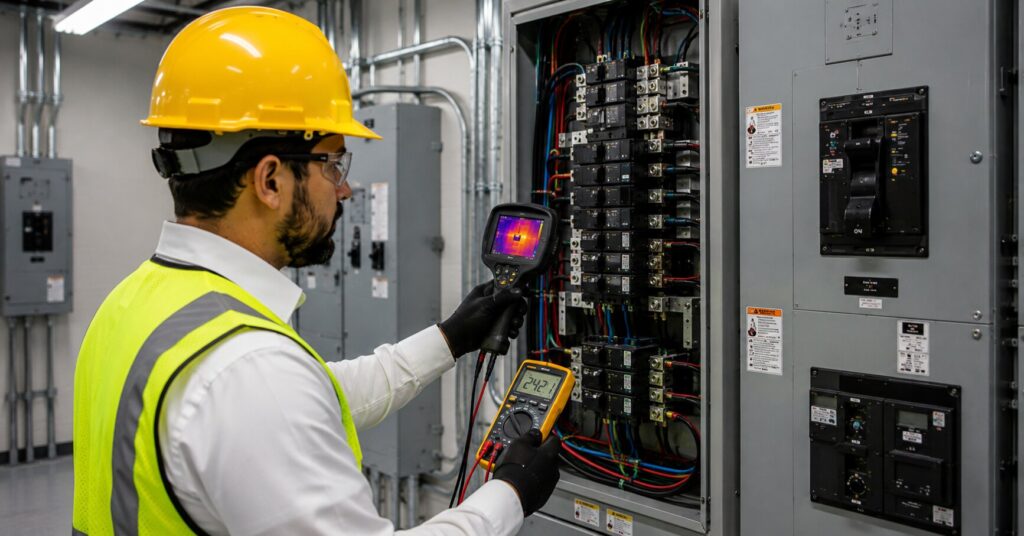
Visual inspections are valuable, but not every developing electrical problem is visible.
Diagnostic testing can provide additional information about how electrical equipment performs under operating conditions.
Depending on the facility and equipment, preventative evaluations may involve:
- Voltage measurements
- Current measurements
- Load testing
- Phase balance evaluations
- Thermal imaging
- Continuity testing
- Grounding evaluations
- Insulation resistance testing
- Power quality analysis
- Circuit tracing
The purpose of testing is not simply to collect measurements. The information helps identify abnormal conditions and determine whether additional investigation, repair, or monitoring is appropriate.
When diagnostic testing reveals an unexplained electrical condition, AMTEK can perform Commercial Electrical Troubleshooting to isolate the underlying cause.
Preventative Maintenance Can Help Reduce Unplanned Downtime
For many commercial facilities, electrical downtime is more expensive than the electrical repair itself.
An unexpected failure can interrupt:
- Employee productivity
- Manufacturing
- Customer transactions
- Building access
- Refrigeration
- Communications
- HVAC operation
- Security systems
- Technology infrastructure
- Tenant operations
Emergency repairs may also require businesses to make important decisions quickly while operations are already disrupted.
Preventative maintenance provides an opportunity to identify developing concerns earlier and, when possible, schedule corrective work around normal business operations.
For example, instead of discovering a deteriorating electrical component after it fails during business hours, an inspection may identify the condition early enough for repairs to be coordinated during planned downtime.
Maintenance Documentation Helps Businesses Plan Ahead
One of the valuable aspects of an ongoing preventative maintenance program is documentation.
Maintaining records of electrical conditions, inspections, testing, repairs, and recommendations helps facility managers better understand how their electrical infrastructure changes over time.
Maintenance documentation may include:
- Equipment inspected
- Conditions observed
- Test results
- Thermal imaging findings
- Identified deficiencies
- Repairs completed
- Recommended corrective actions
- Equipment requiring monitoring
- Potential future upgrades
This creates a useful electrical maintenance history for the property.
Rather than treating every electrical service call as an isolated event, facility managers can use previous findings to identify recurring problems, track aging equipment, and plan future capital improvements.
Identifying Aging Electrical Infrastructure Before It Fails
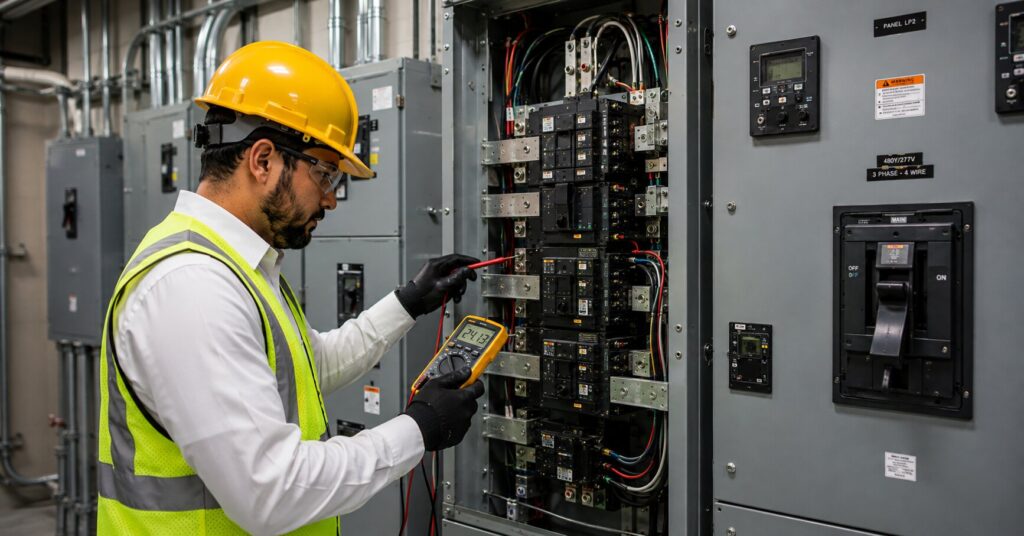
Commercial electrical equipment has a finite service life, and deterioration does not always produce immediate warning signs.
Older properties may contain electrical infrastructure that has operated for decades while undergoing multiple renovations, tenant improvements, and equipment additions.
Preventative maintenance can help identify concerns involving:
- Aging breakers
- Older electrical panels
- Deteriorating insulation
- Obsolete components
- Heat-damaged equipment
- Corroded connections
- Older switchgear
- Limited electrical capacity
- Previous electrical modifications
Discovering aging infrastructure does not automatically mean everything must be replaced.
Instead, an evaluation helps businesses understand which equipment remains serviceable, which components should be monitored, and which improvements should be prioritized.
When an existing panel or distribution system can no longer adequately support a facility’s electrical requirements, businesses can consider Commercial Panel Upgrades as part of a planned infrastructure improvement rather than waiting for capacity limitations to disrupt operations.
Preventative Maintenance After Tenant Improvements and Facility Changes
Commercial electrical systems frequently change over the life of a building.
New tenants, renovations, equipment installations, expansions, and changes in building use can alter electrical demand considerably.
After significant changes, it can be valuable to reassess the electrical system.
Examples include:
- New office buildouts
- Additional workstations
- Restaurant equipment installations
- Warehouse automation
- Manufacturing equipment additions
- Medical equipment installations
- HVAC replacements
- Server room expansions
- EV charger installations
- Facility expansions
A building that had adequate electrical capacity several years ago may operate very differently today.
Businesses completing renovations can work with a Commercial Tenant Improvement Electrical Contractor to properly integrate new electrical systems while considering how those improvements affect the facility’s overall electrical infrastructure.
Preventative Maintenance vs. Reactive Electrical Repair
Both preventative maintenance and electrical repair have important roles, but they address electrical systems at different stages.
Reactive electrical repair begins when a problem has already occurred.
Examples include:
- A breaker repeatedly trips
- Equipment loses power
- Part of a building experiences an outage
- An electrical component fails
- A panel begins overheating
- Lighting circuits stop operating
Preventative maintenance occurs before a known failure interrupts operations.
It focuses on inspecting, testing, monitoring, and maintaining electrical infrastructure so developing concerns can be addressed proactively.
A strong commercial electrical strategy uses both approaches appropriately: troubleshoot problems when they occur while maintaining the broader electrical system to reduce avoidable failures.
Preventative Maintenance Supports Future Electrical Planning
Maintenance inspections can also provide useful information for future construction and capital planning.
During evaluations, businesses may discover that electrical systems are approaching capacity or that older infrastructure should eventually be modernized.
Knowing this in advance allows property owners and facility managers to budget and plan instead of waiting for an emergency.
Future electrical planning may involve:
- Panel upgrades
- Electrical service upgrades
- Additional distribution equipment
- New dedicated circuits
- Three-phase power improvements
- EV charging infrastructure
- Equipment expansions
- Building renovations
- Tenant improvements
- Facility expansions
For commercial properties throughout Southern California, experienced electrical contractors Los Angeles and electrical contractors Orange County can help evaluate how current electrical infrastructure aligns with future facility requirements.
The goal is not to recommend upgrades simply because equipment is older. It is to give businesses enough information to make informed decisions about reliability, capacity, maintenance, and future investment.
Why Businesses Choose AMTEK Construction for Preventative Electrical Maintenance
Commercial preventative maintenance requires an understanding of how electrical infrastructure affects the operation of the entire facility.
AMTEK Construction works with commercial properties throughout Los Angeles and Orange County to evaluate electrical systems, identify developing concerns, troubleshoot problems, and plan appropriate improvements.
Businesses choose AMTEK Construction for:
- Commercial electrical experience
- Thorough system evaluations
- Practical maintenance recommendations
- Advanced electrical diagnostics
- Clear communication
- Code-compliant electrical work
- Long-term infrastructure planning
- Solutions designed around facility operations
Our objective is to help businesses maintain dependable electrical infrastructure while making informed decisions about repairs, maintenance, capacity, and future improvements.
Related Commercial Electrical Services
Preventative maintenance is one part of maintaining dependable commercial electrical infrastructure. When inspections identify existing problems, aging equipment, capacity limitations, or changing facility requirements, additional electrical services may be appropriate.
AMTEK Construction provides related commercial electrical services throughout Los Angeles and Orange County, including:
- Commercial Electrical Troubleshooting – Diagnose recurring breaker trips, power interruptions, voltage problems, equipment failures, and other electrical issues.
- Commercial Panel Upgrades – Upgrade aging or insufficient electrical panels to accommodate changing electrical demands and future growth.
- Commercial Tenant Improvement Electrical Contractor – Electrical planning and installation for office buildouts, renovations, commercial tenant improvements, and facility changes.
- Commercial Electrical Contractor Los Angeles – Commercial electrical services for businesses and facilities throughout Los Angeles.
- Commercial Electrical Contractor Orange County – Commercial electrical services for Orange County properties, businesses, and facility managers.
- Electrical Contractors Los Angeles – Electrical contracting services for projects throughout Los Angeles.
- Electrical Contractors Orange County – Electrical contracting services for commercial properties throughout Orange County.
A preventative maintenance evaluation can help determine whether an electrical concern requires monitoring, troubleshooting, repair, or a larger infrastructure improvement.
Frequently Asked Questions About Commercial Electrical Preventative Maintenance
What is commercial electrical preventative maintenance?
Commercial electrical preventative maintenance involves scheduled inspection, testing, evaluation, and maintenance of electrical systems before equipment failures or operational problems occur.
The goal is to identify developing concerns early, maintain dependable electrical infrastructure, and reduce the likelihood of unexpected electrical downtime.
What equipment should be included in an electrical preventative maintenance plan?
The specific equipment depends on the facility, but a commercial maintenance plan may include:
- Electrical panels
- Circuit breakers
- Switchgear
- Transformers
- Disconnects
- Distribution equipment
- Electrical connections
- Grounding and bonding systems
- Three-phase electrical systems
- Dedicated equipment circuits
- Electrical equipment supporting critical building systems
Higher-priority equipment may receive additional attention based on its importance to facility operations.
How often should commercial electrical systems receive preventative maintenance?
There is no single schedule appropriate for every commercial property.
Maintenance frequency should account for the facility type, operating hours, electrical loads, equipment age, environmental conditions, manufacturer recommendations, previous electrical problems, and the importance of the equipment to business operations.
AMTEK Construction can evaluate these factors when developing an appropriate preventative maintenance plan.
Can preventative maintenance help prevent electrical outages?
Preventative maintenance can reduce the likelihood of some unexpected failures by identifying conditions such as loose connections, abnormal heat, deteriorating components, overloaded circuits, and aging electrical equipment before they cause larger problems.
Not every electrical outage can be prevented, but proactive maintenance gives businesses an opportunity to address many developing concerns before operations are affected.
What is the difference between preventative maintenance and electrical troubleshooting?
Preventative maintenance evaluates electrical infrastructure before a known failure occurs.
Commercial Electrical Troubleshooting is used when a specific problem already exists, such as recurring breaker trips, intermittent power, voltage irregularities, equipment failures, or unexplained electrical behavior.
Both services can work together as part of a broader commercial electrical maintenance strategy.
Can thermal imaging be used during preventative electrical maintenance?
Yes. Thermal imaging can help identify abnormal temperature patterns in electrical panels, breakers, connections, switchgear, and other electrical equipment.
When unusual heat patterns are detected, additional testing can help determine whether corrective action is appropriate.
Can preventative maintenance identify an overloaded electrical panel?
Yes. Evaluating circuit loads, equipment demands, panel condition, and available electrical capacity can identify situations where an existing panel may no longer adequately support the facility.
When additional capacity is required, a planned Commercial Panel Upgrade may provide a better long-term solution than continually working around an undersized electrical system.
Should electrical systems be evaluated after a commercial renovation?
Yes. Renovations, tenant improvements, equipment additions, HVAC upgrades, EV charging installations, and other facility changes can alter electrical demand.
Evaluating the system after significant changes helps determine whether the existing electrical infrastructure continues to meet the facility’s operational requirements.
What types of businesses benefit from preventative electrical maintenance?
Preventative maintenance can benefit many commercial and industrial properties, including:
- Office buildings
- Warehouses
- Distribution centers
- Manufacturing facilities
- Retail properties
- Restaurants
- Medical offices
- Healthcare facilities
- Educational facilities
- Mixed-use commercial properties
Facilities where an electrical failure would significantly disrupt operations may receive particularly strong value from an organized maintenance program.
Why should businesses have a documented preventative maintenance plan?
Documentation gives property owners and facility managers a record of inspections, findings, testing, repairs, and recommendations.
Over time, these records can help identify recurring issues, track equipment condition, prioritize repairs, and plan future electrical investments more effectively.
Partner with AMTEK Construction
Reliable electrical infrastructure is essential to keeping a commercial facility operating efficiently. Waiting until equipment fails can lead to unexpected downtime, emergency repairs, interrupted operations, and unplanned expenses.
AMTEK Construction provides commercial electrical preventative maintenance services throughout Los Angeles and Orange County designed around the needs of each facility. We evaluate electrical infrastructure, identify developing concerns, perform diagnostic testing, and help businesses establish practical maintenance priorities.
Whether you manage an office building, warehouse, manufacturing facility, restaurant, retail property, healthcare facility, or another commercial property, our team can help you take a proactive approach to electrical system reliability.
Contact AMTEK Construction today to discuss a commercial electrical preventative maintenance plan for your facility.