Category Archives: Info Articles

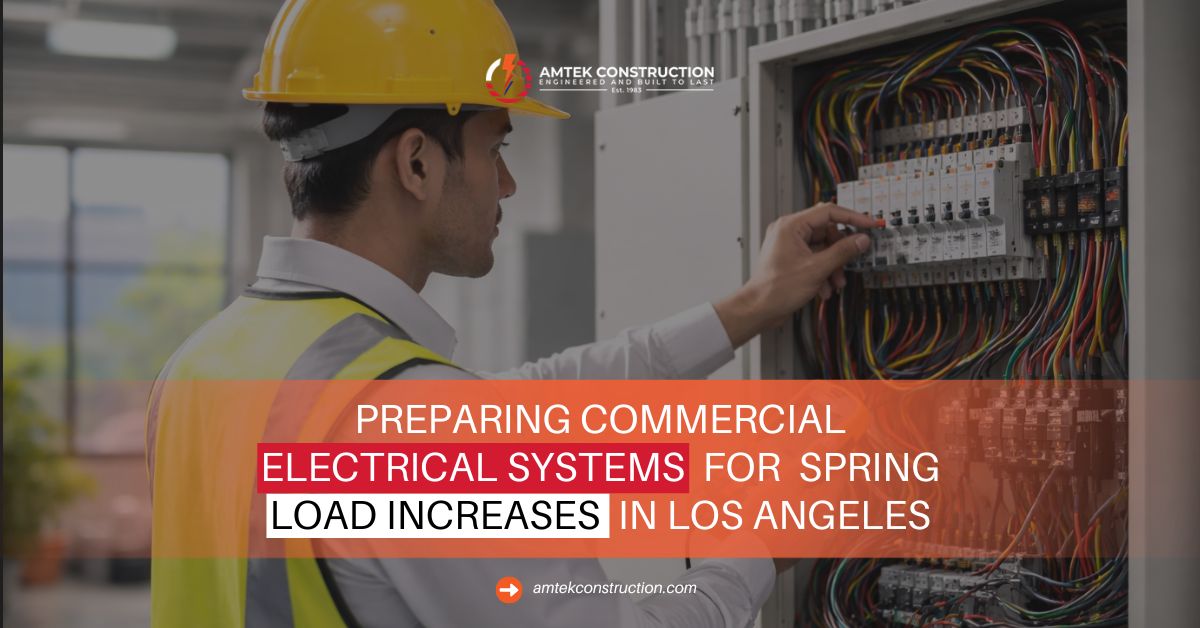
Preparing Commercial Electrical Systems for Spring Load Increases in Los Angeles

As temperatures begin to rise in Southern California, commercial buildings across Los Angeles quietly enter a new phase of electrical demand. Spring may not bring extreme heat yet, but HVAC systems start cycling more frequently, lighting patterns shift, and operational loads normalize after winter fluctuations.

For many properties, this is when hidden electrical weaknesses begin to surface.

Experienced electrical contractors Los Angeles businesses rely on consistently recommend preparing electrical systems before peak summer demand arrives. Spring is not just a seasonal transition — it is a critical preparation window.

Below is what commercial property owners and facility managers should address now to avoid costly disruptions later.

Why Spring Load Increases Matter in Los Angeles

Los Angeles does not experience severe winters, but seasonal demand shifts still impact electrical infrastructure. Spring introduces:

  • Increased morning HVAC cycling
  • Extended operating hours as businesses ramp up activity
  • Cooling systems activating earlier in the day
  • Equipment returning to full utilization

These incremental load changes may seem minor individually. Combined, they can stress panels, circuits, and distribution systems already operating near capacity.

This pattern often mirrors issues discussed in
Electrical Problems That Appear After Peak Season, where stressed systems begin to show strain once demand stabilizes.

Evaluate Panel Capacity Before Summer Demand Hits

One of the most important spring steps is verifying that electrical panels have sufficient available capacity.

Many commercial buildings have added:

  • Tenant improvements
  • Technology upgrades
  • Lighting retrofits
  • EV infrastructure
  • Additional HVAC equipment

Over time, these additions reduce available headroom. Without updated load calculations, panels may already be close to their limits.

This issue is frequently uncovered during
Why Many Commercial Panels Fail Inspection — Even When They Seem “Fine”, where panels appear functional but fail under detailed review.

A spring load evaluation ensures systems are ready before sustained summer heat increases demand further.

Address Load Imbalance Before It Drives Demand Charges

Spring is also the ideal time to assess phase and circuit balance. Uneven electrical distribution can increase energy waste and contribute to higher demand charges.

Unbalanced systems often result from:

  • Gradual equipment additions
  • Poor circuit reassignment
  • Lack of coordinated load planning

This connects directly to insights outlined in Electrical Load Balancing: The Overlooked Fix for High Commercial Energy Bills, where uneven load distribution silently increases operating costs.

Correcting imbalance before summer demand peaks helps reduce stress on transformers, feeders, and panels.

Inspect HVAC Electrical Infrastructure

HVAC systems are among the largest electrical loads in Los Angeles commercial buildings. Spring start-up cycles often expose weaknesses such as:

  • Aging contactors and relays
  • Loose electrical connections
  • Undersized circuits
  • Inconsistent control sequencing

A proactive electrical inspection ensures HVAC systems are not only mechanically functional, but electrically stable and efficient.

These preventative evaluations align closely with the strategies outlined in Year-End Electrical Inspections: What Commercial Buildings Should Address Before 2026, where system-wide reviews prevent seasonal strain from escalating into failures.

Review Documentation and Compliance Before Peak Season

Spring is also an ideal time to confirm that panel schedules, load records, and system documentation are current.

Outdated documentation can delay upgrades, complicate inspections, and increase risk during emergencies. This concern is explored further in Why Electrical Documentation Matters More Than Businesses Realize, where missing records often lead to compliance issues during high-demand periods.

Accurate documentation ensures faster diagnostics and smoother project approvals.

Plan for Growth and Infrastructure Expansion

For many Los Angeles properties, spring is budgeting season. It’s the right time to evaluate:

  • Upcoming tenant improvements
  • EV charging expansion
  • Service upgrades
  • Panel replacements
  • Energy efficiency investments

Strategic planning before summer helps avoid rushed installations under peak demand pressure.

This proactive approach supports long-term strategies discussed in Planning Commercial Electrical Upgrades for 2026: What Orange County Businesses Should Budget for Now, which highlights the value of early infrastructure planning.

Why Spring Is the Smartest Time to Act

Waiting until summer heat peaks increases risk, costs, and scheduling constraints. Spring provides:

  • Scheduling flexibility
  • Time for corrective upgrades
  • Reduced emergency service likelihood
  • Opportunity for strategic budgeting

Commercial properties that address electrical load readiness now enter summer with confidence instead of uncertainty.

Final Thoughts

Spring electrical preparation is not about reacting to failures — it is about preventing them.

In Los Angeles commercial buildings, rising HVAC demand, incremental load increases, and aging infrastructure can quietly push systems toward their limits. Early evaluation allows businesses to correct issues before they disrupt operations or inflate energy costs.

Preparing now protects performance later.

Schedule a Spring Electrical Evaluation with AMTEK Construction

AMTEK Construction works with commercial property owners and facility managers throughout Los Angeles to prepare electrical systems for seasonal load increases. Our team evaluates panel capacity, load balance, HVAC electrical stability, grounding systems, and documentation to ensure buildings are ready for rising demand.

If your commercial property has not undergone a recent load evaluation or infrastructure review, now is the ideal time to act.

Contact AMTEK Construction today to schedule a spring commercial electrical assessment and ensure your building is ready for the season ahead.
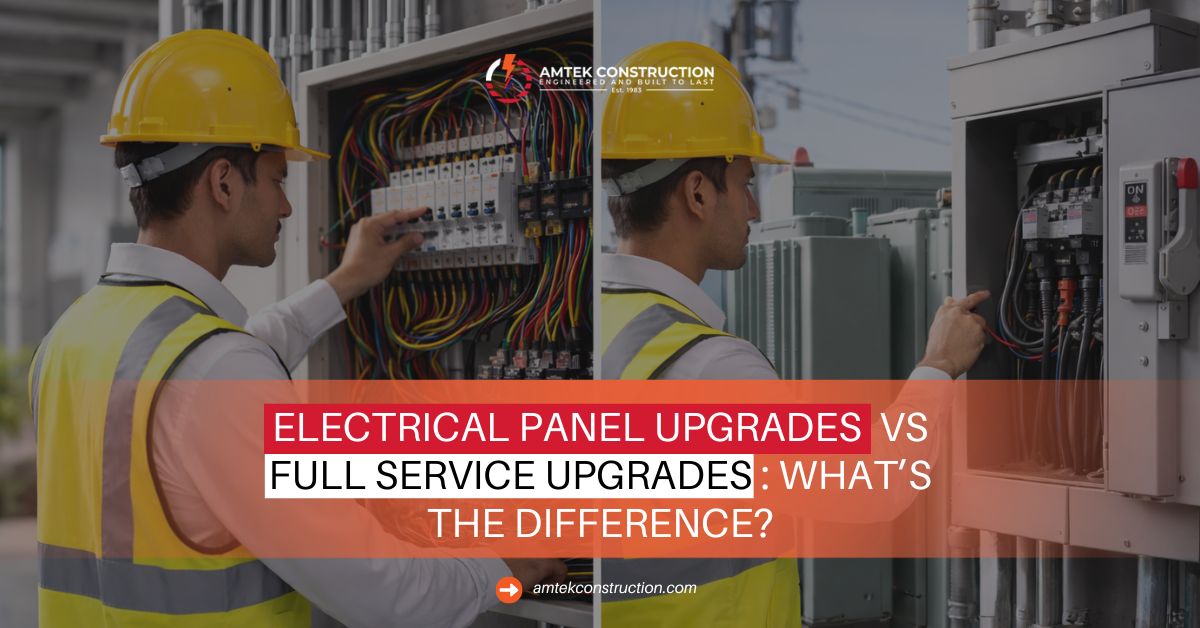
Electrical Panel Upgrades vs Full Service Upgrades: What’s the Difference?

When commercial buildings begin experiencing electrical capacity issues, one of the first questions property owners ask is:

“Do we need a panel upgrade — or a full service upgrade?”

The two are often confused, but they are not the same.

Experienced electrical contractors Orange County businesses rely on evaluate both scenarios carefully because choosing the wrong approach can lead to unnecessary costs — or worse, continued capacity problems.

Below is a clear breakdown of the difference and how to determine what your commercial property actually needs.

What Is an Electrical Panel Upgrade?

An electrical panel upgrade involves replacing or expanding the main distribution panel while keeping the existing utility service size the same.

This solution is typically appropriate when:

  • The existing panel is outdated or obsolete
  • Breaker space is limited
  • The panel no longer meets current code
  • Minor load increases are needed
  • Labeling, organization, or compliance issues exist

Panel upgrades are often identified during evaluations like
Why Many Commercial Panels Fail Inspection — Even When They Seem “Fine”, where panels appear functional but lack compliance or capacity headroom.

A panel upgrade improves safety, organization, and breaker capacity — but it does not increase the total amount of power available from the utility.

What Is a Full Electrical Service Upgrade?

A full service upgrade increases the total electrical capacity supplied to the building. This often involves:

  • Upgrading service conductors
  • Replacing the main disconnect
  • Increasing transformer capacity (if required)
  • Coordinating with the utility company
  • Replacing or expanding panels

Service upgrades are necessary when the building’s total electrical demand exceeds what the current utility feed can safely support.

This scenario is common when commercial properties add:

  • Large HVAC systems
  • EV charging infrastructure
  • High-load manufacturing equipment
  • Expanded tenant improvements
  • Major lighting conversions

Capacity limitations frequently surface during reviews such as
Preparing Commercial Electrical Systems for Spring Load Increases in Los Angeles, where seasonal load shifts reveal underlying infrastructure constraints.

The Key Difference: Distribution vs Capacity

The simplest way to understand the difference:

  • Panel Upgrade = Improves distribution inside the building
  • Service Upgrade = Increases total power available to the building

A panel upgrade reorganizes and modernizes your system.
A service upgrade expands what the building can handle overall.

Choosing incorrectly can result in spending money on a new panel — only to later discover the utility service still limits expansion.

When a Panel Upgrade Is Enough

For many Orange County commercial properties, a panel upgrade is sufficient if:

  • The service amperage is adequate
  • Load calculations show available capacity
  • The panel is outdated but not overloaded
  • Code compliance or labeling is the primary concern

In these cases, licensed electrical contractor Orange County professionals can replace the panel, improve labeling, and correct deficiencies without modifying utility infrastructure.

When a Full Service Upgrade Is Required

A service upgrade becomes necessary when:

  • The building consistently operates near maximum load
  • New equipment would exceed available capacity
  • Demand charges indicate stress on the system
  • Utility coordination is required for expansion
  • Transformer limitations exist

Load balancing issues, such as those discussed in Electrical Load Balancing: The Overlooked Fix for High Commercial Energy Bills, may sometimes delay the need for a full service upgrade — but only if imbalance is the primary issue.

If total demand exceeds available service, redistribution alone will not solve the problem.

Why Proper Evaluation Matters

Many commercial property owners assume more breakers mean more power. That is not always true.

Before recommending either upgrade, experienced electrical contractors in Orange County CA perform:

  • Detailed load calculations
  • Panel capacity assessments
  • Phase balance evaluations
  • Utility service verification
  • Future expansion planning

Without these steps, upgrades can be reactive instead of strategic.

Planning for Future Growth

Even if a full service upgrade is not immediately required, smart commercial property owners consider:

  • Upcoming tenant improvements
  • EV charging expansion
  • HVAC modernization
  • Long-term energy goals

This forward-thinking approach aligns with strategies outlined in Planning Commercial Electrical Upgrades for 2026: What Orange County Businesses Should Budget for Now, where proactive planning prevents emergency infrastructure decisions.

Final Thoughts

Not every commercial electrical issue requires a full service upgrade — but not every problem can be solved with a panel replacement either.

Understanding the difference between distribution improvements and true capacity expansion allows Orange County businesses to make informed, cost-effective decisions.

The right solution starts with accurate evaluation, not assumption.

Schedule a Capacity Evaluation with AMTEK Construction

AMTEK Construction works with commercial property owners and facility managers throughout Orange County to determine whether a panel upgrade or full service upgrade is appropriate.

Our team evaluates load calculations, panel condition, phase balance, and utility capacity to ensure your electrical system is safe, compliant, and prepared for future growth.

If your building is expanding, adding equipment, or experiencing capacity concerns, now is the time to evaluate your infrastructure properly.

Contact AMTEK Construction today to schedule a commercial electrical capacity assessment and ensure your building is built to support long-term performance.

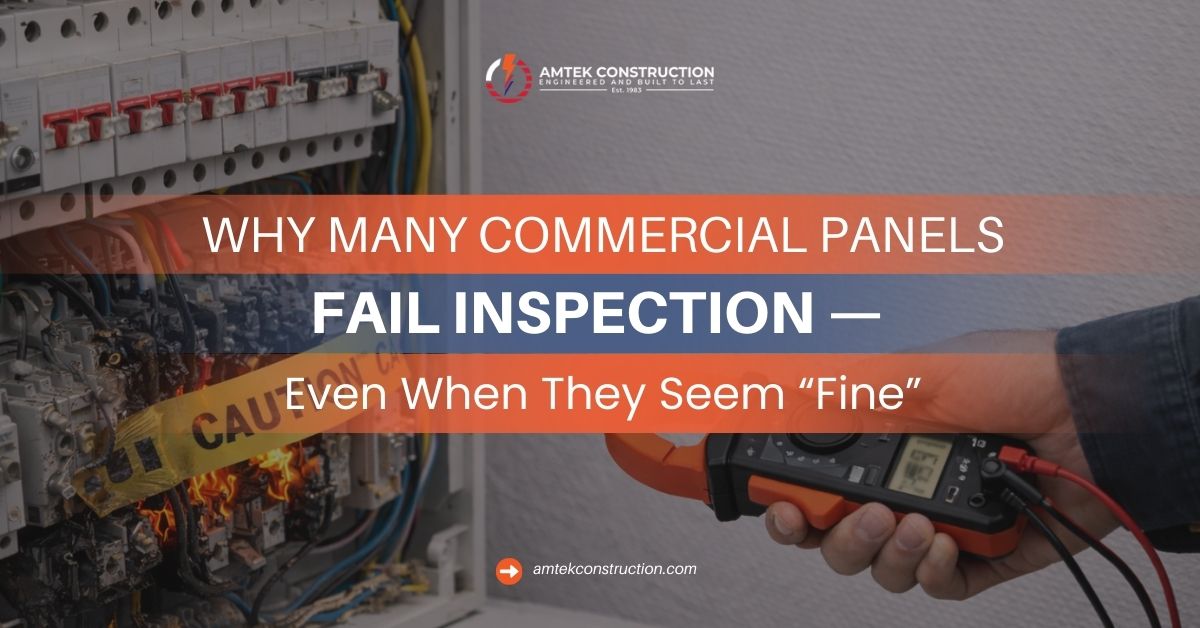
Why Many Commercial Panels Fail Inspection — Even When They Seem “Fine”

At a glance, a commercial electrical panel can look perfectly fine. Breakers aren’t tripping. Power is stable. Daily operations continue without interruption. Yet when inspections occur, many Orange County businesses are surprised to learn their panels fail — sometimes requiring immediate corrections.

This disconnect is common. Experienced electrical contractors Orange County businesses rely on frequently see panels that “work” but don’t meet current safety, capacity, or code requirements. Electrical inspections are not just about whether power flows — they’re about whether the system is safe, compliant, and built to support ongoing operations.

Below are the most common reasons commercial panels fail inspection, even when no obvious problems are present.

Panels That Were Modified Over Time Without Re-Evaluation

Many commercial buildings evolve gradually. Equipment is added. Tenants change. New lighting, HVAC systems, or technology are installed. Often, these changes happen without reassessing whether the electrical panel can safely support the added load.

Common issues inspectors find include:

  • Additional breakers added without updated load calculations
  • Circuits repurposed beyond their original design
  • Panels operating near or beyond capacity
  • No documentation showing capacity planning

This issue closely relates to what’s discussed in Planning Commercial Electrical Upgrades for 2026: What Orange County Businesses Should Budget for Now, where incremental upgrades over time lead to hidden capacity problems.

A panel may still function day to day, but inspections focus on whether it can safely handle current and future demand.

Improper or Missing Panel Labeling

Panel labeling is one of the most frequent reasons commercial panels fail inspection. Labels that are outdated, unclear, or missing altogether create serious safety risks.

Inspection failures often stem from:

  • Circuit labels that don’t match actual loads
  • Handwritten or faded labeling
  • Panels with undocumented modifications
  • Incomplete or inaccurate panel schedules

This is why documentation plays such a critical role, as outlined in
Why Electrical Documentation Matters More Than Businesses Realize, where missing records directly impact inspection outcomes.

Clear labeling isn’t a formality — it allows faster response during emergencies and ensures technicians can work safely without guesswork.

Breakers That Are Technically Functional but Non-Compliant

Breakers can still trip and reset while being unsuitable for the application they’re serving. Inspectors evaluate whether breakers are properly rated, compatible with the panel, and correctly sized for the connected loads.

Common breaker-related issues include:

  • Incorrect breaker sizing
  • Mixed or incompatible breaker types
  • Evidence of overheating or wear
  • Aging breakers that no longer meet current standards

These problems often appear during comprehensive evaluations such as those discussed in Year-End Electrical Inspections: What Commercial Buildings Should Address Before 2026, where deeper system reviews uncover issues that routine maintenance misses.

Grounding and Bonding Deficiencies

Grounding and bonding are critical for protecting people, equipment, and the building itself. Unfortunately, these systems are frequently overlooked during renovations or expansions.

Inspection failures related to grounding include:

  • Incomplete bonding between panels and conduits
  • Improper grounding electrode connections
  • Missing bonding jumpers on metallic systems
  • Grounding that doesn’t meet current NEC requirements

Because grounding issues rarely cause immediate outages, they’re easy to miss — until an inspection or incident occurs.

Panels That No Longer Meet Current Code Standards

Electrical codes change over time to reflect new technology, safety data, and energy usage patterns. Panels installed years ago may no longer meet today’s requirements, even if they were compliant when first installed.

Inspectors commonly flag:

  • Obsolete panel designs
  • Insufficient working clearance
  • Inadequate fault protection
  • Lack of capacity for modern loads

This is particularly common in older Orange County commercial buildings that have not undergone recent evaluation by a licensed electrical contractor Orange County businesses depend on.

Lack of Documentation and Inspection Records

Even well-maintained panels can fail inspection if documentation is missing. Inspectors expect to see records that confirm upgrades, testing, and maintenance were performed correctly.

Missing documentation often includes:

  • As-built drawings
  • Load calculations
  • Records of previous modifications
  • Maintenance or inspection logs

Without proper records, inspectors have no way to verify compliance — and failure becomes more likely.

Final Thoughts

Commercial electrical panels don’t fail inspections because they stop working — they fail because they no longer meet the standards required to operate safely and reliably.

For Orange County businesses, regular evaluations and proactive planning help ensure electrical panels aren’t just functional, but compliant, documented, and prepared for future demand.

Schedule a Commercial Panel Inspection with AMTEK Construction

AMTEK Construction works with commercial property owners, facility managers, and business operators throughout Orange County to identify panel issues before inspections occur. Our team evaluates capacity, labeling, breakers, grounding, and documentation to ensure your electrical systems are safe, compliant, and prepared for future demand.

If your building has undergone electrical changes, added equipment, or hasn’t had a recent panel evaluation, now is the right time to act.

Contact AMTEK Construction today to schedule a commercial electrical panel inspection and ensure your building is inspection-ready and compliant.

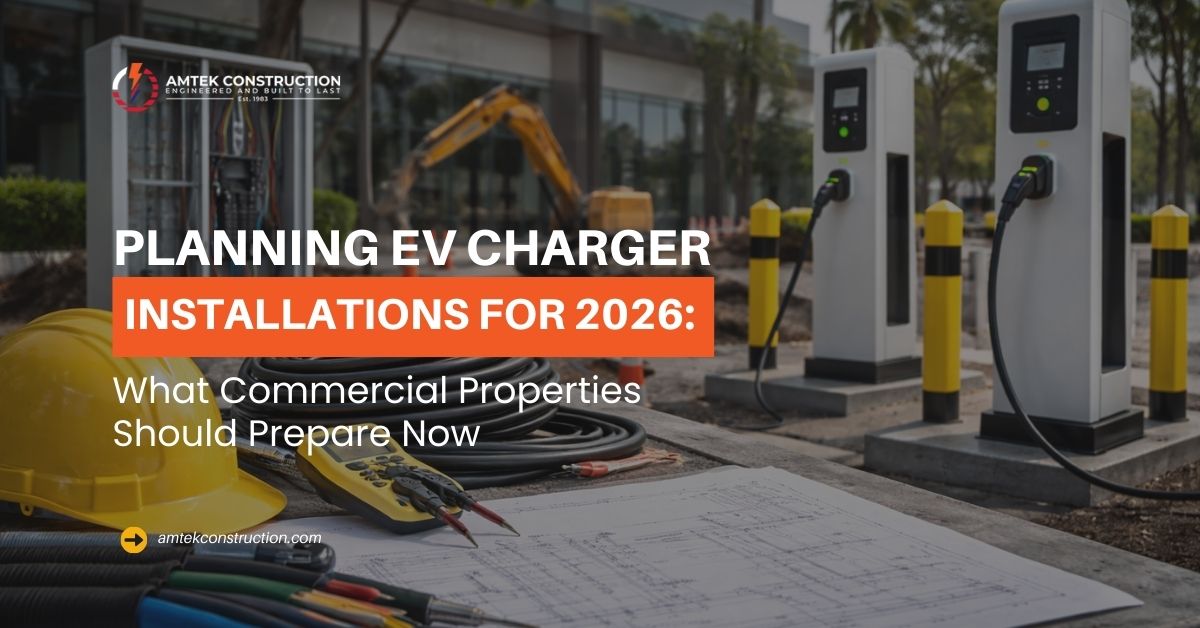
Planning EV Charger Installations for 2026: What Commercial Properties Should Prepare Now

As electric vehicle adoption continues to accelerate across Southern California, EV charging infrastructure is quickly becoming a necessity — not a luxury — for commercial properties. For businesses in Orange County, 2026 is shaping up to be a pivotal year for EV charger planning, driven by tenant expectations, employee demand, and long-term sustainability goals.

Experienced electrical contractors Orange County recommend that commercial property owners begin preparing now to avoid rushed installations, costly upgrades, and compliance issues later.

Why 2026 Is a Key Year for EV Charger Planning

EV adoption is increasing across office buildings, retail centers, industrial facilities, and mixed-use developments. Even properties that don’t plan to install chargers immediately are under growing pressure to ensure their electrical infrastructure is EV-ready.

Early planning helps Orange County businesses:

  • Reduce future installation costs
  • Avoid electrical capacity bottlenecks
  • Minimize tenant and operational disruption
  • Stay compliant with evolving state and local codes

Many of these readiness gaps are first identified during Year-End Electrical Inspections: What Commercial Buildings Should Address Before 2026, making inspections a critical first step in EV charger planning.

Evaluating Electrical Panel Capacity

One of the most important steps in preparing for EV chargers is determining whether your existing electrical panels can support additional load.

Key considerations include:

  • Available panel capacity
  • Age and condition of existing panels
  • Space for new breakers
  • Long-term expansion needs

Older commercial buildings often lack the capacity needed for EV chargers without upgrades. This challenge is explored in
Planning Commercial Electrical Upgrades for 2026: What Orange County Businesses Should Budget for Now, which highlights how proactive upgrades prevent emergency retrofits.

Licensed electrical contractors in Orange County CA can perform detailed load calculations to identify exactly what upgrades are required.

Circuit Planning and Load Management

EV chargers require dedicated circuits and precise load balancing. Without proper planning, installations can cause breaker trips, power disruptions, and failed inspections.

Commercial properties should plan for:

  • Dedicated EV charging circuits
  • Balanced load distribution across panels
  • Demand management strategies
  • Scalability for future charger expansion

Load-related issues are a common cause of electrical failures during high-demand periods, as discussed in Common Electrical Failures Businesses Experience During the Holidays — and How to Prevent Them.

Parking Lot and Conduit Infrastructure

Electrical readiness goes beyond panels and circuits — parking lot infrastructure plays a major role in EV charger success.

Preparation steps include:

  • Conduit pathways from panels to parking areas
  • Trenching or surface-mounted conduit planning
  • Weather-rated enclosures and equipment
  • ADA-compliant charger placement

Installing conduit in advance — even before chargers are added — significantly reduces future costs and disruption.

Code Compliance and Permitting Considerations

EV charger installations must comply with California electrical codes, Orange County permitting requirements, and local utility standards. Inspectors increasingly expect commercial properties to demonstrate EV-ready infrastructure, even when chargers are planned for future phases.

Key compliance considerations include:

  • Proper grounding and bonding for charging equipment
  • Surge protection to protect vehicles and electrical systems
  • Clearly documented load calculations for inspections
  • Coordination with utilities for service upgrades or transformer capacity

Reviewing compliance requirements early helps businesses avoid permitting delays, failed inspections, and costly redesigns during installation. Working with experienced electrical contractors ensures EV infrastructure is installed safely, meets current code requirements, and remains adaptable as standards continue to evolve.

Integrating EV Chargers Into Long-Term Energy Planning

EV chargers affect far more than just parking areas — they influence the entire electrical system. Treating EV charging as a standalone upgrade often leads to capacity issues, inefficiencies, and future rework.

Commercial properties should evaluate EV charging alongside:

  • HVAC electrical loads
  • Lighting efficiency upgrades
  • Backup power and emergency systems
  • Ongoing energy monitoring and demand management

Taking a holistic approach allows businesses to plan electrical infrastructure that supports current needs while remaining flexible for future growth. Integrating EV charging into long-term energy planning helps prevent overloads, reduces operating costs, and ensures the electrical system can scale as demand increases.

Final Thoughts

EV charger installations are no longer a future consideration — they’re a 2026 reality for commercial properties across Orange County. Businesses that plan early gain flexibility, reduce costs, and avoid rushed electrical upgrades under pressure.

By working with experienced electrical contractors Orange County, commercial property owners can ensure their electrical systems are EV-ready, code-compliant, and built for long-term growth.

Preparing now leads to smoother installations later — and a property that’s ready for what’s next.

New Year, New Code: Electrical Code Updates California Businesses Should Know in 2026

As 2026 begins, California businesses face an important responsibility: ensuring their electrical systems meet updated safety, performance, and compliance standards. Electrical codes continue to evolve to address new technology, higher energy demand, and emerging safety risks — and commercial properties in Los Angeles are no exception.

That’s why experienced electrical contractors Los Angeles strongly encourage businesses to start the year by reviewing electrical code updates and evaluating how they impact existing systems, recent upgrades, and future projects.

Below are the key electrical code changes and compliance considerations California businesses should understand in 2026 — and how to stay ahead.

Why Electrical Code Updates Matter More in 2026

Electrical systems are under more pressure than ever. EV chargers, smart building technology, high-efficiency HVAC systems, and expanded lighting loads all add complexity to commercial electrical infrastructure.

For Los Angeles businesses, code compliance is critical to:

  • Passing inspections
  • Avoiding fines or project delays
  • Reducing liability exposure
  • Protecting employees, customers, and equipment

Many of these risks are first identified during Year-End Electrical Inspections: What Commercial Buildings Should Address Before 2026, making early-year compliance planning essential.

Panel Capacity and Load Calculation Updates

One of the most significant areas of focus in recent code updates involves electrical panel capacity and load calculations.

What’s changing in 2026:

  • Stricter requirements for calculating present and future electrical loads
  • Greater scrutiny of panel labeling and circuit identification
  • Increased emphasis on expansion readiness for new equipment and EV infrastructure

Businesses that added equipment over time without upgrading panels may now be out of compliance. This issue is commonly flagged in Planning Commercial Electrical Upgrades for 2026: What Orange County Businesses Should Budget for Now, which explains how outdated panels limit growth and increase safety risks.

Professional electrical contractors in Los Angeles can perform updated load studies to determine whether panel upgrades are required.

Grounding, Bonding, and Surge Protection Requirements

Grounding and surge protection continue to receive increased attention from California inspectors and enforcement agencies.

Key updates include:

  • More precise grounding continuity standards
  • Enhanced bonding requirements for commercial equipment
  • Stronger expectations for whole-building surge protection

With businesses relying heavily on sensitive electronics, these protections are no longer optional. Surge-related risks and mitigation strategies are also discussed in Common Electrical Failures Businesses Experience During the Holidays — and How to Prevent Them, where inadequate surge protection leads to costly downtime.

EV Charger and Future Infrastructure Compliance

EV infrastructure has become a core consideration in commercial electrical planning across California. Even when chargers are not being installed immediately, many commercial properties are now expected to demonstrate EV-ready electrical capacity as part of long-term compliance and development planning.

Key 2026 compliance considerations include:

  • Dedicated circuit and conduit pathways for future EV chargers
  • Electrical panel and transformer capacity planning
  • Proper grounding, bonding, and surge protection for charging infrastructure
  • Coordination with local utilities and permitting authorities

Addressing EV readiness early allows businesses to avoid costly retrofits, permitting delays, and capacity limitations as EV adoption continues to grow. Working with a licensed electrical contractor in Los Angeles ensures EV infrastructure planning meets current code requirements while remaining flexible for future expansion.

Documentation, Labeling, and Inspection Readiness

Code compliance is not only about equipment — documentation is now a major inspection focus.

Inspectors increasingly expect:

  • Accurate and updated panel schedules
  • Clearly labeled circuits
  • Current as-built drawings
  • Complete maintenance and inspection records

Missing or outdated documentation can delay approvals or trigger re-inspections. These issues are frequently uncovered during
Year-End Electrical Inspections: What Commercial Buildings Should Address Before 2026, reinforcing the importance of recordkeeping.

How Los Angeles Businesses Should Respond

Rather than reacting to failed inspections or violations, Los Angeles businesses should take a proactive approach early in 2026:

  • Schedule code-compliance evaluations
  • Review panel capacity and grounding systems
  • Update documentation and labeling
  • Align electrical upgrade plans with new code standards

Partnering with experienced electrical contractors Los Angeles helps businesses stay compliant, reduce risk, and plan upgrades strategically instead of under pressure.

Final Thoughts

New electrical codes are not obstacles — they are safeguards designed to protect people, property, and long-term operations. As 2026 begins, California businesses that understand and adapt to code updates position themselves for safer, more efficient growth.

By working with trusted electrical contractors in Los Angeles, commercial property owners can move into the new year confident their systems are compliant, future-ready, and built to support what comes next.

Call Now Button