
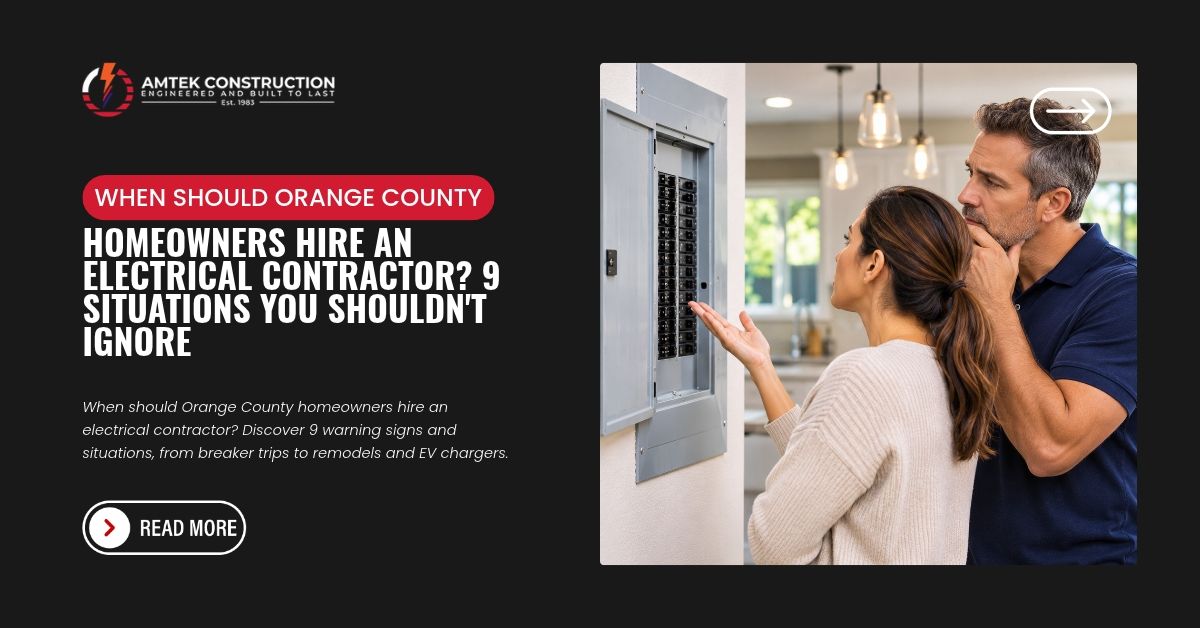
Your home’s electrical system works quietly behind the scenes, powering everything from kitchen appliances and air conditioning to computers, lighting, and electric vehicle chargers. Most homeowners don’t think about their wiring, outlets, or electrical panels until something stops working.
But electrical problems don’t always begin with a complete power outage.
Sometimes, the warning signs are subtle. A circuit breaker trips more frequently than usual. Lights flicker when the air conditioner starts. An outlet feels warm, or an older electrical panel struggles to support new appliances.
For homeowners throughout Orange County, recognizing when to hire a professional electrical contractor can help prevent unnecessary damage, improve electrical reliability, and make home improvement projects easier to plan.
Whether you live in Irvine, Newport Beach, Huntington Beach, Anaheim, Costa Mesa, or another Orange County community, understanding your home’s electrical needs is an important part of maintaining a safe and functional property.
Experienced electrical contractors Orange County homeowners can turn to can evaluate electrical concerns, identify underlying problems, and recommend appropriate repairs or upgrades.
Here are nine situations when calling an electrical contractor is a smart decision.
1. Your Circuit Breakers Keep Tripping
Circuit breakers are designed to interrupt electricity when certain abnormal conditions occur, such as an overloaded circuit or short circuit.
An occasional trip may result from temporary equipment problems, but repeated breaker trips shouldn’t be ignored.
Why Do Circuit Breakers Trip?
Common causes include:
- Too many appliances operating on one circuit
- Damaged electrical wiring
- Faulty appliances
- Short circuits or ground faults
- Loose electrical connections
- Problems involving circuit breakers or electrical panels
For example, an older Orange County home may have kitchen circuits installed before modern appliances became common.
Adding an air fryer, microwave, coffee maker, and other countertop appliances can place additional demand on existing circuits.
If a breaker trips repeatedly, resetting it without investigating the cause won’t resolve the underlying issue.
When Should You Call an Electrician?
Contact a qualified electrical contractor when the same breaker trips frequently, especially if it occurs during normal household activities.
An electrician can investigate the circuit, evaluate connected equipment, and determine whether repairs or additional circuits are needed.
Never replace a circuit breaker with one rated for higher amperage unless the wiring and electrical equipment are specifically designed for that rating.
2. Your Lights Flicker or Dim Unexpectedly
Flickering lights are among the most common electrical concerns homeowners experience.
Sometimes, the cause is relatively simple.
A loose light bulb, failing LED driver, or incompatible dimmer switch may cause noticeable flickering.
However, repeated or unexplained flickering can also indicate problems involving electrical connections, circuits, or the home’s electrical service.
What If Your Lights Dim When the Air Conditioner Starts?
In Southern California, air conditioning can create significant electrical demand, especially during warmer months.
A brief change in lighting brightness when large equipment starts may occur under certain conditions.
However, substantial dimming, repeated flickering, or changes affecting multiple rooms deserve professional evaluation.
Potential causes include:
- Loose electrical connections
- Voltage fluctuations
- Circuit overloads
- Deteriorating electrical equipment
- Problems with the electrical service
- Incompatible lighting controls
Homeowners experiencing these symptoms can learn more in AMTEK Construction’s guide, Why Do My Lights Flicker? When It’s Normal and When to Call an Electrician.
If flickering occurs throughout the house or is accompanied by unusual sounds, burning odors, or other electrical symptoms, arrange a professional evaluation.
3. Your Electrical Outlets Feel Warm, Spark, or Stop Working
Electrical outlets are used constantly, yet they’re easy to overlook until something goes wrong.
A damaged or deteriorating outlet can create more than an inconvenience.
Loose connections, worn receptacles, and improper electrical installations can cause overheating or intermittent operation.
Warning Signs of Outlet Problems
Pay attention to:
- Outlets that feel unusually warm
- Discoloration around receptacles
- Burning odors
- Buzzing or crackling sounds
- Loose plugs
- Outlets that stop working intermittently
- Visible sparks or damaged components
A tiny, momentary spark when connecting certain devices can occur under normal circumstances. However, repeated, large, or unusual sparking deserves attention.
Why Professional Repairs Matter
Replacing a receptacle may seem straightforward, but the visible outlet isn’t always the source of the problem.
The issue could involve damaged wiring, loose connections, or other components within the circuit.
An electrical contractor can inspect the affected equipment and determine whether the outlet requires replacement or whether additional repairs are necessary.
Homeowners should avoid continuing to use outlets showing signs of overheating or physical damage.
4. You’re Planning a Kitchen or Bathroom Remodel
Home remodeling projects provide an excellent opportunity to evaluate and improve electrical systems.
Kitchen and bathroom renovations often involve changes to lighting, outlets, appliances, ventilation, and electrical protection.
Unfortunately, electrical planning sometimes happens too late in the remodeling process.
Homeowners may finalize cabinet layouts and appliance selections before considering whether their existing circuits can support the new design.
Electrical Improvements to Consider During a Kitchen Remodel
Depending on the project, electrical work may include:
- Dedicated circuits for major appliances
- Additional countertop outlets
- Updated GFCI protection
- Recessed or under-cabinet lighting
- Kitchen island electrical connections
- Lighting controls and dimmer switches
- Electrical panel capacity evaluation
For a more detailed breakdown, read Planning a Kitchen Remodel? 9 Electrical Upgrades Homeowners Should Consider Before the Walls Close.
What About Bathroom Renovations?
Bathroom electrical improvements may involve lighting, ventilation fans, receptacles, and appropriate circuit protection.
Because bathrooms contain moisture and water sources, electrical installations require careful planning and compliance with applicable requirements.
Hiring an electrical contractor early can help coordinate electrical work with the rest of the renovation.
It can also reduce the likelihood of opening finished walls to make changes that should have been planned before construction.
5. Your Home Has an Older Electrical Panel
Orange County contains many established residential neighborhoods with homes built decades ago.
Some properties have received extensive electrical improvements over the years.
Others may still rely on older equipment that deserves evaluation.
The electrical panel distributes electricity throughout the house and contains protective devices for individual circuits.
An older panel doesn’t automatically require replacement, but its condition and capacity should be assessed when concerns arise.
Signs Your Electrical Panel May Need Attention
Possible warning signs include:
- Frequent breaker trips
- Rust or corrosion
- Unusual buzzing sounds
- Evidence of overheating
- Limited capacity for planned electrical improvements
- Damage or deterioration
- An unclear maintenance history
Modern households often operate more electrical equipment than homes originally built several decades ago.
Air conditioning, kitchen appliances, electric dryers, home offices, and EV chargers can all contribute to household electrical demand.
Does Every Older Home Need a Panel Upgrade?
No.
Panel replacement depends on the existing equipment’s condition, available electrical capacity, and intended use.
An electrician can evaluate whether the panel remains suitable or whether improvements should be considered.
AMTEK Construction provides residential electrical panel upgrades in Los Angeles and Orange County for homeowners whose electrical infrastructure requires additional capacity or equipment improvements.
If you’re planning renovations or installing new electrical equipment, evaluating the panel before beginning the project can help prevent unexpected complications.
6. You’re Installing an Electric Vehicle Charger
Electric vehicles have become an increasingly common part of Southern California transportation.
For Orange County homeowners, installing a home EV charger can make charging more convenient and reduce reliance on public charging stations.
However, EV charging equipment introduces electrical requirements that should be evaluated before installation.
Why Does an EV Charger Need Professional Installation?
Many homeowners choose Level 2 charging equipment, which generally provides faster charging than a standard household receptacle.
A typical Level 2 installation may require:
- Evaluation of electrical service capacity
- An appropriately sized circuit
- Suitable wiring and protective equipment
- Proper charger placement
- Required permits and inspections
- Compliance with applicable electrical requirements
The installation requirements depend on the charger, the home’s electrical system, and the planned charging configuration.
Will You Need an Electrical Panel Upgrade?
Not every EV charger installation requires a panel upgrade.
Some homes have adequate electrical capacity for additional charging equipment.
Others may require electrical improvements or an approved load-management approach.
An electrical contractor can evaluate the available capacity and recommend a suitable installation plan.
This is especially important for homeowners with older electrical panels or several major electric appliances.
Planning the installation correctly helps support reliable charging and avoids unnecessary electrical modifications.
7. You’re Buying an Older Home in Orange County
Buying an older home can be an exciting investment.
Established Orange County neighborhoods often feature attractive properties with distinctive architecture and mature landscaping.
But older homes can also contain electrical systems that have been modified repeatedly over the years.
A beautifully renovated property may still have wiring, outlets, or electrical equipment that deserves closer examination.
Electrical Issues to Check Before Moving In
Potential concerns include:
- Older electrical panels
- Outdated wiring
- Improperly modified circuits
- Missing or inadequate electrical protection
- Damaged outlets
- Previous renovations with unclear electrical records
- Insufficient capacity for future improvements
A general home inspection may identify visible concerns, but a specialized electrical evaluation can provide additional information when necessary.
AMTEK Construction offers residential electrical inspections in Los Angeles and Orange County to help homeowners assess electrical conditions and identify areas requiring attention.
For additional homebuying guidance, see the published article Buying an Older Home? 7 Electrical Problems You Should Check Before Moving In.
Understanding a property’s electrical condition before moving in can help buyers make informed decisions about repairs and future renovations.
8. You’re Adding a Room, Garage Conversion, or ADU
Home additions and accessory dwelling units can create new opportunities for Orange County homeowners.
A garage conversion might become a home office, guest suite, or additional living space.
An accessory dwelling unit may provide housing for family members or create rental opportunities.
However, these projects also introduce electrical planning requirements.
What Electrical Work Might Be Needed?
Depending on the project, electrical improvements may include:
- Additional circuits
- New lighting and outlets
- Electrical distribution modifications
- Dedicated circuits for appliances
- HVAC electrical connections
- Electrical panel or service upgrades
- Required electrical permits and inspections
An ADU with a kitchen, bathroom, heating and cooling equipment, and multiple appliances may have substantial electrical requirements.
The existing electrical system should be evaluated before assuming it can accommodate the additional load.
Why Early Electrical Planning Matters
Electrical planning should be coordinated with the project’s overall design and construction schedule.
This helps determine where circuits, outlets, lighting, and other equipment should be installed.
It also allows the contractor to identify capacity limitations before construction progresses.
For homeowners planning a garage conversion, room addition, or ADU, bringing an electrician into the planning process early can help reduce delays and unexpected changes.
9. You Notice Burning Smells, Buzzing, or Other Electrical Warning Signs
Some electrical problems require more immediate attention than others.
A damaged outlet or repeatedly tripping breaker should be evaluated, but certain symptoms can indicate potentially serious electrical hazards.
Warning Signs That Require Prompt Attention
These include:
- Burning odors near electrical equipment
- Smoke or visible sparking
- Loud buzzing or crackling
- Unusually hot outlets or switches
- Visible signs of electrical damage
- Repeated unexplained power interruptions
- Electrical shocks when touching equipment
These symptoms may involve overheating, damaged connections, insulation failure, or other electrical faults.
What Should Homeowners Do?
Avoid using affected electrical equipment and arrange professional assistance.
Do not repeatedly reset a breaker or continue operating equipment that shows signs of overheating.
An electrical contractor can investigate the condition and determine what repairs are required.
Electrical safety concerns should be addressed based on the actual symptoms and the condition of the equipment.
What Does a Residential Electrical Contractor Actually Do?
Some homeowners associate electricians primarily with replacing outlets or repairing light fixtures.
In reality, residential electrical contractors handle a wide range of services related to electrical installation, maintenance, troubleshooting, and system improvements.
Depending on the contractor’s qualifications and services, residential electrical work may include:
- Electrical troubleshooting and repairs
- Electrical panel upgrades
- New circuits and outlets
- Lighting installations
- Electrical inspections
- EV charger installations
- Electrical work for remodeling
- Electrical improvements for additions and ADUs
- Wiring modifications
- Electrical safety improvements
The appropriate scope of work depends on the home’s condition, the problem being addressed, and the homeowner’s plans.
For larger projects, electrical contractors may also coordinate with general contractors, designers, and other trades.
How to Choose the Right Electrical Contractor in Orange County
Hiring the right electrical contractor involves more than comparing estimates.
Homeowners should consider qualifications, experience, communication, and whether the contractor understands the specific project.
Verify Licensing and Qualifications
In California, electrical contracting work generally falls under the C-10 electrical contractor classification.
Homeowners can verify contractor licensing information through the California Contractors State License Board.
Licensing requirements depend on the work and applicable California regulations.
Ask About Relevant Experience
An electrician experienced with commercial facilities may have different project experience from one who regularly handles residential remodeling.
Ask whether the contractor has worked on similar homes and electrical systems.
For example, electrical improvements in an older home may require familiarity with existing wiring conditions and previous modifications.
Request a Clear Scope of Work
A written estimate should explain the proposed work and relevant project details.
Depending on the job, this may include equipment, installation requirements, permits, and necessary inspections.
Clear communication helps homeowners understand what they’re paying for and what the work is intended to accomplish.
Consider Long-Term Electrical Needs
If you’re planning future renovations, mention them during the evaluation.
A contractor may be able to identify opportunities to coordinate improvements and reduce unnecessary repeat work.
For example, homeowners planning an EV charger and kitchen remodel may benefit from evaluating their electrical capacity before beginning either project.
Do You Need an Electrical Contractor for Small Repairs?
Not every household issue requires extensive electrical work.
A burned-out light bulb, for example, can usually be replaced without hiring an electrician.
However, electrical repairs involving wiring, circuit breakers, damaged outlets, electrical panels, or unexplained faults deserve professional evaluation.
The complexity of a problem isn’t always obvious from its symptoms.
An outlet that stops working may involve a simple device failure, but it could also indicate a damaged connection elsewhere in the circuit.
Likewise, a flickering light may have a straightforward explanation or may involve a larger electrical issue.
When the cause is unclear, professional troubleshooting can help avoid unnecessary replacements and identify the appropriate repair.
Why Electrical Planning Matters for Orange County Homes
Orange County homeowners often invest in improvements that make their properties more comfortable, functional, and energy efficient.
These projects may include kitchen renovations, EV chargers, outdoor lighting, garage conversions, and accessory dwelling units.
Electrical planning plays an important role in making those improvements successful.
For example, installing new kitchen appliances without evaluating existing circuits may create complications.
Similarly, adding an EV charger without reviewing available electrical capacity can result in unexpected installation requirements.
Homeowners should consider their electrical systems as part of the overall property rather than as isolated components.
A well-planned electrical improvement can support the home’s current needs while making future renovations easier to coordinate.
Frequently Asked Questions About Hiring an Electrical Contractor in Orange County
When should I call an electrician for a tripping circuit breaker?
Call an electrician when a breaker trips repeatedly, especially during normal appliance use. Repeated trips can indicate overloaded circuits, electrical faults, or equipment problems.
Do I need an electrician if my lights flicker occasionally?
Occasional flickering may have a simple explanation, but repeated, widespread, or unexplained flickering should be evaluated professionally.
How do I know if my Orange County home needs an electrical panel upgrade?
Warning signs may include recurring breaker trips, deteriorating equipment, or insufficient capacity for planned electrical improvements. An electrician can evaluate the system and determine whether an upgrade is appropriate.
Should I hire an electrical contractor before remodeling my kitchen?
Yes. Early electrical planning can help determine circuit requirements, outlet locations, lighting design, and whether the existing electrical system can support new appliances.
Can an electrician install a Level 2 EV charger at my home?
Yes. A qualified electrical contractor can evaluate your home’s electrical capacity and install suitable charging equipment according to applicable requirements.
Do older Orange County homes need electrical inspections?
Older homes may benefit from electrical evaluations, particularly when their wiring history is unclear, visible concerns exist, or major renovations are planned.
Do I need an electrical permit for a panel upgrade?
Electrical panel upgrades generally require appropriate permits and inspections. Specific requirements depend on the local jurisdiction and project scope.
Can an electrical contractor help with ADU construction?
Yes. Electrical contractors can assist with circuit planning, electrical distribution, lighting, outlets, and other electrical requirements associated with accessory dwelling units.
How much does it cost to hire an electrical contractor in Orange County?
Costs depend on the type of work, equipment, accessibility, permit requirements, and the condition of the existing electrical system. A professional evaluation and written estimate can help establish the project’s scope and expected cost.
What’s the difference between an electrician and an electrical contractor?
An electrician is an individual who performs electrical work. An electrical contractor is a business or contractor responsible for providing electrical contracting services, typically operating under applicable licensing and regulatory requirements.
Keep Your Orange County Home Safe, Functional, and Ready for the Future
Your home’s electrical system supports nearly every part of daily life.
From lighting and appliances to air conditioning, computers, and EV charging, reliable electrical infrastructure is essential for comfort and convenience.
Recognizing electrical warning signs early can help homeowners address problems before they become more disruptive.
Whether you’re dealing with recurring breaker trips, flickering lights, aging electrical equipment, or planning a major renovation, professional evaluation can help determine the right next steps.
Just as importantly, involving an electrical contractor early in remodeling and home improvement projects can help prevent unnecessary complications.
AMTEK Construction provides residential electrical services for homeowners throughout Orange County and Los Angeles, including electrical inspections, troubleshooting, panel upgrades, and electrical improvements.
If you’re experiencing electrical problems or planning upgrades to your home, working with a qualified contractor can help you make informed decisions about your electrical system.
Contact AMTEK Construction to discuss your residential electrical needs and request a professional evaluation.