
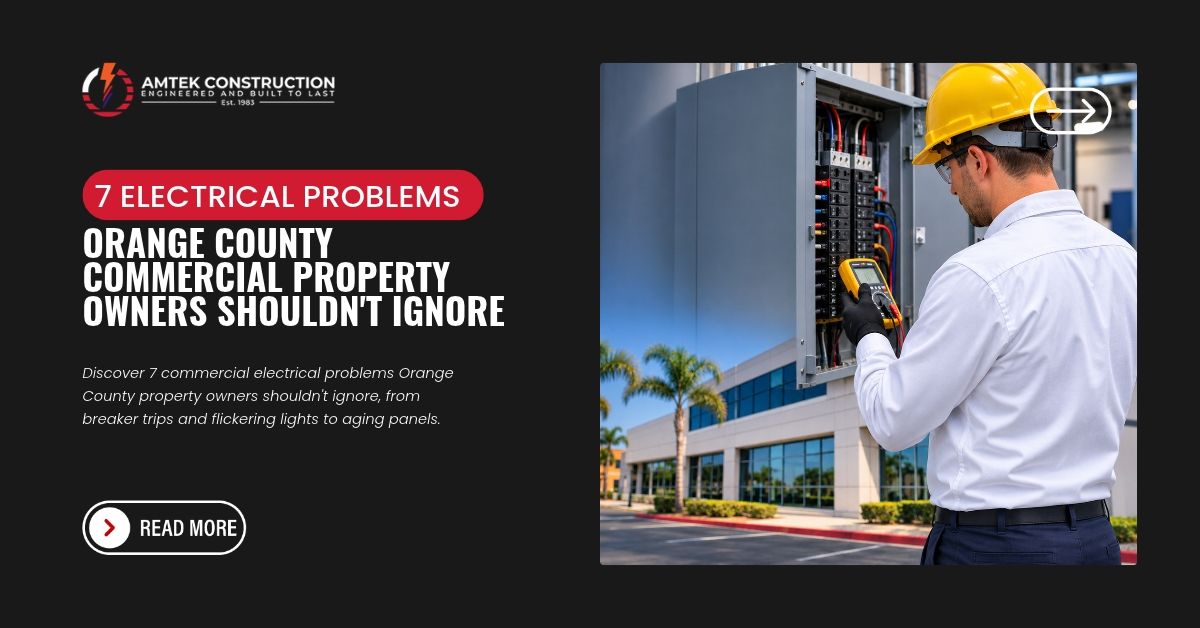
Running a commercial property in Orange County involves more than maintaining an attractive building and keeping tenants satisfied. Behind the walls, ceilings, and electrical panels is an infrastructure that supports nearly every part of daily business operations.
From office buildings and retail centers to warehouses, restaurants, and industrial facilities, businesses depend on reliable electricity for lighting, HVAC equipment, computers, security systems, and essential machinery.
Unfortunately, commercial electrical problems don’t always announce themselves through a complete power outage.
Sometimes, the warning signs are subtle. A circuit breaker trips more frequently than usual. Office lights begin flickering. An electrical panel produces an unfamiliar buzzing sound. Equipment unexpectedly shuts down during normal operations.
These issues may seem minor at first, but ignoring them can lead to equipment damage, operational interruptions, expensive repairs, and potentially dangerous electrical conditions.
For property owners and facility managers, recognizing electrical warning signs early is an important part of protecting their buildings and maintaining reliable operations.
Working with an experienced commercial electrical contractor Orange County businesses can depend on helps identify underlying electrical problems and determine the appropriate repairs or improvements.
Here are seven commercial electrical problems that deserve attention before they become more serious.
1. Circuit Breakers That Keep Tripping
Circuit breakers are designed to interrupt electrical current when certain abnormal conditions occur, such as overloads or short circuits.
An occasional breaker trip may result from a temporary equipment problem. However, repeated trips should never become an accepted part of operating a commercial property.
If employees regularly reset the same breaker, there’s likely an underlying issue that needs investigation.
What Causes Breakers to Trip in Commercial Buildings?
Several conditions can contribute to repeated breaker trips, including:
- Too much equipment operating on the same circuit
- Damaged electrical wiring
- Short circuits or ground faults
- Faulty appliances or machinery
- Deteriorating electrical connections
- Circuit breakers that require evaluation or replacement
In office environments, adding computers, printers, servers, and other equipment can increase electrical demand.
Retail stores may experience similar problems when new display lighting, refrigeration equipment, or other electrical devices are installed without reviewing existing circuits.
Warehouses and industrial facilities can face even greater challenges when operating equipment with substantial electrical loads.
Why Repeated Breaker Trips Matter
Repeated trips interrupt business operations and may indicate electrical conditions that need correction.
Simply replacing a breaker with one that has a higher amperage rating is not an appropriate solution unless the circuit and connected equipment are designed and approved for that rating.
A qualified electrician should determine why the breaker is operating before recommending repairs.
For commercial property owners, addressing repeated breaker trips early can help prevent larger disruptions and identify whether the existing electrical infrastructure is adequate.
2. Flickering or Dimming Commercial Lighting
Lighting plays an important role in workplace safety, employee comfort, customer experience, and building functionality.
When lights begin flickering or dimming unexpectedly, it’s easy to assume the bulbs or fixtures are simply getting old.
However, commercial lighting problems can involve much more than a defective lamp.
Common Causes of Flickering Lights
Commercial lighting may flicker because of:
- Loose electrical connections
- Failing LED drivers
- Incompatible dimming controls
- Voltage fluctuations
- Overloaded circuits
- Aging electrical equipment
- Problems affecting the building’s electrical service
For example, lights that dim when large HVAC equipment starts may indicate a voltage drop that deserves evaluation.
In other situations, flickering LED fixtures may result from incompatible controls or failing electronic components.
How Lighting Problems Affect Businesses
In an office, poor lighting can make workspaces uncomfortable and interfere with daily activities.
Retail businesses rely on consistent lighting to present products and maintain an inviting shopping environment.
Warehouses need adequate illumination so employees can navigate aisles, identify materials, and operate equipment.
When lighting problems occur repeatedly, they can affect both productivity and the overall experience of employees and visitors.
Commercial property owners should also consider whether their lighting systems are becoming outdated.
Modern LED lighting can offer energy-efficiency benefits, longer service life, and improved lighting control when properly selected and installed.
Businesses planning improvements can explore commercial LED lighting installation and upgrades in Los Angeles and Orange County to understand available lighting solutions.
The important first step is identifying whether the problem involves the fixtures, controls, electrical circuits, or another part of the system.
3. Electrical Panels Showing Signs of Overheating or Deterioration
Electrical panels are central components of a commercial building’s electrical distribution system.
They distribute power to individual circuits and house protective equipment that helps manage electrical faults.
Because commercial buildings often operate substantial electrical loads, panels must be properly maintained and suitable for the equipment they serve.
Unfortunately, electrical panel problems may develop gradually.
Warning Signs of Electrical Panel Problems
Facility managers should pay attention to:
- Unusual buzzing or crackling sounds
- Burning odors near electrical equipment
- Visible discoloration
- Rust, corrosion, or moisture damage
- Repeated breaker trips
- Unexplained power interruptions
- Signs of overheating around accessible components
Some problems may involve loose connections, damaged equipment, or excessive electrical loads.
Other issues may develop because the building’s electrical infrastructure has not been evaluated following years of renovations and equipment additions.
Does an Older Commercial Building Need a Panel Upgrade?
Not necessarily.
The age of a panel alone does not determine whether replacement is required.
An electrician should consider the equipment’s condition, electrical capacity, maintenance history, and current operating demands.
However, a panel that is damaged, unsuitable for its intended use, or unable to accommodate necessary electrical improvements may require replacement or upgrading.
For businesses considering major electrical improvements, commercial panel upgrades can provide an opportunity to address capacity limitations and replace equipment that no longer meets the property’s needs.
Commercial property owners should never ignore evidence of electrical overheating, particularly when accompanied by burning odors or unusual sounds.
4. Frequent Power Interruptions Affecting Equipment
Unexpected power interruptions can be especially disruptive in commercial environments.
Even a brief loss of electricity may affect computers, point-of-sale systems, network equipment, refrigeration, security systems, or industrial machinery.
For some businesses, a few minutes of downtime can interrupt transactions, delay operations, or require equipment to be restarted.
What Causes Unexpected Power Interruptions?
Possible causes include:
- Electrical distribution problems
- Loose or deteriorating connections
- Faulty circuit breakers
- Equipment-related electrical faults
- Utility service disturbances
- Overloaded circuits
- Problems with electrical control equipment
The source of the interruption matters.
A problem affecting one circuit may require a different approach from an issue involving an entire building or the utility supply.
Why Proper Troubleshooting Is Important
Replacing equipment without identifying the cause can waste money and leave the underlying problem unresolved.
A qualified electrician can investigate symptoms, perform appropriate testing, and determine which components require attention.
For commercial buildings experiencing recurring interruptions, a systematic troubleshooting process can help distinguish between circuit-level problems, equipment failures, and larger electrical distribution concerns.
AMTEK Construction offers commercial electrical troubleshooting to help businesses investigate electrical problems and identify appropriate corrective work.
Prompt diagnosis can reduce repeated disruptions and help facility managers plan repairs more effectively.
5. Electrical Systems That Can No Longer Support Business Growth
Commercial properties often change significantly over time.
An office building may add workstations and conference rooms.
A retail space may introduce new refrigeration equipment or illuminated displays.
A warehouse may install additional machinery.
A restaurant may upgrade kitchen appliances.
Each improvement can change the property’s electrical requirements.
Unfortunately, electrical infrastructure isn’t always reviewed when businesses expand or renovate.
Signs Your Commercial Electrical Capacity May Be Insufficient
Potential indicators include:
- Frequent breaker trips after equipment additions
- Limited panel space for new circuits
- Difficulty accommodating new machinery
- Electrical problems following renovations
- Temporary power arrangements becoming permanent
- Equipment installations delayed by capacity limitations
Electrical capacity should be evaluated using the actual equipment requirements and applicable load calculations.
Simply looking at the number of available breaker spaces is not enough to determine whether a system can support additional loads.
Plan Electrical Improvements Before Renovating
Electrical planning should begin early when a commercial property undergoes remodeling or tenant improvements.
For example, a new restaurant tenant may require dedicated circuits for kitchen equipment.
A medical office may have specialized electrical requirements.
A retail business may need additional outlets, lighting controls, or electrical distribution changes.
Addressing these requirements during the planning stage can reduce the likelihood of expensive changes after construction begins.
Businesses preparing for renovations can benefit from coordinating electrical work with an experienced contractor before installing new equipment or modifying the property.
6. Damaged Outlets, Switches, and Electrical Connections
Commercial electrical problems don’t always involve major equipment.
Sometimes, the most noticeable warning signs appear at ordinary outlets, switches, and electrical connections.
These components are used repeatedly throughout the day, particularly in busy commercial environments.
Over time, equipment may experience physical damage, wear, or deterioration.
Electrical Warning Signs Employees Should Report
Employees and building managers should report:
- Loose or damaged outlets
- Cracked receptacle covers
- Discoloration around electrical devices
- Sparks during normal use
- Unusual heat
- Buzzing or crackling sounds
- Burning odors
- Electrical equipment that operates intermittently
These symptoms may indicate damaged devices, poor connections, or other electrical faults.
A damaged receptacle should not remain in service simply because it still supplies electricity.
The Problem With Temporary Electrical Solutions
Commercial properties sometimes rely on extension cords and power strips when existing outlets are inconvenient or insufficient.
Although certain temporary arrangements may be appropriate for specific applications, extension cords should not become substitutes for permanent wiring.
Overloaded power strips, damaged cords, and unsuitable temporary connections can introduce additional electrical hazards.
If employees regularly need extension cords to operate essential equipment, it may be time to evaluate the placement and capacity of existing circuits.
Installing appropriate outlets and dedicated circuits can help businesses create safer and more functional workspaces.
7. Electrical Systems Without a Consistent Maintenance Plan
One of the most overlooked commercial electrical problems is the absence of a structured maintenance program.
Many businesses only contact an electrician after something stops working.
While emergency repairs are sometimes unavoidable, relying entirely on reactive maintenance can allow developing electrical problems to go unnoticed.
Commercial electrical equipment should be maintained according to its condition, operating environment, manufacturer recommendations, and applicable requirements.
What Can Commercial Electrical Maintenance Include?
Depending on the property and equipment, maintenance may involve:
- Visual evaluation of accessible electrical equipment
- Inspection of panels and distribution components
- Assessment of visible deterioration or corrosion
- Appropriate testing of electrical connections
- Review of recurring breaker trips
- Evaluation of identified electrical performance concerns
- Inspection of relevant lighting and control systems
- Documentation of findings and recommended repairs
Some facilities may also benefit from specialized diagnostic methods, such as thermal imaging, when appropriate.
Thermal imaging can help identify unusual temperature patterns, although findings require professional interpretation and may need additional testing.
Why Preventative Maintenance Matters
A consistent maintenance approach can help businesses identify developing problems before they result in unexpected downtime.
It also provides facility managers with information for budgeting future repairs and upgrades.
For example, a maintenance inspection may identify deteriorating electrical components that can be addressed during a planned shutdown rather than after an unexpected failure.
Businesses interested in taking a more proactive approach can explore commercial electrical preventative maintenance plans for their facilities.
The objective is to support electrical reliability, identify potential hazards, and make maintenance more predictable.
Why Commercial Electrical Problems Shouldn’t Be Ignored
Electrical issues can affect far more than the immediate equipment involved.
A recurring problem may interfere with employees, disrupt customer service, damage equipment, or create conditions that require a temporary shutdown.
Commercial property owners also have to consider the needs of tenants, maintenance personnel, visitors, and contractors working within the building.
When electrical concerns are ignored, seemingly minor problems can become more difficult to manage.
Operational Downtime
Businesses rely on electricity for essential operations.
Unexpected interruptions can affect productivity, communication systems, equipment, and customer transactions.
Equipment Damage
Electrical faults and abnormal operating conditions may damage connected equipment.
Sensitive electronics and specialized machinery can be particularly vulnerable to certain electrical disturbances.
Building Safety
Damaged wiring, overheating equipment, and faulty electrical connections can create serious hazards.
Electrical warning signs should be evaluated before the affected equipment continues operating.
Unexpected Repair Expenses
Reactive repairs can become more expensive when problems cause additional damage or require emergency work.
Identifying issues early can help facility managers plan repairs and reduce unnecessary disruption.
Which Orange County Commercial Properties Need Electrical Evaluations?
Commercial electrical concerns can affect virtually any type of business property.
However, different facilities have different electrical requirements.
Office Buildings
Office properties depend on reliable lighting, HVAC systems, computers, network equipment, and security infrastructure.
Changes in occupancy or workspace layouts may introduce additional electrical demands.
Retail Stores and Shopping Centers
Retail businesses need consistent lighting, outlets, signage, and power for operational equipment.
Electrical problems can affect customer experience and daily sales activities.
Warehouses and Distribution Centers
Warehouses may operate industrial lighting, loading equipment, conveyors, charging systems, and other machinery.
Electrical capacity and reliability are especially important when equipment operates for extended periods.
Restaurants and Food Service Facilities
Restaurants often have substantial electrical demands associated with refrigeration, ventilation, lighting, and commercial kitchen equipment.
Unexpected electrical interruptions can affect operations and temperature-sensitive inventory.
Multifamily and Mixed-Use Commercial Properties
Properties serving multiple tenants may have complex electrical distribution arrangements and varying electrical loads.
Renovations, tenant changes, and equipment additions can require careful electrical planning.
Regardless of property type, commercial electrical systems should be evaluated based on their actual condition and operating requirements.
When Should You Call a Commercial Electrician?
Not every electrical concern requires an extensive renovation.
However, certain symptoms should prompt a professional evaluation.
Contact a qualified commercial electrician when:
- Breakers trip repeatedly
- Lighting problems continue after routine fixture maintenance
- Electrical equipment produces unusual sounds or odors
- Outlets or switches show visible damage
- Equipment loses power unexpectedly
- New machinery or appliances require additional electrical capacity
- Renovations will affect existing circuits
- The building has recurring electrical problems without a clear explanation
For burning odors, smoke, sparking, or signs of active overheating, stop using the affected equipment and arrange immediate professional attention.
An electrician can determine whether the issue requires a repair, additional testing, equipment replacement, or a broader electrical assessment.
Choosing a Commercial Electrical Contractor in Orange County
Commercial electrical work requires an understanding of building operations, electrical distribution systems, equipment demands, and applicable installation requirements.
When selecting a contractor, property owners should consider experience with commercial facilities and the specific type of electrical work required.
Important questions include:
- Does the contractor have experience with similar commercial properties?
- Can they troubleshoot existing electrical systems?
- Do they handle commercial electrical panel improvements?
- Can they coordinate electrical work during renovations?
- Do they understand the importance of minimizing operational disruption?
- Can they provide clear recommendations based on inspection findings?
- Are they appropriately licensed for the work being performed?
A contractor should be able to explain the problem, discuss potential solutions, and identify whether additional testing or improvements are necessary.
AMTEK Construction provides commercial electrical services throughout Orange County, helping property owners and businesses address electrical concerns and plan improvements to their facilities.
Whether the issue involves recurring electrical faults, aging equipment, or changes in electrical demand, the goal is to develop a practical solution based on the property’s needs.
Frequently Asked Questions About Commercial Electrical Problems
What are the most common electrical problems in commercial buildings?
Common problems include frequently tripping circuit breakers, flickering lights, damaged outlets, faulty connections, electrical panel issues, and insufficient capacity for additional equipment.
Why do circuit breakers keep tripping in my commercial property?
Repeated breaker trips can result from overloaded circuits, short circuits, ground faults, defective equipment, or other electrical problems. A qualified electrician should investigate the cause before repairs are made.
Can flickering lights indicate a serious commercial electrical problem?
Yes. Although flickering can result from failing lamps or incompatible lighting controls, it may also indicate loose connections, voltage problems, or other electrical faults.
How often should commercial electrical systems be inspected?
Inspection frequency depends on the facility, equipment, operating conditions, maintenance history, and applicable requirements. A qualified contractor can help determine an appropriate inspection and maintenance schedule.
Does my commercial building need an electrical panel upgrade?
Not necessarily. Panel upgrades may be appropriate when equipment is damaged, electrical capacity is insufficient, or planned improvements require changes to the distribution system.
Can commercial electrical problems cause business downtime?
Yes. Electrical faults and unexpected power interruptions can affect lighting, computers, machinery, refrigeration, security systems, and other essential operations.
Should electrical work be completed before a commercial renovation?
Electrical planning should begin early in the renovation process. Evaluating existing infrastructure before construction can help identify capacity limitations and necessary electrical modifications.
Can preventative maintenance help reduce electrical problems?
Preventative maintenance can help identify deteriorating equipment and developing electrical concerns, allowing property owners to plan corrective work before certain problems become more disruptive.
What should I do if an electrical panel smells like it’s burning?
Stop using affected equipment and arrange immediate professional attention. Burning odors can indicate overheating or damaged electrical components and should not be ignored.
Protect Your Orange County Commercial Property With Proactive Electrical Care
Commercial electrical systems support nearly every part of modern business operations.
When those systems develop problems, the consequences can extend beyond a single outlet, light fixture, or circuit breaker.
Recurring breaker trips, flickering lighting, aging electrical panels, damaged connections, and unexpected power interruptions all deserve attention.
For Orange County commercial property owners, recognizing these warning signs early can help protect equipment, maintain reliable operations, and reduce avoidable disruptions.
Just as importantly, electrical planning and preventative maintenance can help businesses prepare for future improvements and changing operational needs.
AMTEK Construction serves commercial property owners and businesses throughout Orange County and Los Angeles, providing electrical troubleshooting, panel upgrades, lighting improvements, and other commercial electrical services.
Whether you’re dealing with an ongoing electrical problem or planning improvements to an existing facility, professional evaluation can help determine the next steps.
Contact AMTEK Construction to discuss your commercial property’s electrical needs and request an evaluation.