
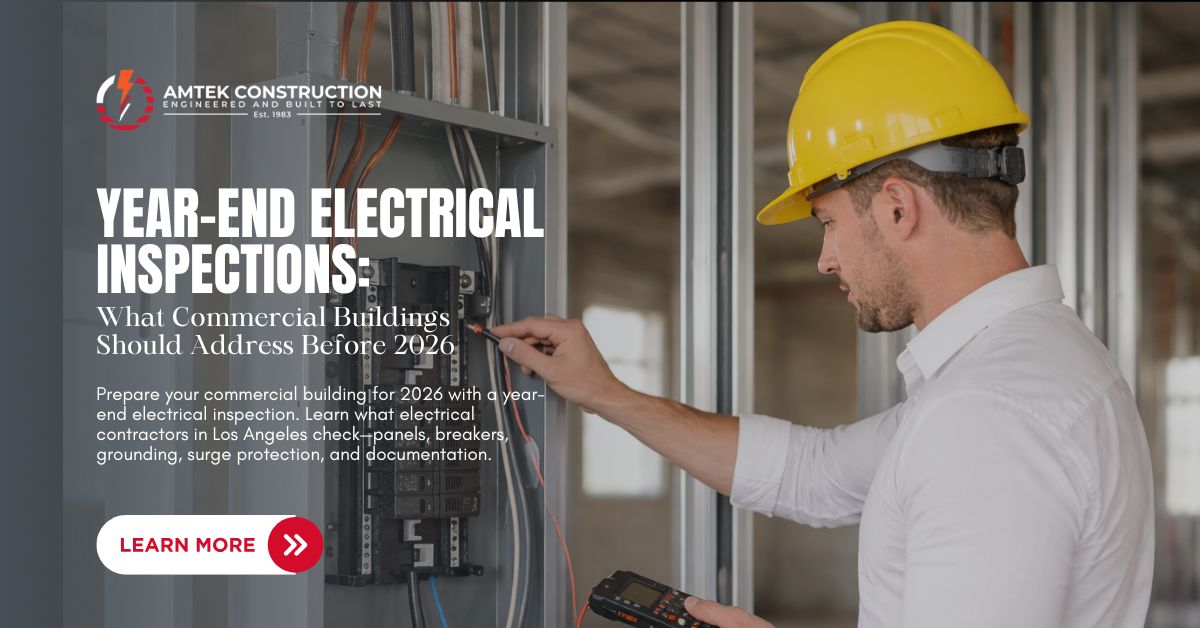
As the year comes to a close, Los Angeles businesses enter one of the most critical windows for electrical inspections and preventive maintenance. After months of increased energy usage from summer cooling, fall operations, and winter lighting and HVAC demands, commercial electrical systems are often operating under stress—sometimes without obvious warning signs.
This is why experienced electrical contractors in Los Angeles strongly recommend scheduling year-end commercial electrical inspections. These inspections identify safety risks, prevent downtime, and ensure your building is ready for 2026 without unexpected failures or compliance issues.
Below are the key areas every commercial building should address before the new year.
1. Electrical Panels: Capacity, Condition, and Compliance
Why it matters:
Electrical panels are the heart of your building’s power system. Over time, panels can become overloaded, outdated, or unsafe—especially as businesses add new equipment, technology, or EV chargers.
What inspectors look for:
- Signs of overheating, corrosion, or wear
- Panels operating beyond designed capacity
- Outdated or non-compliant panel components
- Proper labeling and circuit organization
If panels are undersized or deteriorating, commercial electrical inspections in Los Angeles often reveal the need for upgrades before failures occur.
This type of proactive planning aligns with strategies discussed in How AMTEK Construction Helps Businesses Avoid Costly Electrical Mistakes This Fall.
2. Breakers and Circuit Load Distribution
Why it matters:
Frequent breaker trips are often dismissed as minor annoyances—but they’re usually warning signs of overloaded circuits or failing breakers.
What inspectors evaluate:
- Breaker condition and responsiveness
- Balanced load distribution across circuits
- Dedicated circuits for high-demand systems (HVAC, lighting, servers)
- Compatibility with modern electrical loads
Los Angeles businesses that ignore breaker issues risk downtime during peak operations or early 2026 ramp-ups.
3. Grounding and Bonding Systems
Why it matters:
Grounding protects people, equipment, and buildings from electrical faults. Inadequate grounding increases shock risk, equipment damage, and code violations—especially after months of humidity and rain exposure.
What inspectors check:
- Grounding continuity and resistance
- Bonding of panels, conduits, and equipment
- Compliance with NEC and LADBS requirements
- Protection for outdoor and rooftop electrical components
Grounding inspections are especially important following rainy-season exposure, as outlined in Preparing for Rainy Season: Electrical Safety Tips for Commercial Buildings in Orange County.
4. Surge Protection and Power Quality
Why it matters:
Power surges don’t only come from lightning—they’re often caused by utility fluctuations, equipment cycling, or internal load changes. Over time, surges silently damage electronics and control systems.
What inspectors assess:
- Presence of whole-building surge protection
- Condition of existing surge devices
- Protection for sensitive equipment and control panels
- Coordination between surge protection and backup power systems
Surge protection is a critical companion to energy-efficiency upgrades and backup systems discussed in Smart Energy Upgrades to Lower Commercial Utility Bills This Winter.
5. Documentation, Labeling, and Code Compliance
Why it matters:
Outdated documentation creates confusion during emergencies, inspections, renovations, or future upgrades. Poor labeling alone can slow response times and increase risk.
What should be reviewed:
- Panel schedules and circuit labels
- As-built drawings and inspection records
- Maintenance logs and testing documentation
- Code compliance status for recent upgrades
Professional electrical contractors Los Angeles ensure all documentation is current, accurate, and inspection-ready—saving time and money when projects or audits arise.
6. Why Year-End Electrical Inspections Matter More Than Ever
Scheduling commercial electrical inspections in Los Angeles before 2026 allows businesses to:
- Identify safety hazards before failures occur
- Prevent downtime during Q1 operations
- Plan electrical upgrades strategically instead of reactively
- Budget accurately for panels, circuits, and energy upgrades
- Enter the new year compliant, efficient, and prepared
Year-end inspections also pair perfectly with electrical audits, helping businesses uncover inefficiencies and plan improvements before tax season and capital planning cycles.
Final Thoughts
Year-end electrical inspections aren’t just a checklist—they’re a strategic investment in safety, reliability, and long-term performance.
By working with experienced electrical contractors in LA, commercial property owners and facility managers can confidently close out the year knowing their systems are safe, compliant, and ready for what 2026 brings.
If your building hasn’t had a comprehensive inspection this year, now is the time to act.