
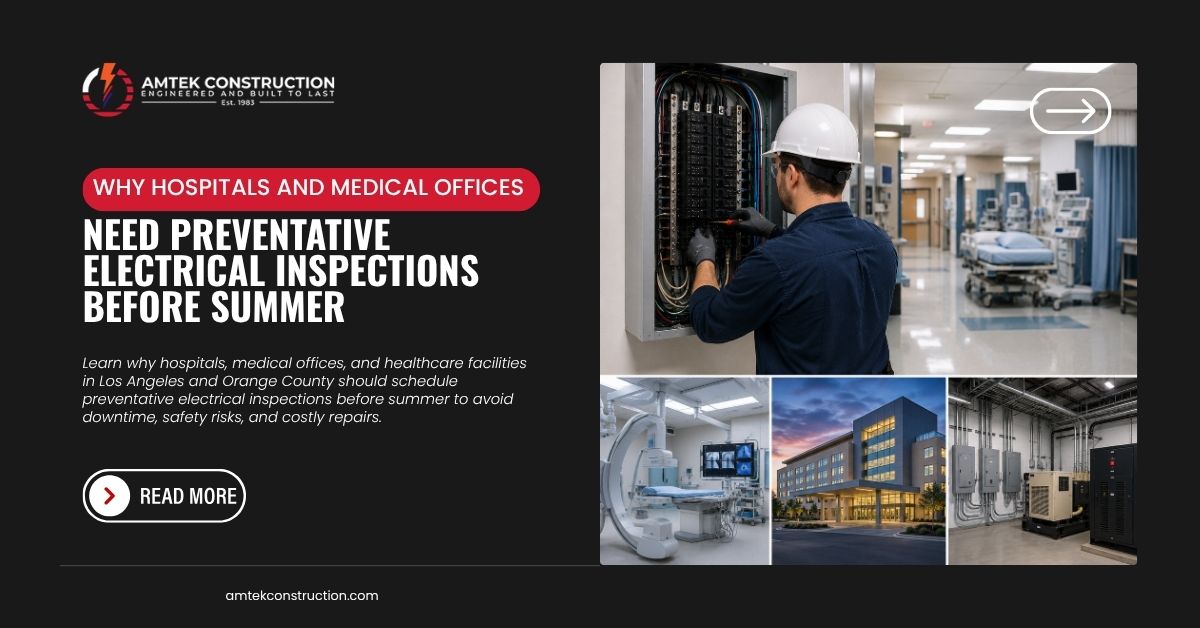
Hospitals, medical offices, urgent care centers, surgery centers, and healthcare campuses depend on reliable electrical systems every day. Unlike many businesses, healthcare facilities cannot simply pause operations when an electrical issue occurs. Patient care, medical equipment, security systems, refrigeration, and life-safety infrastructure all rely on consistent power.
As temperatures rise across Los Angeles and Orange County, electrical systems face increased demands from cooling equipment, extended operating hours, and growing energy consumption. Summer is often when hidden electrical issues become more noticeable, making preventative inspections one of the smartest investments healthcare facilities can make.
Working with experienced electrical contractors Los Angeles and electrical contractors Orange County helps healthcare administrators identify potential problems before they impact patient care, staff productivity, or facility operations.
Why Healthcare Facilities Cannot Afford Electrical Downtime
Electrical interruptions affect more than convenience in healthcare environments.
Critical systems often depend on uninterrupted power, including:
- Medical equipment
- Patient monitoring systems
- Refrigeration for medications
- Imaging equipment
- Security systems
- Access control systems
- Emergency lighting
- Communication networks
Even a relatively minor electrical issue can create significant operational challenges if not addressed quickly.
Why Healthcare Facilities Have Less Margin for Electrical Failure
Unlike traditional office buildings, healthcare facilities depend on uninterrupted electrical service for patient safety and regulatory compliance.
Even brief interruptions can affect:
- Diagnostic equipment
- Patient monitoring systems
- Medication refrigeration
- Surgical equipment
- Emergency communication systems
- Building security
- Electronic medical record systems
While many commercial properties can temporarily suspend operations during an electrical issue, hospitals and medical facilities often cannot. Electrical reliability directly impacts patient care, staff efficiency, and overall facility safety.
This is one reason preventative electrical inspections are particularly important in healthcare environments. Identifying potential issues before summer demand peaks helps reduce the risk of unexpected outages and ensures critical systems remain operational when they are needed most.
Increased HVAC Demand During Summer
One of the biggest seasonal challenges for healthcare facilities is increased cooling demand.
Hospitals and medical offices require controlled indoor temperatures for:
- Patient comfort
- Equipment operation
- Medication storage
- Infection control requirements
As HVAC systems work harder during summer months, electrical panels, circuits, and distribution systems experience increased load.
Preventative inspections help determine whether systems are prepared to handle these seasonal demands.
Common Electrical Issues Found During Preventative Inspections
Many healthcare facilities uncover issues that may not be immediately visible during daily operations.
Frequently Identified Problems
Aging Electrical Panels
Older panels may struggle to support modern medical equipment and expanded facility demands.
Overloaded Circuits
Years of equipment additions can gradually increase electrical demand beyond original design capacity.
Loose Connections
Small connection issues can create heat buildup and increase failure risk.
Outdated Wiring
Older facilities often contain wiring systems that were not designed for today’s technology requirements.
Grounding Problems
Proper grounding is essential for protecting sensitive medical equipment and maintaining safety standards.
Why Older Medical Buildings Require Extra Attention
Many medical offices throughout Southern California operate in buildings that were constructed decades ago.
These facilities often face challenges such as:
- Outdated infrastructure
- Increased equipment demands
- Expanding technology systems
- Aging electrical components
Many warning signs found in older homes can also appear in older commercial and healthcare facilities.
Related Reading: How to Know If Your Home’s Wiring Is Outdated (Especially in Older Los Angeles Homes)
Electrical Inspections Help Identify Problems Before They Become Emergencies
One of the primary benefits of preventative inspections is identifying issues before they create costly disruptions.
Inspectors often evaluate:
- Panel capacity
- Circuit loading
- Wiring condition
- Grounding systems
- Safety equipment
- Emergency power readiness
These evaluations allow facility managers to prioritize repairs and upgrades before summer demand peaks.
Code Compliance Remains Critical in Healthcare Facilities
Healthcare buildings must maintain strict safety standards while complying with applicable electrical regulations.
Preventative inspections help verify:
- Electrical equipment safety
- Proper labeling
- Grounding compliance
- Emergency system readiness
- Current code requirements
Addressing compliance concerns proactively can help avoid larger issues during future inspections or facility upgrades.
Related Reading: Electrical Code Requirements for Commercial Properties in Los Angeles & Orange County
Preparing for Future Healthcare Technology
Modern healthcare facilities continue to add new technology that places greater demands on electrical infrastructure.
Examples include:
- Advanced imaging equipment
- Digital patient monitoring
- Expanded server and network systems
- Security upgrades
- Electric vehicle charging stations
- Building automation systems
Preventative inspections help determine whether current systems can support future growth.
Facilities planning EV charging stations for staff, patients, or visitors may also benefit from understanding installation requirements.
Related Reading: EV Charger Installation in Los Angeles & Orange County: Costs, Permits, and What to Expect
The Financial Benefits of Preventative Inspections
Emergency electrical repairs are often more expensive than planned maintenance.
Benefits of preventative inspections include:
- Reduced emergency service calls
- Lower repair costs
- Improved equipment reliability
- Reduced downtime
- Better long-term budgeting
- Increased facility safety
For healthcare facilities, preventing a disruption is often far less costly than responding to one.
Why Summer Is the Best Time to Schedule Inspections
Summer provides an ideal opportunity to evaluate systems before they experience maximum stress.
Preventative inspections can help healthcare administrators:
- Identify weaknesses
- Plan upgrades
- Improve reliability
- Address code concerns
- Prepare for future growth
A proactive approach helps facilities enter the busiest months of the year with greater confidence.
Final Thoughts
Hospitals and medical offices rely on dependable electrical infrastructure to support patient care, medical equipment, security systems, refrigeration, communications, and daily operations. As summer temperatures increase and cooling systems place additional demands on electrical networks, preventative inspections become an important part of facility planning and risk management.
Identifying aging equipment, overloaded circuits, wiring concerns, grounding issues, and code compliance deficiencies before they become emergencies allows healthcare facilities to maintain safer and more reliable operations throughout the year. Proactive inspections also help facility managers better plan future upgrades, budget for maintenance, and reduce the risk of unexpected downtime.
For healthcare providers throughout Los Angeles and Orange County, preventative electrical inspections are more than a maintenance task—they are an investment in patient safety, operational continuity, regulatory compliance, and long-term facility performance.
FAQ Section
Why should hospitals schedule electrical inspections before summer?
Summer increases electrical demand due to HVAC systems, cooling equipment, and facility operations. Preventative inspections help identify problems before they affect patient care.
How often should medical facilities perform electrical inspections?
Most healthcare facilities should conduct annual electrical inspections, with additional evaluations after major equipment installations or facility expansions.
What are common electrical problems found in hospitals and medical offices?
Common issues include aging panels, overloaded circuits, outdated wiring, loose connections, grounding deficiencies, and equipment operating near capacity.
Can preventative inspections reduce healthcare facility downtime?
Yes. Identifying and correcting issues early significantly reduces the risk of unexpected outages and emergency repairs.
Are electrical inspections important for medical office buildings?
Absolutely. Medical offices depend on reliable power for equipment, patient records, security systems, communications, and day-to-day operations.