
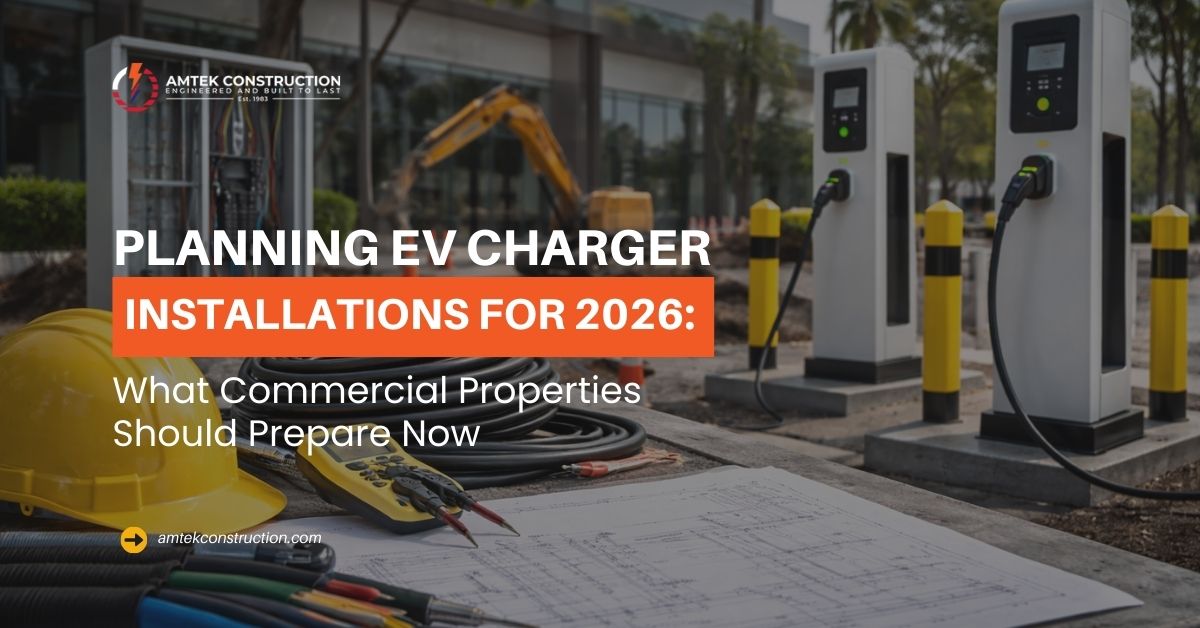
As electric vehicle adoption continues to accelerate across Southern California, EV charging infrastructure is quickly becoming a necessity — not a luxury — for commercial properties. For businesses in Orange County, 2026 is shaping up to be a pivotal year for EV charger planning, driven by tenant expectations, employee demand, and long-term sustainability goals.
Experienced electrical contractors Orange County recommend that commercial property owners begin preparing now to avoid rushed installations, costly upgrades, and compliance issues later.
Why 2026 Is a Key Year for EV Charger Planning
EV adoption is increasing across office buildings, retail centers, industrial facilities, and mixed-use developments. Even properties that don’t plan to install chargers immediately are under growing pressure to ensure their electrical infrastructure is EV-ready.
Early planning helps Orange County businesses:
- Reduce future installation costs
- Avoid electrical capacity bottlenecks
- Minimize tenant and operational disruption
- Stay compliant with evolving state and local codes
Many of these readiness gaps are first identified during Year-End Electrical Inspections: What Commercial Buildings Should Address Before 2026, making inspections a critical first step in EV charger planning.
Evaluating Electrical Panel Capacity
One of the most important steps in preparing for EV chargers is determining whether your existing electrical panels can support additional load.
Key considerations include:
- Available panel capacity
- Age and condition of existing panels
- Space for new breakers
- Long-term expansion needs
Older commercial buildings often lack the capacity needed for EV chargers without upgrades. This challenge is explored in
Planning Commercial Electrical Upgrades for 2026: What Orange County Businesses Should Budget for Now, which highlights how proactive upgrades prevent emergency retrofits.
Licensed electrical contractors in Orange County CA can perform detailed load calculations to identify exactly what upgrades are required.
Circuit Planning and Load Management
EV chargers require dedicated circuits and precise load balancing. Without proper planning, installations can cause breaker trips, power disruptions, and failed inspections.
Commercial properties should plan for:
- Dedicated EV charging circuits
- Balanced load distribution across panels
- Demand management strategies
- Scalability for future charger expansion
Load-related issues are a common cause of electrical failures during high-demand periods, as discussed in Common Electrical Failures Businesses Experience During the Holidays — and How to Prevent Them.
Parking Lot and Conduit Infrastructure
Electrical readiness goes beyond panels and circuits — parking lot infrastructure plays a major role in EV charger success.
Preparation steps include:
- Conduit pathways from panels to parking areas
- Trenching or surface-mounted conduit planning
- Weather-rated enclosures and equipment
- ADA-compliant charger placement
Installing conduit in advance — even before chargers are added — significantly reduces future costs and disruption.
Code Compliance and Permitting Considerations
EV charger installations must comply with California electrical codes, Orange County permitting requirements, and local utility standards. Inspectors increasingly expect commercial properties to demonstrate EV-ready infrastructure, even when chargers are planned for future phases.
Key compliance considerations include:
- Proper grounding and bonding for charging equipment
- Surge protection to protect vehicles and electrical systems
- Clearly documented load calculations for inspections
- Coordination with utilities for service upgrades or transformer capacity
Reviewing compliance requirements early helps businesses avoid permitting delays, failed inspections, and costly redesigns during installation. Working with experienced electrical contractors ensures EV infrastructure is installed safely, meets current code requirements, and remains adaptable as standards continue to evolve.
Integrating EV Chargers Into Long-Term Energy Planning
EV chargers affect far more than just parking areas — they influence the entire electrical system. Treating EV charging as a standalone upgrade often leads to capacity issues, inefficiencies, and future rework.
Commercial properties should evaluate EV charging alongside:
- HVAC electrical loads
- Lighting efficiency upgrades
- Backup power and emergency systems
- Ongoing energy monitoring and demand management
Taking a holistic approach allows businesses to plan electrical infrastructure that supports current needs while remaining flexible for future growth. Integrating EV charging into long-term energy planning helps prevent overloads, reduces operating costs, and ensures the electrical system can scale as demand increases.
Final Thoughts
EV charger installations are no longer a future consideration — they’re a 2026 reality for commercial properties across Orange County. Businesses that plan early gain flexibility, reduce costs, and avoid rushed electrical upgrades under pressure.
By working with experienced electrical contractors Orange County, commercial property owners can ensure their electrical systems are EV-ready, code-compliant, and built for long-term growth.
Preparing now leads to smoother installations later — and a property that’s ready for what’s next.