Why Do My Lights Flicker? When It’s Normal and When to Call an Electrician

You’re sitting in your living room watching television when the lights suddenly flicker. Maybe it happens when the air conditioner starts. Maybe the kitchen lights dim for a second when you turn on the microwave. Or perhaps you’ve noticed a light that seems to flicker randomly, even when nothing else in the house is running.

It’s easy to ignore a flickering light, especially when it only happens occasionally.

But what does it actually mean?

For homeowners throughout Los Angeles and Orange County, flickering lights are a common electrical concern. Sometimes the explanation is as simple as a loose light bulb or an incompatible dimmer switch. Other times, flickering can indicate a problem with a circuit, electrical connection, or the home’s electrical system.

The challenge is knowing the difference.

Understanding why lights flicker, what warning signs deserve attention, and when to call an electrician can help you address minor annoyances before they turn into larger electrical problems.


Is It Normal for Lights to Flicker Occasionally?

Occasional flickering isn’t always a sign of a serious electrical problem.

For example, some lights may briefly dim when a large motor-driven appliance starts. Air conditioners, refrigerators, and other equipment can create a temporary increase in electrical demand during startup.

A brief voltage change may be noticeable in certain lighting fixtures.

LED lights can also be sensitive to voltage fluctuations or incompatible dimmer switches.

However, repeated or unexplained flickering shouldn’t automatically be considered normal.

The important questions are how often it happens, which lights are affected, and whether other electrical symptoms occur at the same time.

A single light behaving strangely may have a different explanation from multiple rooms suddenly dimming together.

That’s why identifying the pattern matters.


1. A Loose Light Bulb or Fixture Connection

One of the simplest explanations for a flickering light is a bulb that isn’t making reliable contact with its socket.

If only one fixture is affected, the problem may involve the bulb itself, the socket, or an internal fixture connection.

Sometimes replacing a failing bulb resolves the issue.

However, homeowners should be careful not to assume that every flickering fixture has a simple explanation.

If a fixture continues to flicker after the bulb has been replaced, the issue may involve the fixture, switch, wiring, or another electrical component.

If you notice discoloration, unusual heat, buzzing, or a burning smell, stop using the affected fixture and arrange a professional evaluation.

Never attempt to tighten or inspect energized electrical connections.


2. Your LED Bulbs May Not Be Compatible With Your Dimmer Switch

LED lighting has become popular because it offers efficient illumination and a wide range of lighting options.

But not every LED bulb works properly with every dimmer switch.

Some older dimmers were designed for incandescent lighting.

When certain LED bulbs are connected to incompatible dimmers, they may flicker, pulse, buzz, or behave unpredictably at particular brightness settings.

You might notice that the light works normally at full brightness but begins flickering when dimmed.

In some cases, using an appropriate LED-compatible dimmer and compatible bulbs can resolve the problem.

However, flickering can also result from faulty wiring or electrical connections, so compatibility shouldn’t be assumed to be the only cause.

If you’re planning to replace several fixtures or upgrade your home’s lighting, it’s worth having an electrician review the proposed equipment.

Proper lighting installation involves more than choosing fixtures that look attractive.

The controls, wiring, and electrical requirements should also be appropriate for the installation.


3. Your Lights Dim When the Air Conditioner Starts

Southern California homeowners rely heavily on air conditioning during warmer months.

You may notice the lights dim briefly when your air conditioner starts running.

This can happen because the compressor motor draws additional current during startup.

A small, momentary change in lighting brightness may occur without indicating an immediate emergency.

However, noticeable dimming that becomes more frequent, lasts longer, or affects multiple areas of the home deserves attention.

The cause may involve the equipment, the circuit supplying it, voltage conditions, or the home’s electrical infrastructure.

An electrician can evaluate whether the observed behavior is consistent with the system’s normal operation or whether further testing is needed.

If your lights suddenly begin dimming more severely than before, don’t simply assume it’s because the weather is hot.

A change in electrical behavior can be an important clue.


4. Too Many Appliances May Be Sharing a Circuit

Modern homes use electricity in ways that older homes weren’t necessarily designed to support.

Think about a typical kitchen.

You might have a microwave, coffee maker, toaster oven, blender, and air fryer operating throughout the day.

If multiple high-demand appliances are connected to the same circuit, their combined electrical load can create problems.

In some situations, you may notice dimming or other changes when appliances operate.

Overloaded circuits may also cause breakers to trip.

It’s important to understand that flickering alone doesn’t prove a circuit is overloaded.

Loose connections, voltage problems, and other electrical conditions can produce similar symptoms.

A professional evaluation can help identify the actual cause.

For homeowners planning kitchen renovations or additional electrical equipment, reviewing circuit capacity early can prevent avoidable problems.

Adding dedicated circuits where appropriate may help distribute electrical loads more effectively.


5. Loose Electrical Connections Can Cause Flickering

This is one of the more concerning possibilities.

Electrical connections can deteriorate, become damaged, or develop problems over time.

When a connection is unreliable, the electrical supply to a fixture or circuit may become intermittent.

The result can include flickering, dimming, or unexpected interruptions.

A loose connection may also create localized heating or electrical arcing, depending on the circumstances.

These conditions can create a fire hazard.

Warning signs that deserve immediate attention include:

  • Flickering accompanied by buzzing or crackling
  • Outlets or switches that feel unusually warm
  • Burning or melting odors
  • Discoloration around electrical devices
  • Lights that flicker when a switch or outlet is touched
  • Repeated interruptions affecting the same circuit

If you notice smoke, sparks, or signs of active electrical overheating, move away from the affected area and seek emergency assistance when appropriate.

Do not remove outlet covers, open electrical panels, or attempt to repair wiring while it is energized.

Electrical connections should be inspected and repaired by a qualified professional.


6. Your Electrical Panel May Need Attention

The electrical panel distributes electricity throughout your home.

It contains circuit breakers and connections that are essential to the operation of your electrical system.

If flickering affects multiple circuits or occurs alongside other electrical symptoms, the panel may be one of several areas an electrician needs to evaluate.

Possible concerns can include deteriorating connections, damaged components, or problems related to the electrical distribution system.

However, flickering lights do not automatically mean you need a new electrical panel.

That distinction matters.

Sometimes the problem is limited to a particular circuit or fixture.

In other cases, an evaluation may reveal that the electrical panel or service equipment needs repair or replacement.

AMTEK Construction provides residential electrical panel upgrades in Los Angeles and Orange County for homeowners whose existing electrical infrastructure requires improvement.

The right recommendation should be based on the condition of the equipment and the results of a professional evaluation, not simply the age of the home.


7. Flickering Throughout the House May Indicate a Service Problem

When lights flicker in several rooms at the same time, the issue may extend beyond an individual fixture.

Possible causes include problems with the home’s electrical service, connections, or voltage supplied to the property.

A particularly concerning symptom is when some lights become unusually bright while others dim.

This can indicate a neutral connection problem or another serious electrical condition.

Voltage abnormalities can damage appliances and electronic equipment and may create safety hazards.

If you notice widespread flickering, especially when accompanied by unusually bright lights, burning odors, or other concerning symptoms, stop using affected equipment and seek prompt professional assistance.

Depending on the situation, the utility company may also need to investigate the incoming electrical supply.

An electrician can help determine whether the problem appears to originate within the home’s electrical system or requires utility involvement.


8. Older Homes May Have Wiring That Needs Evaluation

Los Angeles and Orange County have many beautiful homes that were built decades ago.

Older homes can offer distinctive architecture, established neighborhoods, and features that homeowners appreciate.

But their electrical systems may have experienced years of changes.

Previous owners may have remodeled kitchens, added appliances, converted garages, or installed new lighting.

Some modifications may have been completed professionally, while others may deserve closer examination.

Over time, wiring and electrical connections can also experience deterioration or damage.

That doesn’t mean every older home requires complete rewiring.

It means unexplained electrical symptoms should be evaluated rather than ignored.

Working with experienced electrical contractors Orange County homeowners can trust is especially important when dealing with older wiring, recurring flickering lights, or unexplained electrical problems. A professional inspection can help identify the cause before recommending repairs or upgrades.

AMTEK Construction offers residential electrical inspections in Los Angeles and Orange County to help homeowners understand the condition of their electrical systems.

An inspection can help identify visible concerns and determine whether additional diagnostic testing is appropriate.


9. Problems With the Utility Supply Can Affect Your Lights

Not every flickering light originates inside your home.

Voltage disturbances can also occur on the utility distribution system.

Nearby electrical faults, utility equipment problems, or other supply-related conditions may affect lighting.

Sometimes neighbors experience similar symptoms.

If flickering affects the entire property, it may be worth checking whether nearby homes are experiencing the same issue and contacting the utility company.

However, don’t assume a utility problem is responsible simply because several lights are affected.

Electrical service connections and other components on the property can also create widespread symptoms.

A qualified electrician can evaluate the home’s electrical system and help determine the appropriate next steps.


When Is Flickering Normal, and When Is It Dangerous?

The following situations can help homeowners understand when further attention may be needed.


Flickering That May Have a Simple Explanation

A single LED bulb flickers only when dimmed.

One bulb begins flickering and stops after it is replaced.

Lights briefly dim when a large appliance starts, with no other symptoms.

These situations may have relatively straightforward explanations, although persistent or worsening behavior still deserves evaluation.


Flickering That Should Be Checked by an Electrician

Lights flicker repeatedly without an obvious cause.

Several fixtures on the same circuit behave unpredictably.

Flickering occurs when appliances operate.

The problem continues after bulbs and compatible controls have been checked.

The flickering becomes more frequent or noticeable over time.


Flickering That May Require Urgent Attention

Lights suddenly become unusually bright or dim throughout the home.

Flickering occurs alongside burning smells, smoke, sparks, or unusual heat.

You hear crackling or arcing sounds near electrical equipment.

Electrical devices show signs of melting or damage.

Multiple circuits lose power or behave unpredictably.

These symptoms may indicate dangerous electrical conditions and should not be ignored.


Can Flickering Lights Cause an Electrical Fire?

Flickering itself doesn’t cause an electrical fire.

However, some of the electrical conditions responsible for flickering can create fire hazards.

For example, a deteriorating electrical connection may generate excessive heat or arcing.

If left unaddressed, that condition can damage electrical components and surrounding materials.

This is why the underlying cause matters more than the visible symptom.

A flickering LED caused by dimmer incompatibility is very different from flickering caused by a damaged electrical connection.

Homeowners should avoid assuming the cause without appropriate evaluation.


How Does an Electrician Diagnose Flickering Lights?

An electrician typically begins by asking questions about when and where the flickering occurs.

Does it affect one fixture or several rooms?

Does it happen when the air conditioner starts?

Does it occur only when certain appliances are operating?

Has the problem become worse?

These details help narrow down possible causes.

Depending on the symptoms, the electrician may evaluate lighting fixtures, switches, circuits, electrical connections, the panel, and relevant voltage conditions.

Diagnostic testing may help identify irregularities that aren’t obvious during a visual inspection.

The goal is to determine why the flickering occurs before recommending repairs.

Sometimes the solution is relatively simple.

Other situations may require electrical repairs, circuit modifications, or additional investigation.


Should You Replace Your Electrical Panel Because Your Lights Flicker?

Not necessarily.

An electrical panel replacement is a significant improvement and should be recommended for a valid reason.

Flickering lights alone do not establish that the panel needs replacement.

The cause may involve an individual fixture, dimmer switch, branch circuit, service connection, or utility supply.

However, if an inspection identifies damaged panel components, unsafe conditions, or inadequate capacity for planned electrical improvements, an upgrade may be appropriate.

Whether you’re searching for electrical contractors in Los Angeles or electrical contractors Orange County, choosing an experienced electrical contractor matters. AMTEK Construction evaluates the complete electrical system to help determine whether the problem requires a simple repair, additional troubleshooting, or a more substantial electrical upgrade.


Can New LED Lighting Help Stop Flickering?

Sometimes.

If the flickering is caused by a failing bulb or incompatibility between LED fixtures and dimmers, selecting appropriate lighting equipment may solve the problem.

However, installing new LED lights will not correct damaged wiring, poor electrical connections, or service voltage problems.

This is an important distinction for homeowners remodeling their kitchens, bathrooms, or living spaces.

Lighting upgrades should be coordinated with the condition of the existing electrical system.

The same principle applies to commercial properties.

Office buildings, retail stores, warehouses, and other facilities may experience lighting problems related to outdated fixtures, incompatible controls, or electrical system concerns.

For businesses considering larger lighting improvements, AMTEK Construction also provides commercial LED lighting installation and upgrades in Los Angeles and Orange County.

A commercial lighting evaluation can help determine whether existing fixtures, controls, or related electrical infrastructure should be improved.


Frequently Asked Questions About Flickering Lights

Why do my lights flicker when the air conditioner turns on?

Air conditioners can draw substantial current during startup, sometimes causing a brief voltage change. Persistent, severe, or worsening dimming should be evaluated by an electrician.

Is it dangerous if only one light flickers?

Not always. The problem may involve the bulb, fixture, or dimmer. However, continued flickering, buzzing, unusual heat, or burning odors can indicate a more serious concern.

Why do my LED lights flicker even though they’re new?

Possible causes include incompatible dimmer switches, LED driver problems, electrical connections, or voltage irregularities.

Can a bad breaker cause lights to flicker?

A defective breaker or associated connection may contribute to electrical problems, but flickering can have many other causes. Proper testing is needed to identify the source.

Why do my lights flicker when I use the microwave?

Starting or operating an appliance can affect electrical loads. Repeated or pronounced flickering may indicate a circuit or voltage issue that needs evaluation.

Should I call an electrician if all my lights flicker?

Yes. Widespread flickering deserves prompt investigation because it may involve the electrical service, neutral connections, or utility supply.

Can flickering lights damage appliances?

The flickering itself is not necessarily damaging, but underlying voltage problems can affect appliances and sensitive electronics.

Do flickering lights mean my house needs rewiring?

Not automatically. Rewiring is only appropriate when the condition of the existing wiring and the results of an evaluation justify it.


Don’t Ignore Changes in Your Home’s Electrical System

Your home’s lighting can provide clues about what’s happening behind the walls.

A single flickering bulb may be a minor inconvenience.

But repeated flickering, unusual dimming, buzzing, overheating, or changes affecting multiple rooms can indicate an electrical problem that deserves professional attention.

The most important thing is not to guess.

For homeowners in Los Angeles and Orange County, understanding the cause of flickering lights can help prevent unnecessary repairs while ensuring potentially dangerous conditions aren’t overlooked.

AMTEK Construction helps residential property owners evaluate electrical concerns, inspect existing systems, troubleshoot problems, and plan appropriate electrical improvements.

If your lights are flickering and you’re unsure why, it’s worth having the electrical system checked before the problem becomes more serious.

Contact AMTEK Construction to discuss your electrical concerns and schedule a professional evaluation.

 

Planning a Kitchen Remodel? 9 Electrical Upgrades Homeowners Should Consider Before the Walls Close

A kitchen remodel is one of the most exciting improvements you can make to your home. New cabinets, countertops, appliances, flooring, and lighting can completely transform how your kitchen looks and feels. But there’s one important part of the renovation that homeowners often overlook until construction is already underway: the electrical system.

Behind those beautiful new cabinets and freshly painted walls are the wires, circuits, outlets, and connections that make everything work.

And once the drywall goes up, making changes becomes a lot more complicated.

For homeowners in Los Angeles and Orange County, kitchen remodeling is an opportunity to do more than update the appearance of the home. It’s also a chance to make sure the electrical system can safely and reliably support the way your family lives today.

Whether you’re remodeling a small kitchen in an older home or creating a spacious, modern kitchen with high-end appliances, electrical planning should happen before the walls close.

Here are nine electrical upgrades worth considering before your kitchen renovation reaches that point.


1. Evaluate Your Electrical Panel Before Adding New Appliances

One of the first questions homeowners should ask is whether their existing electrical system can support the appliances and features planned for the new kitchen.

Today’s kitchens often include more electrical equipment than kitchens built 20 or 30 years ago.

You may be adding an induction cooktop, double oven, built-in microwave, beverage refrigerator, dishwasher, or other equipment that wasn’t part of the original kitchen.

Each appliance has its own electrical requirements.

If your home has an older electrical panel or limited available capacity, adding new equipment without evaluating the system could create problems.

That doesn’t mean every kitchen remodel requires a new panel.

Some homes already have sufficient electrical capacity. Others may need additional circuits or more substantial improvements.

The important thing is to find out before construction progresses.

AMTEK Construction provides residential electrical panel upgrades in Los Angeles and Orange County and can help homeowners determine whether their existing electrical infrastructure is appropriate for the proposed renovation.

A professional evaluation can help you avoid discovering an electrical capacity issue after you’ve already purchased expensive appliances and installed new cabinets.


2. Plan Dedicated Circuits for Major Kitchen Appliances

Not every appliance should share the same electrical circuit.

Major kitchen appliances may require dedicated circuits based on their electrical specifications and applicable code requirements.

Examples can include:

  • Electric ranges and cooktops
  • Wall ovens
  • Built-in microwaves
  • Dishwashers
  • Garbage disposals
  • Certain refrigerators or specialty appliances
  • Other high-demand kitchen equipment

The exact requirements depend on the appliance, installation instructions, and applicable electrical code.

This is particularly important when changing from gas appliances to electric models.

For example, replacing a gas cooktop with an induction cooktop can introduce a significant new electrical load.

Likewise, upgrading from a conventional oven to a larger electric wall oven may require electrical modifications.

Before ordering appliances, make sure your contractor and electrician have the model specifications.

It’s much easier to plan the appropriate circuits while the kitchen is open than to discover later that the electrical system doesn’t match the equipment you’ve purchased.


3. Add Enough Countertop Outlets for How You Actually Cook

Think about how many electrical devices you use in your kitchen.

Coffee makers, air fryers, blenders, stand mixers, toaster ovens, food processors, and other countertop appliances all need power.

Now think about how frustrating it can be when there aren’t enough outlets in the right places.

Older kitchens were often designed around fewer electrical devices.

A remodel gives you the opportunity to rethink outlet placement.

Consider where you normally prepare food, make coffee, charge devices, and use small appliances.

You may want convenient receptacles near your coffee station, food-preparation area, or other regularly used workspaces.

However, outlet placement isn’t simply a matter of personal preference.

Kitchen countertop receptacles are subject to electrical code requirements, including provisions addressing spacing, circuit protection, and permitted locations.

A qualified electrician can help determine where outlets are required and where additional receptacles may improve convenience.

The goal is a kitchen that works naturally without depending on extension cords or constantly unplugging appliances.


4. Upgrade GFCI and AFCI Protection Where Required

Kitchen electrical safety deserves special attention because electricity and water are often used close together.

Ground-fault circuit interrupter protection, commonly called GFCI protection, is designed to reduce the risk of electric shock by interrupting power when certain ground-fault conditions are detected.

Arc-fault circuit interrupter protection, or AFCI protection, helps address certain electrical arcing conditions associated with fire hazards.

Depending on the circuit and applicable code, kitchen electrical work may require GFCI protection, AFCI protection, or both.

Requirements can vary based on the scope of the renovation and the code adopted by the local jurisdiction.

For homeowners remodeling older kitchens, this is a good opportunity to evaluate whether existing electrical protection needs to be updated.

Don’t assume that because an outlet works, it necessarily provides the protection required for the renovated space.

An electrician can assess the relevant circuits and determine what changes are appropriate.


5. Design Your Kitchen Lighting Before Installing Cabinets

Lighting is one of the biggest opportunities to improve a kitchen during remodeling.

Unfortunately, it is also one of the areas where homeowners sometimes wait too long to make decisions.

A kitchen can have beautiful cabinets and countertops but still feel uncomfortable if the lighting isn’t planned properly.

Good kitchen lighting generally involves several layers.


General Lighting

This provides overall illumination throughout the kitchen.

Recessed LED fixtures and other ceiling-mounted lighting can help create a comfortable, well-lit environment.


Task Lighting

Task lighting focuses on areas where you’re actually working.

Under-cabinet lighting is a popular option because it illuminates countertops where people prepare food.

Without dedicated task lighting, upper cabinets can cast shadows across work surfaces.


Accent Lighting

Accent lighting can highlight architectural details, open shelving, glass cabinets, or other design features.


Decorative Lighting

Pendant lights over an island or dining area can add visual interest while contributing to the overall lighting design.

The key is to plan these elements before the walls and ceilings are finished.

Wiring, switch locations, fixture placement, and lighting controls should be coordinated with the cabinet layout.

If you wait until after the cabinets are installed, adding under-cabinet lighting or moving fixtures may become much more difficult.


6. Install Better Lighting Controls and Dimmer Switches

A kitchen doesn’t need the same amount of light at every moment of the day.

Bright lighting may be helpful when preparing dinner, but you might prefer softer lighting when enjoying a quiet evening.

A remodel is a good time to consider lighting controls that provide greater flexibility.

Depending on the fixtures and design, options may include:

  • LED-compatible dimmer switches
  • Separate switches for different lighting zones
  • Under-cabinet lighting controls
  • Smart switches
  • Programmable lighting controls
  • Convenient multi-location switching

For example, you may want island pendants controlled separately from recessed ceiling lights.

Under-cabinet lighting might operate independently from the rest of the kitchen.

This allows you to adjust the lighting based on how the space is being used.

Not every dimmer is compatible with every LED fixture, so selecting the correct equipment matters.

Discussing lighting controls during the planning stage helps ensure the necessary wiring and devices are included before the walls close.


7. Think Carefully About Kitchen Island Electrical Needs

Kitchen islands have become central gathering places in many homes.

They may serve as food-preparation areas, informal dining spaces, homework stations, and places where family members charge electronic devices.

Some islands also contain sinks, dishwashers, cooktops, or other equipment.

All of these features can affect electrical planning.

If you’re installing a new island, consider its intended use before finalizing the layout.

Will it contain an induction cooktop?

Will you need electrical connections for appliances?

Are you planning pendant lighting above it?

Would convenient access to power improve how you use the space?

Electrical requirements for kitchen islands have changed under newer electrical code editions, so homeowners should not assume that older outlet-placement practices are still acceptable.

Your electrician should verify the requirements adopted by the local building department.

Planning ahead is particularly important when electrical wiring must be routed beneath floors or through other areas that will become difficult to access later.


8. Prepare for Smart Kitchen Technology and Future Electrical Needs

Kitchen technology continues to evolve.

Many homeowners are now installing appliances with connected features, programmable controls, or additional electrical requirements.

But smart technology isn’t limited to appliances.

A modern kitchen may include:

  • Smart lighting
  • Connected appliances
  • Touchless faucets requiring power
  • Built-in charging areas
  • Under-cabinet electrical accessories
  • Smart switches
  • Automated lighting controls
  • Specialty ventilation equipment

You don’t necessarily need to install every available feature during your remodel.

However, thinking about potential future needs can help you make better decisions while construction is underway.

For example, if you expect to add a particular electrical feature later, it may be worth discussing whether provisions should be included during the renovation.

The cost and complexity of future electrical modifications can increase once new finishes, cabinetry, and walls are in place.

Planning for realistic future needs is different from installing equipment you don’t need.

It’s about making informed decisions while you still have access to the electrical infrastructure.


9. Schedule an Electrical Inspection Before Closing the Walls

This may be the most important step of all.

Before drywall, cabinets, and other finishes conceal the electrical work, make sure the installation has received the inspections required for the project.

Kitchen renovations often involve multiple trades working in the same space.

Electricians, plumbers, HVAC contractors, cabinet installers, and general contractors may all need access to walls, ceilings, and floors.

Coordination matters.

Depending on the project, electrical work may require permits and inspections before it can be concealed.

An inspection can help confirm that the work meets applicable requirements at the relevant stage of construction.

It is also important to address existing electrical problems before they become hidden behind new finishes.

AMTEK Construction offers residential electrical inspections in Los Angeles and Orange County to help homeowners evaluate electrical conditions and identify concerns that may affect their remodeling plans.

A professional electrical evaluation is not a substitute for any required municipal inspection, but it can help identify existing conditions and support proper project planning.


Why Older Southern California Kitchens Deserve Extra Attention

Los Angeles and Orange County have many established neighborhoods filled with homes built decades ago.

These properties often have character, desirable locations, and layouts that homeowners want to preserve while updating their kitchens.

But the electrical systems may have been designed for a very different era.

A home that originally had a basic refrigerator, gas range, a few countertop outlets, and limited lighting may now be expected to support a completely different kitchen.

Over the years, previous owners may also have made electrical modifications.

Some improvements may have been professionally completed and properly permitted. Others may deserve closer evaluation.

When remodeling an older home, the electrician should consider the existing system rather than assuming everything behind the walls is ready for modern equipment.

For homeowners working with electrical contractors in Los Angeles, early electrical planning can help identify potential issues before they interfere with the renovation schedule.

The same applies to Orange County homeowners upgrading older kitchens in established residential communities.


Why Electrical Planning Should Happen Before Demolition Is Finished

A common remodeling mistake is making electrical decisions only after the kitchen layout has already been finalized.

By that point, the homeowner may have selected cabinets, ordered appliances, and committed to lighting locations without confirming whether the electrical system can support those choices.

A better approach is to involve an electrician early enough to review the plans.

Ideally, the electrician should know:

  • Which appliances will be installed
  • Whether gas appliances are being replaced with electric models
  • Where the kitchen island will be located
  • How countertop areas will be used
  • What type of lighting is planned
  • Where switches and outlets are desired
  • Whether any electrical problems already exist
  • Whether future kitchen upgrades are anticipated

This information helps establish the electrical scope before installation begins.

It also allows the electrician to coordinate with the general contractor and other trades.

Good planning doesn’t eliminate every unexpected condition, particularly in older homes, but it can reduce avoidable surprises.


Does Every Kitchen Remodel Require an Electrical Panel Upgrade?

No.

This is an important distinction because homeowners sometimes assume that remodeling automatically means replacing the electrical panel.

The need for an upgrade depends on the existing system and the electrical requirements of the renovation.

A smaller remodel that retains most existing appliances and circuits may have very different requirements from a complete renovation that adds an induction cooktop, multiple ovens, and other major electrical equipment.

The correct approach is to evaluate the actual electrical loads and existing infrastructure.

An electrician may determine that the panel is appropriate, that additional circuit work is needed, or that a larger upgrade should be considered.

The recommendation should reflect the home’s condition and the proposed project rather than being based on assumptions.


How Much Should You Budget for Kitchen Electrical Work?

Electrical costs vary considerably depending on the project.

A renovation involving a few lighting and outlet changes will generally have a different scope from one requiring new appliance circuits, extensive rewiring, electrical panel improvements, or significant changes to the kitchen layout.

Factors that can affect cost include:

  • The age and condition of the existing electrical system
  • The number of new circuits
  • Appliance electrical requirements
  • Lighting fixture selections
  • The extent of wiring modifications
  • Electrical panel capacity
  • Access to walls, ceilings, and floors
  • Permit and inspection requirements
  • Coordination with other construction work

Rather than relying on a generic price estimate, homeowners should have the electrical scope evaluated before finalizing the renovation budget.

This helps make sure electrical improvements are treated as an essential part of the project rather than an unexpected expense.


Common Kitchen Remodeling Electrical Mistakes to Avoid

Even a carefully designed kitchen can develop problems when electrical planning is overlooked.

Some common mistakes include choosing appliances before reviewing their electrical requirements, placing outlets without considering cabinet layouts, failing to coordinate lighting with the kitchen design, and waiting until late in construction to evaluate panel capacity.

Another mistake is assuming that existing wiring is suitable simply because the old kitchen worked.

A renovation may change both the electrical demand and the way circuits are used.

Homeowners should also avoid making electrical modifications themselves unless they are legally permitted and appropriately qualified to perform the work.

Kitchen electrical systems involve significant safety and code considerations.

Working with an experienced electrical contractor in Orange County or Los Angeles can help ensure the project is evaluated and planned appropriately.


Frequently Asked Questions About Kitchen Electrical Upgrades

Should I hire an electrician before remodeling my kitchen?

Yes. Involving an electrician during the planning stage can help identify electrical capacity concerns, appliance requirements, lighting needs, and potential wiring changes before construction progresses.

Do I need new wiring for a kitchen remodel?

Not necessarily. The answer depends on the condition of the existing wiring, the scope of the renovation, appliance requirements, and applicable electrical codes.

Can I add more outlets during a kitchen remodel?

Yes, provided the work is properly designed and installed. Kitchen outlets must meet applicable requirements for placement, circuits, and electrical protection.

Do induction cooktops require special electrical work?

They may. Induction cooktops have specific electrical requirements, and some installations require a new dedicated circuit or other electrical modifications.

Should I upgrade my kitchen lighting during remodeling?

A remodel is an excellent opportunity to improve lighting because wiring and fixture placement can be coordinated with the new kitchen layout before walls and ceilings are finished.

Is an electrical inspection required before drywall installation?

Depending on the permitted scope of work and local requirements, an electrical rough-in inspection may be required before wiring is concealed. Your contractor and electrician should confirm the inspection sequence with the local jurisdiction.

Does a kitchen remodel require a new electrical panel?

Not automatically. An electrician should evaluate the existing panel and the electrical demands of the proposed kitchen before determining whether an upgrade is necessary.


Final Thoughts: The Best Kitchen Remodels Start Behind the Walls

It’s easy to get excited about countertops, cabinets, appliances, and finishes.

Those are the improvements you’ll see every day.

But the electrical system behind the walls plays a major role in whether your new kitchen is functional, convenient, and ready for the way you actually live.

Planning dedicated circuits, outlets, lighting, electrical protection, appliance connections, and future needs before the walls close can help prevent unnecessary complications later.

For homeowners throughout Los Angeles and Orange County, the smartest time to address these details is before the renovation reaches the finishing stages.

AMTEK Construction helps Southern California homeowners evaluate existing electrical systems, plan kitchen remodeling electrical improvements, and determine whether additional circuits, inspections, or panel upgrades are appropriate.

Before you close the walls on your next kitchen renovation, make sure the electrical system behind them is ready for everything your new kitchen will need.

Contact AMTEK Construction to discuss your upcoming kitchen remodel and residential electrical requirements.

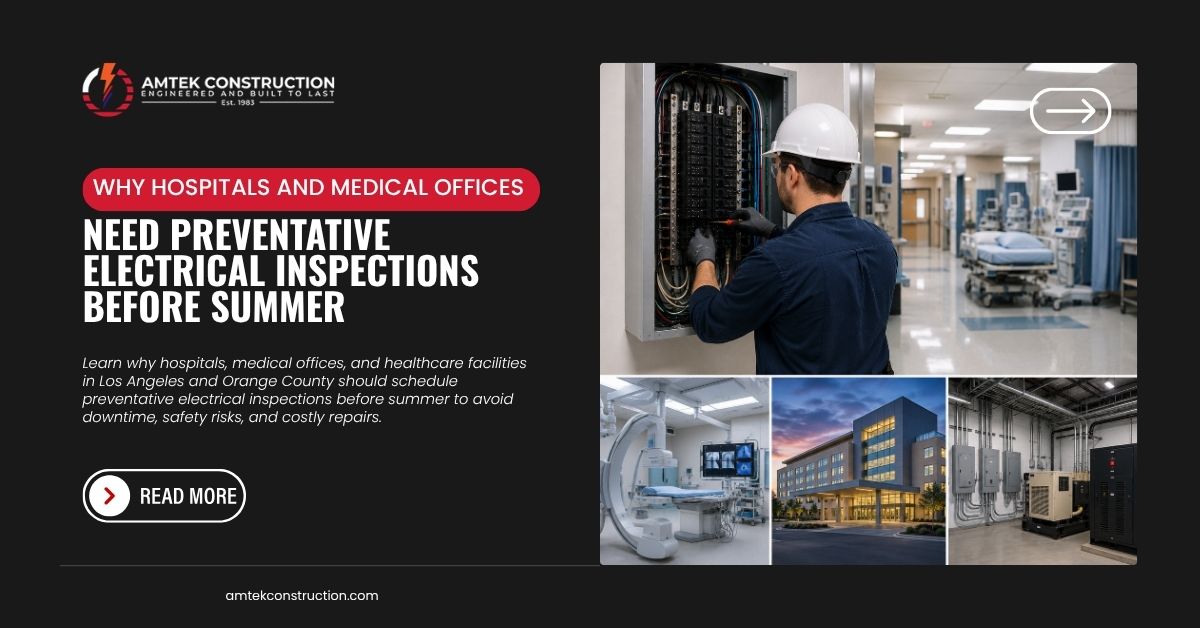
Why Hospitals and Medical Offices Need Preventative Electrical Inspections Before Summer

Hospitals, medical offices, urgent care centers, surgery centers, and healthcare campuses depend on reliable electrical systems every day. Unlike many businesses, healthcare facilities cannot simply pause operations when an electrical issue occurs. Patient care, medical equipment, security systems, refrigeration, and life-safety infrastructure all rely on consistent power.

As temperatures rise across Los Angeles and Orange County, electrical systems face increased demands from cooling equipment, extended operating hours, and growing energy consumption. Summer is often when hidden electrical issues become more noticeable, making preventative inspections one of the smartest investments healthcare facilities can make.

Working with experienced electrical contractors Los Angeles and electrical contractors Orange County helps healthcare administrators identify potential problems before they impact patient care, staff productivity, or facility operations.


Why Healthcare Facilities Cannot Afford Electrical Downtime

Electrical interruptions affect more than convenience in healthcare environments.

Critical systems often depend on uninterrupted power, including:

  • Medical equipment
  • Patient monitoring systems
  • Refrigeration for medications
  • Imaging equipment
  • Security systems
  • Access control systems
  • Emergency lighting
  • Communication networks

Even a relatively minor electrical issue can create significant operational challenges if not addressed quickly.

Why Healthcare Facilities Have Less Margin for Electrical Failure

Unlike traditional office buildings, healthcare facilities depend on uninterrupted electrical service for patient safety and regulatory compliance.

Even brief interruptions can affect:

  • Diagnostic equipment
  • Patient monitoring systems
  • Medication refrigeration
  • Surgical equipment
  • Emergency communication systems
  • Building security
  • Electronic medical record systems

While many commercial properties can temporarily suspend operations during an electrical issue, hospitals and medical facilities often cannot. Electrical reliability directly impacts patient care, staff efficiency, and overall facility safety.

This is one reason preventative electrical inspections are particularly important in healthcare environments. Identifying potential issues before summer demand peaks helps reduce the risk of unexpected outages and ensures critical systems remain operational when they are needed most.

Increased HVAC Demand During Summer

One of the biggest seasonal challenges for healthcare facilities is increased cooling demand.

Hospitals and medical offices require controlled indoor temperatures for:

  • Patient comfort
  • Equipment operation
  • Medication storage
  • Infection control requirements

As HVAC systems work harder during summer months, electrical panels, circuits, and distribution systems experience increased load.

Preventative inspections help determine whether systems are prepared to handle these seasonal demands.


Common Electrical Issues Found During Preventative Inspections

Many healthcare facilities uncover issues that may not be immediately visible during daily operations.

Frequently Identified Problems

Aging Electrical Panels

Older panels may struggle to support modern medical equipment and expanded facility demands.

Overloaded Circuits

Years of equipment additions can gradually increase electrical demand beyond original design capacity.

Loose Connections

Small connection issues can create heat buildup and increase failure risk.

Outdated Wiring

Older facilities often contain wiring systems that were not designed for today’s technology requirements.

Grounding Problems

Proper grounding is essential for protecting sensitive medical equipment and maintaining safety standards.


Why Older Medical Buildings Require Extra Attention

Many medical offices throughout Southern California operate in buildings that were constructed decades ago.

These facilities often face challenges such as:

  • Outdated infrastructure
  • Increased equipment demands
  • Expanding technology systems
  • Aging electrical components

Many warning signs found in older homes can also appear in older commercial and healthcare facilities.

Related Reading: How to Know If Your Home’s Wiring Is Outdated (Especially in Older Los Angeles Homes)


Electrical Inspections Help Identify Problems Before They Become Emergencies

One of the primary benefits of preventative inspections is identifying issues before they create costly disruptions.

Inspectors often evaluate:

  • Panel capacity
  • Circuit loading
  • Wiring condition
  • Grounding systems
  • Safety equipment
  • Emergency power readiness

These evaluations allow facility managers to prioritize repairs and upgrades before summer demand peaks.


Code Compliance Remains Critical in Healthcare Facilities

Healthcare buildings must maintain strict safety standards while complying with applicable electrical regulations.

Preventative inspections help verify:

  • Electrical equipment safety
  • Proper labeling
  • Grounding compliance
  • Emergency system readiness
  • Current code requirements

Addressing compliance concerns proactively can help avoid larger issues during future inspections or facility upgrades.

Related Reading: Electrical Code Requirements for Commercial Properties in Los Angeles & Orange County


Preparing for Future Healthcare Technology

Modern healthcare facilities continue to add new technology that places greater demands on electrical infrastructure.

Examples include:

  • Advanced imaging equipment
  • Digital patient monitoring
  • Expanded server and network systems
  • Security upgrades
  • Electric vehicle charging stations
  • Building automation systems

Preventative inspections help determine whether current systems can support future growth.

Facilities planning EV charging stations for staff, patients, or visitors may also benefit from understanding installation requirements.

Related Reading: EV Charger Installation in Los Angeles & Orange County: Costs, Permits, and What to Expect


The Financial Benefits of Preventative Inspections

Emergency electrical repairs are often more expensive than planned maintenance.

Benefits of preventative inspections include:

  • Reduced emergency service calls
  • Lower repair costs
  • Improved equipment reliability
  • Reduced downtime
  • Better long-term budgeting
  • Increased facility safety

For healthcare facilities, preventing a disruption is often far less costly than responding to one.


Why Summer Is the Best Time to Schedule Inspections

Summer provides an ideal opportunity to evaluate systems before they experience maximum stress.

Preventative inspections can help healthcare administrators:

  • Identify weaknesses
  • Plan upgrades
  • Improve reliability
  • Address code concerns
  • Prepare for future growth

A proactive approach helps facilities enter the busiest months of the year with greater confidence.


Final Thoughts

Hospitals and medical offices rely on dependable electrical infrastructure to support patient care, medical equipment, security systems, refrigeration, communications, and daily operations. As summer temperatures increase and cooling systems place additional demands on electrical networks, preventative inspections become an important part of facility planning and risk management.

Identifying aging equipment, overloaded circuits, wiring concerns, grounding issues, and code compliance deficiencies before they become emergencies allows healthcare facilities to maintain safer and more reliable operations throughout the year. Proactive inspections also help facility managers better plan future upgrades, budget for maintenance, and reduce the risk of unexpected downtime.

For healthcare providers throughout Los Angeles and Orange County, preventative electrical inspections are more than a maintenance task—they are an investment in patient safety, operational continuity, regulatory compliance, and long-term facility performance.


FAQ Section

Why should hospitals schedule electrical inspections before summer?

Summer increases electrical demand due to HVAC systems, cooling equipment, and facility operations. Preventative inspections help identify problems before they affect patient care.

How often should medical facilities perform electrical inspections?

Most healthcare facilities should conduct annual electrical inspections, with additional evaluations after major equipment installations or facility expansions.

What are common electrical problems found in hospitals and medical offices?

Common issues include aging panels, overloaded circuits, outdated wiring, loose connections, grounding deficiencies, and equipment operating near capacity.

Can preventative inspections reduce healthcare facility downtime?

Yes. Identifying and correcting issues early significantly reduces the risk of unexpected outages and emergency repairs.

Are electrical inspections important for medical office buildings?

Absolutely. Medical offices depend on reliable power for equipment, patient records, security systems, communications, and day-to-day operations.

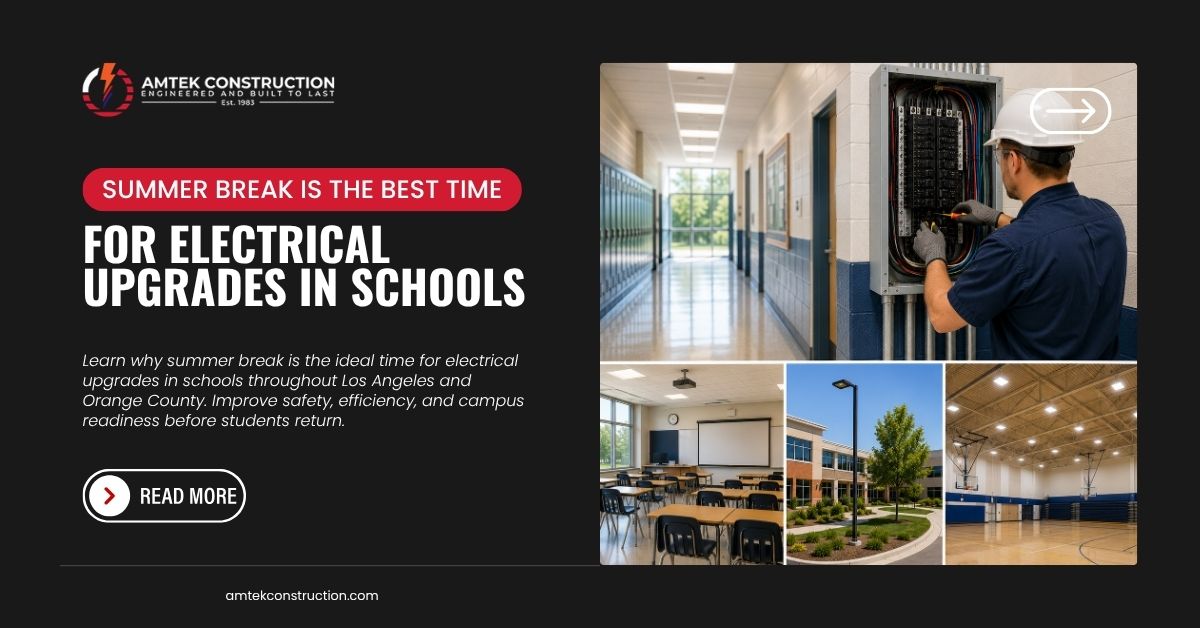
Summer Break Is the Best Time for Electrical Upgrades in Schools

For school administrators, facility directors, maintenance supervisors, and campus operations teams, summer break offers the ideal opportunity to complete electrical improvements with minimal disruption. With classrooms unoccupied and campus activity significantly reduced, schools can address infrastructure projects that would be difficult to perform during the academic year.

Across Los Angeles and Orange County, educational facilities are increasingly investing in electrical upgrades to support modern classroom technology, improve safety, increase energy efficiency, and prepare for future growth. Working with experienced electrical contractors Los Angeles and electrical contractors Orange County helps schools complete these projects safely, efficiently, and before students return for the fall semester.


Why Schools Often Delay Electrical Upgrades

During the school year, electrical work can be challenging due to:

  • Student and staff safety concerns
  • Classroom disruptions
  • Limited access to occupied spaces
  • Scheduling conflicts
  • Noise restrictions during school hours

Summer break removes many of these obstacles, allowing contractors to work more efficiently and complete larger projects without affecting learning environments.


Common Electrical Upgrades Schools Complete During Summer

Electrical Panel Upgrades

Many school buildings were constructed decades ago and now support significantly more technology than originally intended.

Modern classrooms often include:

  • Computers and tablets
  • Smart boards
  • Projectors
  • Security systems
  • HVAC upgrades
  • Charging stations

Older electrical panels may struggle to support these demands, making summer the perfect time for upgrades.


Lighting Modernization

Many schools continue to operate older lighting systems that consume more energy and require frequent maintenance.

Common summer projects include:

  • LED lighting conversions
  • Classroom lighting upgrades
  • Exterior campus lighting improvements
  • Parking lot lighting enhancements
  • Gymnasium lighting replacements

Modern lighting can improve visibility, reduce maintenance costs, and lower energy consumption.


Safety and Emergency Lighting Improvements

Emergency lighting systems play a critical role in protecting students, faculty, and visitors.

Summer provides an ideal window to:

  • Upgrade emergency lighting
  • Test backup systems
  • Replace outdated fixtures
  • Improve exit signage
  • Verify code compliance


Electrical Infrastructure for Technology

Technology continues to play a larger role in education.

Many schools are upgrading electrical infrastructure to support:

  • Classroom technology
  • Network equipment
  • Security systems
  • Access control systems
  • Campus-wide connectivity improvements

These projects often require dedicated circuits and improved electrical capacity.


Why Electrical Inspections Are Important Before the School Year Begins

Many schools use summer break to perform inspections before students return.

Electrical inspections can identify:

  • Aging wiring
  • Overloaded circuits
  • Grounding issues
  • Code compliance concerns
  • Equipment nearing failure

A proactive inspection can prevent unexpected issues during the school year.


Addressing Aging Electrical Infrastructure

Many schools throughout Southern California were built long before today’s electrical demands existed.

Common concerns include:

  • Outdated wiring
  • Undersized panels
  • Insufficient circuit capacity
  • Aging electrical equipment

Addressing these issues during summer helps schools avoid emergency repairs later.

Many of the same challenges seen in older homes also apply to aging educational facilities.

Related Reading: How to Know If Your Home’s Wiring Is Outdated (Especially in Older Los Angeles Homes)


Code Compliance Matters for Educational Facilities

School facilities must comply with electrical safety requirements and building regulations designed to protect students and staff.

Summer projects often include:

  • Correcting code violations
  • Updating electrical equipment
  • Improving panel labeling
  • Enhancing grounding systems
  • Bringing older systems up to current standards

For schools operating older facilities, maintaining compliance is an ongoing responsibility.

Related Reading: Electrical Code Requirements for Commercial Properties in Los Angeles & Orange County


Planning Ahead for Future Campus Growth

Electrical upgrades should not only solve current challenges but also prepare schools for future expansion.

Forward-thinking campuses often plan for:

  • Additional classroom technology
  • Expanded security systems
  • Future building additions
  • Electric vehicle charging stations
  • Increased HVAC demands

Summer break provides the best opportunity to make improvements that support long-term growth.

Schools considering future EV charging infrastructure may benefit from understanding installation requirements in advance.

Related Reading: EV Charger Installation in Los Angeles & Orange County: Costs, Permits, and What to Expect


Why Summer Projects Help Reduce Long-Term Costs

Waiting until electrical issues become emergencies often results in:

  • Higher repair costs
  • Operational disruptions
  • Emergency service expenses
  • Unplanned downtime

Preventative upgrades completed during summer are typically more cost-effective and easier to schedule.

They also help schools avoid disruptions during critical instructional periods.


Final Thoughts

Summer break provides one of the best opportunities for schools to invest in electrical infrastructure improvements without disrupting students, teachers, or daily campus operations. From panel upgrades and lighting modernization to inspections, code compliance improvements, and technology infrastructure enhancements, these projects help create safer, more efficient learning environments.

As schools continue to expand their use of digital learning tools, security systems, HVAC equipment, and campus-wide connectivity, the demands placed on electrical systems continue to grow. Facilities that proactively evaluate and upgrade their infrastructure during the summer months are often better positioned to avoid unexpected failures, reduce maintenance costs, and improve long-term operational reliability.

For educational facilities throughout Los Angeles and Orange County, preventative electrical planning today can help create safer campuses, support future growth, and ensure students and staff return to a reliable learning environment when the new school year begins.

Frequently Asked Questions

Why is summer the best time for electrical upgrades in schools?

Summer allows schools to complete major electrical projects without disrupting classes, students, faculty, or daily operations.

What electrical upgrades do schools commonly perform during summer break?

Common projects include panel upgrades, LED lighting conversions, emergency lighting improvements, electrical inspections, wiring upgrades, and technology infrastructure improvements.

How often should schools schedule electrical inspections?

Most educational facilities should schedule annual inspections, with additional evaluations before major renovations or technology upgrades.

Can older school buildings support modern classroom technology?

Many older campuses require electrical upgrades to safely support computers, smart boards, charging stations, security systems, and modern HVAC equipment.

Why are electrical panel upgrades important for schools?

Panel upgrades help ensure schools have sufficient electrical capacity for modern equipment while improving reliability and safety.

Electrical Code Requirements for Commercial Properties in Los Angeles & Orange County

Why Electrical Code Compliance Matters for Commercial Properties

Electrical systems in commercial buildings are held to a higher standard than residential properties—and for good reason. Businesses rely on consistent, safe power to operate, and any failure can lead to downtime, liability, and costly repairs.

If you own or manage a property in Los Angeles or Orange County, understanding electrical code requirements is essential to keeping your building safe and compliant.

Working with experienced electrical contractors in Los Angeles helps ensure your system meets current regulations and passes inspections.

What Electrical Code Applies in Southern California?

Commercial electrical work in Los Angeles and Orange County must comply with:

  • National Electrical Code (NEC)
  • California Electrical Code (CEC)
  • Local city and county regulations

These codes are regularly updated and enforced through inspections and permitting processes.

Failure to comply can result in:

  • Fines and penalties
  • Failed inspections
  • Delays in tenant occupancy
  • Increased liability risk

Common Electrical Code Requirements for Commercial Buildings

1. Proper Load Capacity and Distribution

Commercial systems must be designed to handle the building’s electrical demand safely.

This includes:

  • Correct panel sizing
  • Balanced load distribution
  • Dedicated circuits for high-demand equipment

Overloaded systems are one of the most common reasons for code violations.

2. Grounding and Bonding

Proper grounding protects both equipment and people.

Requirements include:

  • Grounding systems connected to earth
  • Bonding of all conductive components
  • Protection against electrical faults

Improper grounding can lead to serious safety hazards and failed inspections.

3. Circuit Protection and Breaker Requirements

Commercial panels must include:

  • Correctly rated breakers
  • Arc fault and ground fault protection (where required)
  • Clearly labeled circuits

If your system frequently trips, it may indicate deeper compliance issues.

Related: Why Your Breakers Trip More in Spring (And What It Means for Your Home in Orange County)

4. Emergency and Backup Systems

Many commercial properties are required to have emergency power systems.

These may include:

  • Exit lighting
  • Emergency lighting circuits
  • Backup generators (for certain facilities)

These systems must be tested and maintained regularly to remain compliant.

5. Wiring Methods and Installation Standards

All wiring must meet strict installation requirements, including:

  • Proper conduit use
  • Approved materials
  • Safe routing and protection
  • Accessibility for maintenance

Unapproved or outdated wiring methods are common reasons for violations.

6. Accessibility and Clearance Requirements

Electrical panels and equipment must be accessible at all times.

Code requires:

  • Adequate working space around panels
  • Clear access (no obstructions)
  • Proper mounting heights

Blocked or inaccessible panels can result in immediate inspection failure.

Do Commercial Electrical Projects Require Permits?

Yes—most commercial electrical work requires permits and inspections.

This includes:

  • New installations
  • System upgrades
  • Tenant improvements
  • Equipment additions

Permits ensure the work is reviewed and approved according to current code.

For a full breakdown, see: Electrical Permits in Los Angeles & Orange County: What You Actually Need (And What You Don’t)

Common Code Violations in Commercial Properties

Many properties fail inspections due to preventable issues.

Frequent violations include:

  • Overloaded panels
  • Improper grounding
  • Missing permits
  • Outdated wiring
  • Incorrect breaker sizing
  • Lack of labeling

These problems often go unnoticed until an inspection or system failure occurs.

How to Stay Code-Compliant

Maintaining compliance requires ongoing attention, not just one-time fixes.

Best practices:

  • Schedule regular electrical inspections
  • Upgrade outdated systems
  • Ensure all work is permitted
  • Work with licensed professionals
  • Address warning signs early

Preventative maintenance is always more cost-effective than emergency repairs.

Why Code Compliance Is Critical for Businesses

Electrical issues in commercial properties don’t just affect safety—they impact operations.

Non-compliance can lead to:

  • Business interruptions
  • Equipment damage
  • Legal liability
  • Delayed openings or tenant move-ins

Ensuring your system meets code protects both your property and your business continuity.

Why Choose AMTEK Construction

AMTEK Construction works with commercial property owners and managers across Southern California to ensure electrical systems are safe, compliant, and built for long-term performance.

They provide:

  • Code-compliant installations
  • Commercial electrical upgrades
  • Permit handling and inspections
  • Troubleshooting and maintenance

For businesses in Orange County, working with experienced electrical contractors Orange County ensures your property meets local and state requirements.

Final Thoughts

Electrical code compliance is not something commercial property owners can afford to treat as an afterthought. In Los Angeles and Orange County, commercial buildings face increasing electrical demands from modern equipment, tenant improvements, HVAC systems, EV charging infrastructure, and expanding operational needs. As systems become more complex, maintaining code compliance becomes even more important for both safety and long-term business stability.

Ignoring outdated electrical systems, overloaded panels, or permit requirements can lead to far more than failed inspections. It can result in costly downtime, operational interruptions, liability concerns, damaged equipment, delayed tenant occupancy, and expensive corrective work later on. Many of these issues start with small warning signs that are often overlooked until they become major problems.

Working with an experienced commercial electrical team helps property owners stay ahead of these risks. From inspections and system upgrades to permitting and code-compliant installations, AMTEK Construction helps businesses throughout Los Angeles and Orange County ensure their electrical systems are safe, efficient, and built to meet today’s commercial demands.

Whether you manage an office building, retail center, warehouse, industrial facility, or multi-tenant property, investing in proper electrical planning and compliance protects both your property and your long-term operations.

FAQ

What electrical code applies to commercial buildings in California?

Commercial properties must follow the National Electrical Code (NEC), California Electrical Code (CEC), and local regulations.

Do commercial electrical projects require permits?

Yes, most commercial electrical work requires permits and inspections.

What happens if a property fails an electrical inspection?

The property must correct violations before approval, which can delay operations or occupancy.

How often should commercial electrical systems be inspected?

Regular inspections are recommended, especially for older buildings or high-demand properties.

What are the most common electrical code violations?

Overloaded circuits, improper grounding, outdated wiring, and missing permits are among the most common issues.

Call Now Button